• HOME
  • NEWS
  • EXPLORE
    • CAREER
      • Companies
      • Jobs
    • EVENTS
    • iGEM
      • News
      • Team
    • PHOTOS
    • VIDEO
    • WIKI
  • BLOG
  • COMMUNITY
    • FACEBOOK
    • INSTAGRAM
    • TWITTER
Sunday, December 28, 2025
BIOENGINEER.ORG
No Result
View All Result
  • Login
  • HOME
  • NEWS
  • EXPLORE
    • CAREER
      • Companies
      • Jobs
        • Lecturer
        • PhD Studentship
        • Postdoc
        • Research Assistant
    • EVENTS
    • iGEM
      • News
      • Team
    • PHOTOS
    • VIDEO
    • WIKI
  • BLOG
  • COMMUNITY
    • FACEBOOK
    • INSTAGRAM
    • TWITTER
  • HOME
  • NEWS
  • EXPLORE
    • CAREER
      • Companies
      • Jobs
        • Lecturer
        • PhD Studentship
        • Postdoc
        • Research Assistant
    • EVENTS
    • iGEM
      • News
      • Team
    • PHOTOS
    • VIDEO
    • WIKI
  • BLOG
  • COMMUNITY
    • FACEBOOK
    • INSTAGRAM
    • TWITTER
No Result
View All Result
Bioengineer.org
No Result
View All Result
Home NEWS Science News Health

Study: Enzyme could prove effective in treating tumors and inflammatory diseases in lung

Bioengineer by Bioengineer
August 4, 2020
in Health
Reading Time: 2 mins read
0
IMAGE
Share on FacebookShare on TwitterShare on LinkedinShare on RedditShare on Telegram

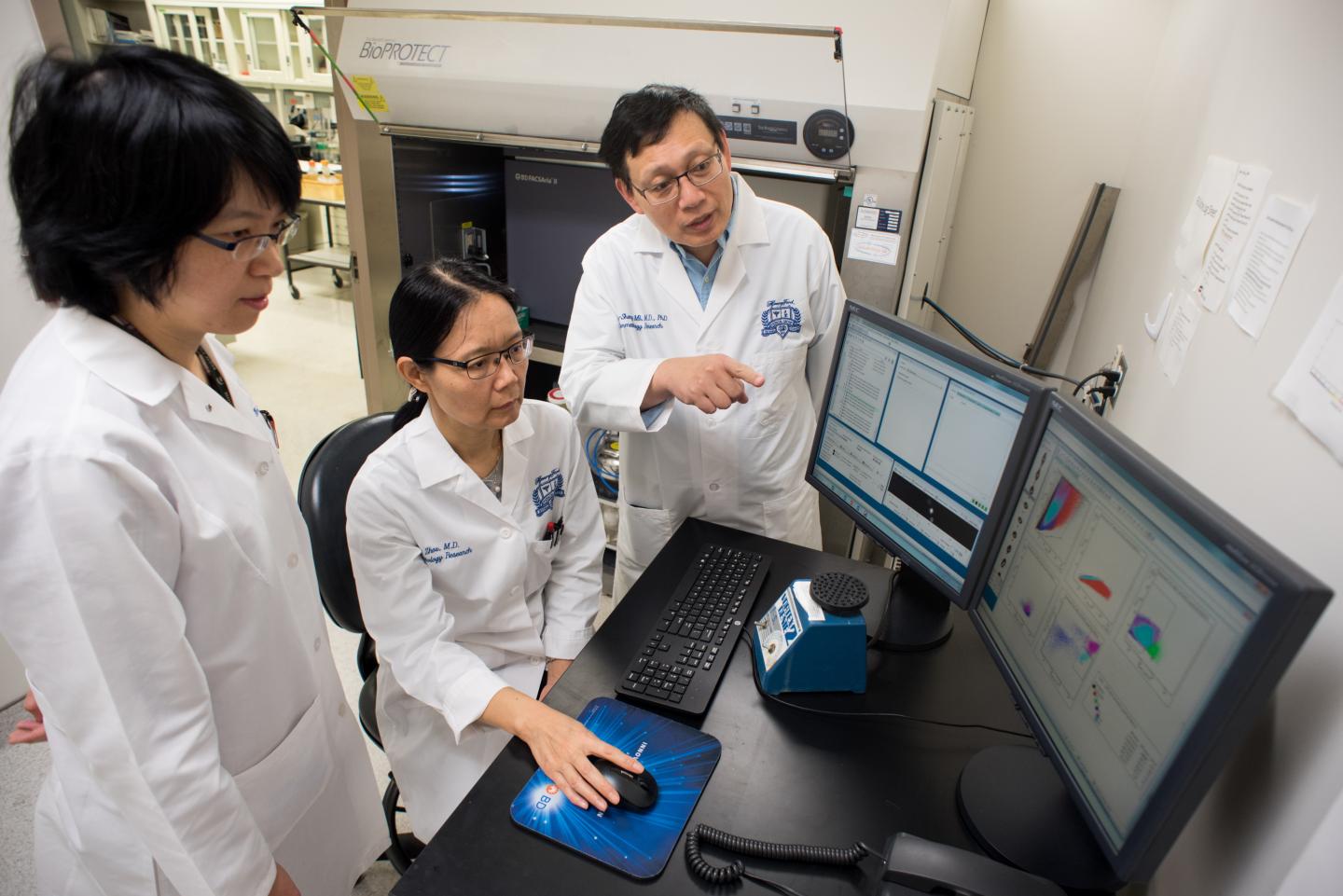
IMAGE

Credit: Henry Ford Health System

Findings from a research study, led by scientists at Henry Ford, published in the latest issue of Nature Communications suggest an enzyme could play an important role in the treatment of cancer and autoimmune diseases in the airway.

Histone deacetylases (HDACs) are enzymes that help modulate gene expression by removing acetyl groups from histone or non-histone proteins. Inhibition of HDACs is emerging as a promising approach to treat various types of malignant diseases and inflammatory disorders.

“The findings from this study show the key role HDAC3, one in the large HDAC family, plays in regulating lung macrophage development and homeostasis,” said Qing-Sheng Mi, M.D., Ph.D., senior author of the study, senior scientist/professor, director of the Center for Cutaneous Biology and Immunology, Department of Dermatology, and director of Immunology Program of Henry Ford Cancer Institute. “Four pan-HDAC inhibitors have been approved by the FDA for anti-tumor therapy. However, due to common severe side effects of these pan-HDAC inhibitors, developing drugs with high selectivity for individual HDACs has become a priority for researchers.”

“This study sheds light on HDAC3 as a potential therapeutic target for intervention in cancer and autoimmune diseases in the airway,” said Li Zhou, M.D., co-senior author, associate scientist in the Center for Cutaneous Biology and Immunology at Henry Ford.

Lung alveolar macrophages are the innate immune cells residing in lung alveoli. They are important for the maintenance of homeostasis in the airways and are involved in the development of a variety of pulmonary diseases, including asthma and lung cancer.

“According to the findings of this study, the deletion of HDAC3 in mouse alveolar macrophages leads to significant impairment of alveolar macrophage development, maintenance, maturation and regeneration,” said Yi Yao, Ph.D., the first author in the paper and a research instructor from Dr. Mi’s laboratory.

More research is needed to better understand the underlying mechanism by which individual HDACs regulate immune cell development, maintenance and function. This knowledge will help with identifying potential therapeutic treatments.

“Our study may help bring HDAC3-inhibitor into clinical trial for lung cancer and inflammatory diseases,” said Dr. Qing-Sheng Mi.

###

This study was supported by the grants from National Institute of Arthritis and Musculoskeletal and Skin Diseases (NIAMS), National Institute of Allergy and Infection Diseases (NIAID), NIH and the Henry Ford Immunology Program Fund.

Media Contact
Jeff Adkins
[email protected]

Original Source

https://www.henryford.com/news/2020/08/hdac

Related Journal Article

http://dx.doi.org/10.1038/s41467-020-17630-6

Tags: cancerClinical TrialsImmunology/Allergies/AsthmaMedicine/HealthPulmonary/Respiratory Medicine
Share12Tweet8Share2ShareShareShare2

Related Posts

New Insights on Angiogenesis and Cell Death in Spinal Cord Injury

December 28, 2025

Assessing Surgical Nurses’ AI Literacy and Readiness

December 28, 2025

Link Between Physical Activity and Youth Mental Health

December 28, 2025

LncRNA AC040169.1 Enhances Ovarian Cancer via m6A Regulation

December 28, 2025
Please login to join discussion

POPULAR NEWS

  • Robotic Waist Tether for Research Into Metabolic Cost of Walking

    NSF funds machine-learning research at UNO and UNL to study energy requirements of walking in older adults

    71 shares
    Share 28 Tweet 18
  • Nurses’ Views on Online Learning: Effects on Performance

    70 shares
    Share 28 Tweet 18
  • Exploring Audiology Accessibility in Johannesburg, South Africa

    51 shares
    Share 20 Tweet 13
  • SARS-CoV-2 Subvariants Affect Outcomes in Elderly Hip Fractures

    44 shares
    Share 18 Tweet 11

About

We bring you the latest biotechnology news from best research centers and universities around the world. Check our website.

Follow us

Recent News

AI-Fueled Matching: Bridging Industry and Education

Evaluating Genetic Diversity in Rice Seedling Vigor

Advancements in Road Accident Prediction Models

Subscribe to Blog via Email

Enter your email address to subscribe to this blog and receive notifications of new posts by email.

Join 71 other subscribers
  • Contact Us

Bioengineer.org © Copyright 2023 All Rights Reserved.

Welcome Back!

Login to your account below

Forgotten Password?

Retrieve your password

Please enter your username or email address to reset your password.

Log In
No Result
View All Result
  • Homepages
    • Home Page 1
    • Home Page 2
  • News
  • National
  • Business
  • Health
  • Lifestyle
  • Science

Bioengineer.org © Copyright 2023 All Rights Reserved.