


Findings lay groundwork for clinical development program
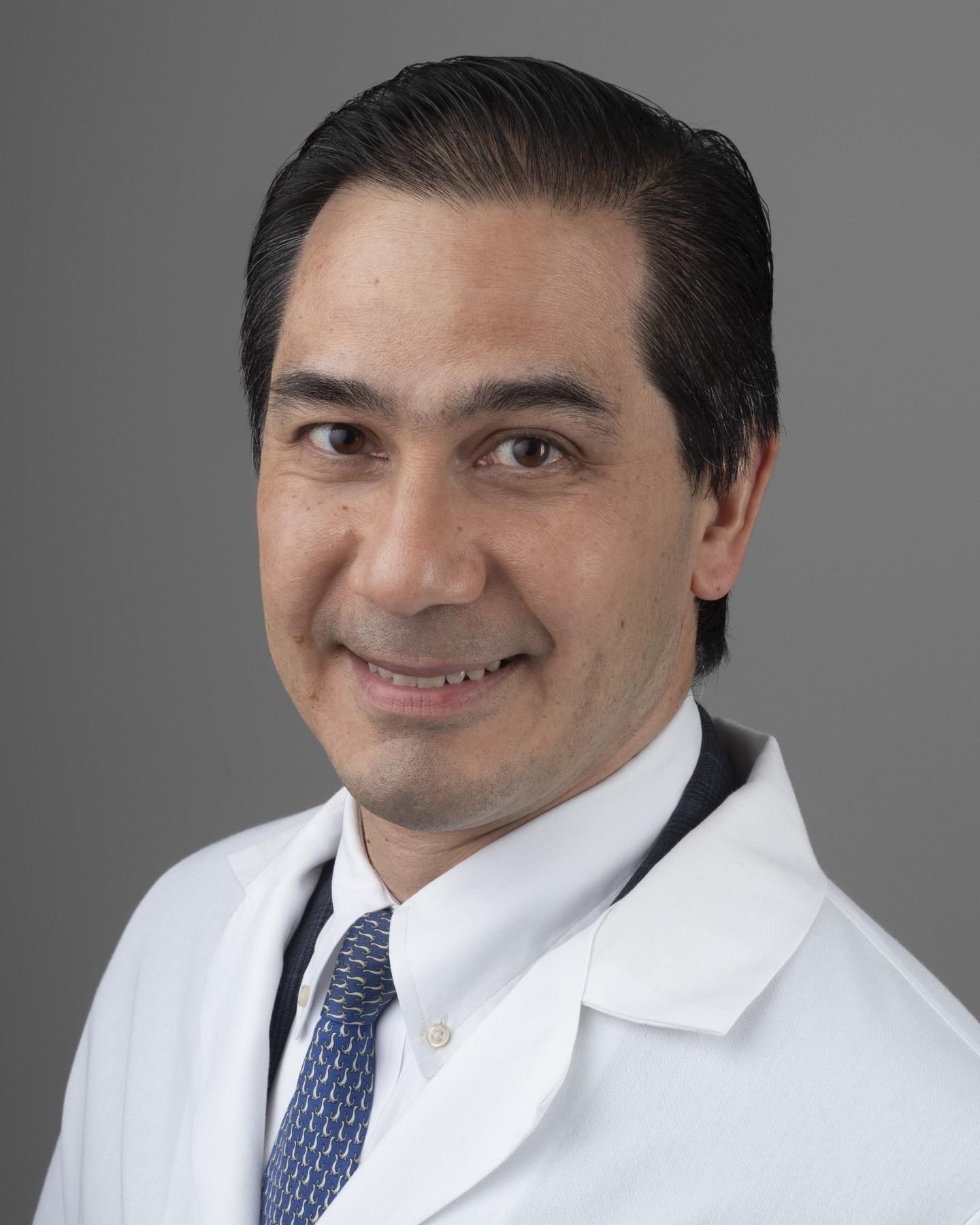
Credit: Beth Israel Deaconess Medical Center
Boston, Mass. – The development of a safe and effective vaccine will likely be required to end the COVID-19 pandemic. A group of scientists, led by Beth Israel Deaconess Medical Center (BIDMC) immunologist Dan H. Barouch, MD, PhD, now report that a leading candidate COVID-19 vaccine developed at BIDMC in collaboration with Johnson & Johnson raised neutralizing antibodies and robustly protected non-human primates (NHPs) against SARS-CoV-2, the virus that causes COVID-19. This study builds on the team’s previous results and is published in the journal Nature.
“This vaccine led to robust protection against SARS-CoV-2 in rhesus macaques and is now being evaluated in humans,” said Barouch, who is Director of BIDMC’s Center for Virology and Vaccine Research.
The vaccine uses a common cold virus, called adenovirus serotype 26 (Ad26), to deliver the SARS-CoV-2 spike protein into host cells, where it stimulates the body to raise immune responses against the coronavirus. Barouch has been working on the development of a COVID-19 vaccine since January, when Chinese scientists released the SARS-CoV-2 genome. Barouch’s group, in collaboration with Johnson & Johnson, developed a series of vaccine candidates designed to express different variants of the SARS-CoV-2 spike protein, which is the major target for neutralizing antibodies.
Barouch and colleagues conducted a study in 52 NHPs, immunizing 32 adult rhesus macaques with a single dose of one of seven different versions of the Ad26-based vaccine, and giving 20 animals sham vaccines as placebo controls. All vaccinated animals developed neutralizing antibodies following immunization. Six weeks after the immunization, all animals were exposed to SARS-CoV-2. All 20 animals that received the sham vaccine became infected and showed high levels of virus in their lungs and nasal swabs. Of the six animals that received the optimal vaccine candidate, Ad26.COV2.S, none showed virus in their lungs, and only one animal showed low levels of virus in nasal swabs.
Moreover, neutralizing antibody responses correlated with protection, suggesting that this biomarker will be useful in the clinical development of COVID-19 vaccines for use in humans.
“Our data show that a single immunization with Ad26.COV2.S robustly protected rhesus macaques against SARS-CoV-2 challenge,” said Barouch, who is also the William Bosworth Castle Professor of Medicine at Harvard Medical School, a member of the Ragon Institute of MGH, MIT, and Harvard, and a co-leader of the vaccine working group of the Massachusetts Consortium on Pathogen Readiness. “A single-shot immunization has practical and logistical advantages over a two-shot regimen for global deployment and pandemic control, but a two-shot vaccine will likely be more immunogenic, and thus both regimens are being evaluated in clinical trials. We look forward to the results of the clinical trials that will determine the safety and immunogenicity, and ultimately the efficacy, of the Ad26.COV2.S vaccine in humans.”
Investigators at Beth Israel Deaconess Medical Center (BIDMC) and other institutions have initiated a first-in-human Phase 1/2 clinical trial of the Ad26.COV2.S vaccine in healthy volunteers. Kathryn E. Stephenson, MD, MPH, is the principal investigator for the trial at BIDMC, which is funded by Janssen Vaccines & Prevention, B.V., a pharmaceutical research arm of Johnson & Johnson.
Pending clinical trial outcomes, the Ad26.COV2.S vaccine is on track to start a phase 3 efficacy trial in 30,000 participants in September.
###
Co-authors included Noe D. Mercado, Abishek Chandrashekar, Jingyou Yu, Jinyan Liu, Lauren Peter, Katherine McMahan, Lisa H. Tostanoski, Esther A. Bondzie, Gabriel Dagotto, Makda S. Gebre, Xuan He, Emily Hoffman, Catherine Jacob-Dolan, Marinela Kiriloya, Zhenfen Li, Zijin Lin, Shant H. Mahrokhian, Lori F. Maxfield, Felix Nampanya, Ramya Mityanandam, Joseph P. Nkolola, Shivanai Patel, John D. Ventura, Kaylee Verrignton and Huahua Wan of BIDMC; Lucy Rutten, Rinke Bos, Danielle van Manan, Jort Vellinga, Jerome Custers, Johannes P. Langedijk, Ted Kwaks, Paul Stoffels, Mathai Mammen, Johan Van Hoof and Hanneke Schuitemaker of Janssen Vaccines & Prevention BV; Carolin Loos, Caroline Atyeo, Stephanie Fischinger, John S. Burke, Jared Feldman, Blake M. Hauser, Timothy M. Caradonna, Aaron G. Schmidt and Galit Alter of the Ragon Institute of MGH, MIT, and Harvard; Douglas A. Lauffenburger of Massachusetts Institute of Technology; David Martinez and Ralph S. Baric of University of North Carolina at Chapel Hill; Laurent Pessaint, Alex Van Ry, Kelvin Blade, Amanda Strasbaugh, Mehtap Cabus, Renita Brown, Anthony Cook, Serge Zouantchangadou, Elyse Teow, Hanne Anderson, and Mark G. Lewis of Bioqual; and Yongfei Cai and Bing Chen of Children’s Hospital.
The authors declare no competing financial interests. Barouch, Zahn, Wegman, Rutten, Bos, Manan, Vellinga, Custers, Langedijk, Kwaks, and Schuitemaker are co-inventors on related vaccine patents. Zahn, Wegman, Rutten, Bos, Manan, Vellinga, Custers, Langedijk, Kwaks, Stoeffels, Mammen, Van Hoof, and Schuitemaker are employees of Janssen Vaccines & Prevention BV and hold stock in Johnson & Johnson.
This project was funded in part by the Department of Health and Human Services Biomedical Advanced Research and Development Authority (BARDA) under contract HHS0100201700018C. We also acknowledge support from Janssen Vaccines & Prevention BV, the Ragon Institute of MGH, MIT, and Harvard, Mark and Lisa Schwartz Foundation, Massachusetts Consortium on Pathogen Readiness (MassCPR), and the National Institutes of Health (OD024917, AI129797, AI124377, AI128751, AI126603 to D.H.B.; AI007151 and AI152296 to D.R.M.; AI146779 to A.G.S.; 272201700036I-0-759301900131-1, AI100625, AI110700, AI132178, AI149644, AI108197 to R.S.B.). We also acknowledge a Burroughs Wellcome Fund Postdoctoral Enrichment Program Award to D.R.M.
About Beth Israel Deaconess Medical Center
Beth Israel Deaconess Medical Center is a part of Beth Israel Lahey Health, a new health care system that brings together academic medical centers and teaching hospitals, community and specialty hospitals, more than 4,000 physicians and 35,000 employees in a shared mission to expand access to great care and advance the science and practice of medicine through groundbreaking research and education.
Media Contact
Lindsey Diaz-MacInnis
[email protected]
Original Source
https:/
Related Journal Article
http://dx.


