• HOME
  • NEWS
  • EXPLORE
    • CAREER
      • Companies
      • Jobs
    • EVENTS
    • iGEM
      • News
      • Team
    • PHOTOS
    • VIDEO
    • WIKI
  • BLOG
  • COMMUNITY
    • FACEBOOK
    • INSTAGRAM
    • TWITTER
Thursday, March 26, 2026
BIOENGINEER.ORG
No Result
View All Result
  • Login
  • HOME
  • NEWS
  • EXPLORE
    • CAREER
      • Companies
      • Jobs
        • Lecturer
        • PhD Studentship
        • Postdoc
        • Research Assistant
    • EVENTS
    • iGEM
      • News
      • Team
    • PHOTOS
    • VIDEO
    • WIKI
  • BLOG
  • COMMUNITY
    • FACEBOOK
    • INSTAGRAM
    • TWITTER
  • HOME
  • NEWS
  • EXPLORE
    • CAREER
      • Companies
      • Jobs
        • Lecturer
        • PhD Studentship
        • Postdoc
        • Research Assistant
    • EVENTS
    • iGEM
      • News
      • Team
    • PHOTOS
    • VIDEO
    • WIKI
  • BLOG
  • COMMUNITY
    • FACEBOOK
    • INSTAGRAM
    • TWITTER
No Result
View All Result
Bioengineer.org
No Result
View All Result
Home NEWS Science News Biology

Report provides new framework for understanding climate risks, impacts to US agriculture

Bioengineer by Bioengineer
July 29, 2020
in Biology
Reading Time: 3 mins read
0
IMAGE
Share on FacebookShare on TwitterShare on LinkedinShare on RedditShare on Telegram

IMAGE

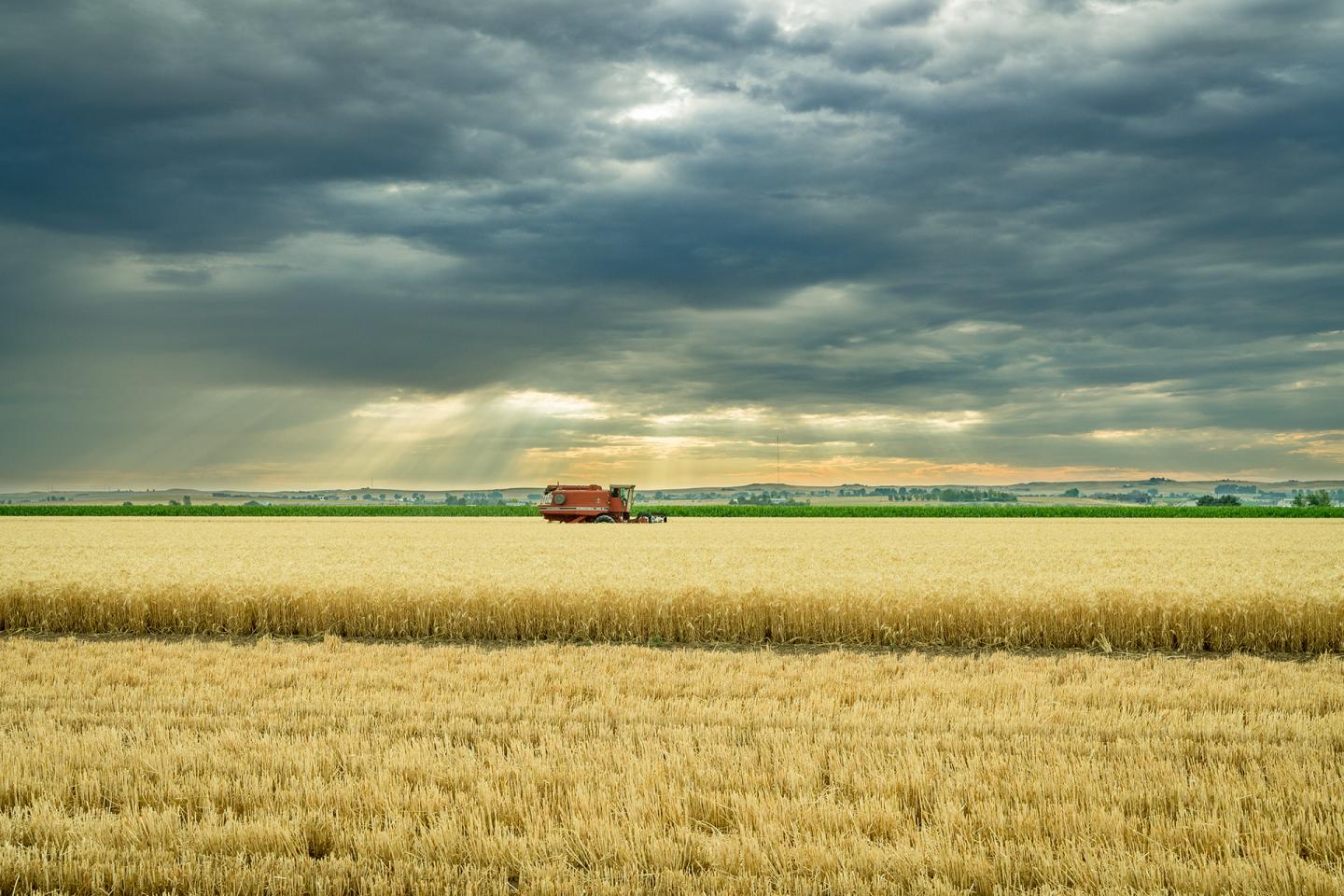
Credit: Joe Mendoza/CSU Photography

Agricultural production is highly sensitive to weather and climate, which affect when farmers and land managers plant seeds or harvest crops. These conditions also factor into decision-making, when people decide to make capital investments or plant trees in an agroforestry system.

A new report from the U.S. Department of Agriculture focuses on how agricultural systems are impacted by climate change and offers a list of 20 indicators that provide a broad look at what’s happening across the country.

The report, “Climate Indicators for Agriculture,” is co-authored by Colorado State University’s Peter Backlund, associate director of the School of Global Environmental Sustainability.

Backlund said the research team started with the scientific fact that climate change is underway.

“We looked at the U.S. agricultural system and examined the climate stresses,” he said. “This report outlines data that farmers and land managers can use to understand how climate change is affecting their operations, and, hopefully, guide the development of effective adaptation.”

In the report, the authors outline how the changes taking place in agriculture affect the system that many people make their livelihoods from.

“We want to help farmers, ranchers and land managers adapt better under climate change, which requires understanding what is actually happening on the ground. These indicators offer ways to measure the impacts of change,” said Backlund.

20 climate indicators, based on robust data

The climate indicators described in the report are arranged in five categories, including physical (extreme precipitation and nighttime air temperature), crop and livestock (animal heat stress and leaf wetness duration), biological (insect infestation in crops, crop pathogens), phenological (timing of budbreak in fruit trees, disease vectors in livestock) and socioeconomic (crop insurance payments, heat-related mortality of agricultural workers).

Backlund said the research team chose these indicators based on the strength of their connection to climate change and availability of long-term data, which is needed to identify how impacts are changing over time and whether adaptive actions are having the desired effect.

“There had to be a measurement of a variable strongly coupled with climate,” he said. “As we go forward, we will better understand the impact of climate change by using these indicators.”

Researchers opted to include nighttime air temperatures as opposed to general temperature because nighttime temperatures have a big effect on the way plants develop.

Some of the indicators have national data, while others are more regional. Heat stress on livestock, a huge issue for feedlot operators, will be of interest to farmers and ranchers in states including Colorado.

“Heat interferes with the rate of reproduction and rate of weight gain,” Backlund said. “This presses on the whole operation; it’s not just that a few more animals will die from getting too hot.”

The crop insurance payment indicator offers insight on the repercussions of climate events.

“You can see if you have a big climate event, like drought, one region will be much more affected than another,” he said. “If farmers have good irrigation, they’ll be much more capable in dealing with periods of low rainfall.”

Backlund said the indicator covering weed range and intensity was also notable. As carbon dioxide concentrations increase, researchers are seeing extreme northern migrations and expanded ranges for weeds.

###

Media Contact
Mary Guiden
[email protected]

Original Source

https://source.colostate.edu/report-provides-new-framework-for-understanding-climate-risks-impacts-to-u-s-agriculture/

Tags: Agricultural Production/EconomicsAgricultureClimate ChangeEcology/EnvironmentFertilizers/Pest ManagementFood/Food ScienceForestryPlant SciencesTemperature-Dependent Phenomena
Share12Tweet8Share2ShareShareShare2

Related Posts

How to sway group opinions: Encourage opponents to stay undecided

How to sway group opinions: Encourage opponents to stay undecided

March 23, 2026
Deep Learning Model Maps How Individual Cells Shape Disease Outcomes

Deep Learning Model Maps How Individual Cells Shape Disease Outcomes

March 20, 2026

Removing only 15 female sharks annually could endanger the entire population, scientists warn

March 20, 2026

Scientists Urge Fragrance Industry to Transition from Sustainability Talk to Active Funding of Plant Conservation

March 20, 2026
Please login to join discussion

POPULAR NEWS

  • blank

    Revolutionary AI Model Enhances Precision in Detecting Food Contamination

    96 shares
    Share 38 Tweet 24
  • Imagine a Social Media Feed That Challenges Your Views Instead of Reinforcing Them

    1003 shares
    Share 397 Tweet 248
  • Uncovering Functions of Cavernous Malformation Proteins in Organoids

    54 shares
    Share 22 Tweet 14
  • Promising Outcomes from First Clinical Trials of Gene Regulation in Epilepsy

    51 shares
    Share 20 Tweet 13

About

We bring you the latest biotechnology news from best research centers and universities around the world. Check our website.

Follow us

Recent News

In-Sensor Cryptography Links Physical Process to Digital Identity

Can Psychosocial Factors Influence Cancer Risk?

Depression Factors in Elderly: Pre vs. Post-COVID Analysis

Subscribe to Blog via Email

Success! An email was just sent to confirm your subscription. Please find the email now and click 'Confirm' to start subscribing.

Join 78 other subscribers
  • Contact Us

Bioengineer.org © Copyright 2023 All Rights Reserved.

Welcome Back!

Login to your account below

Forgotten Password?

Retrieve your password

Please enter your username or email address to reset your password.

Log In
No Result
View All Result
  • Homepages
    • Home Page 1
    • Home Page 2
  • News
  • National
  • Business
  • Health
  • Lifestyle
  • Science

Bioengineer.org © Copyright 2023 All Rights Reserved.