• HOME
  • NEWS
  • EXPLORE
    • CAREER
      • Companies
      • Jobs
    • EVENTS
    • iGEM
      • News
      • Team
    • PHOTOS
    • VIDEO
    • WIKI
  • BLOG
  • COMMUNITY
    • FACEBOOK
    • INSTAGRAM
    • TWITTER
Friday, January 2, 2026
BIOENGINEER.ORG
No Result
View All Result
  • Login
  • HOME
  • NEWS
  • EXPLORE
    • CAREER
      • Companies
      • Jobs
        • Lecturer
        • PhD Studentship
        • Postdoc
        • Research Assistant
    • EVENTS
    • iGEM
      • News
      • Team
    • PHOTOS
    • VIDEO
    • WIKI
  • BLOG
  • COMMUNITY
    • FACEBOOK
    • INSTAGRAM
    • TWITTER
  • HOME
  • NEWS
  • EXPLORE
    • CAREER
      • Companies
      • Jobs
        • Lecturer
        • PhD Studentship
        • Postdoc
        • Research Assistant
    • EVENTS
    • iGEM
      • News
      • Team
    • PHOTOS
    • VIDEO
    • WIKI
  • BLOG
  • COMMUNITY
    • FACEBOOK
    • INSTAGRAM
    • TWITTER
No Result
View All Result
Bioengineer.org
No Result
View All Result
Home NEWS Science News Biology

Wide awake: Light pollution keeps magpies and pigeons tossing and turning

Bioengineer by Bioengineer
July 23, 2020
in Biology
Reading Time: 2 mins read
0
IMAGE
Share on FacebookShare on TwitterShare on LinkedinShare on RedditShare on Telegram

Study first to measure neurological responses to light pollution in wildlife
IMAGE

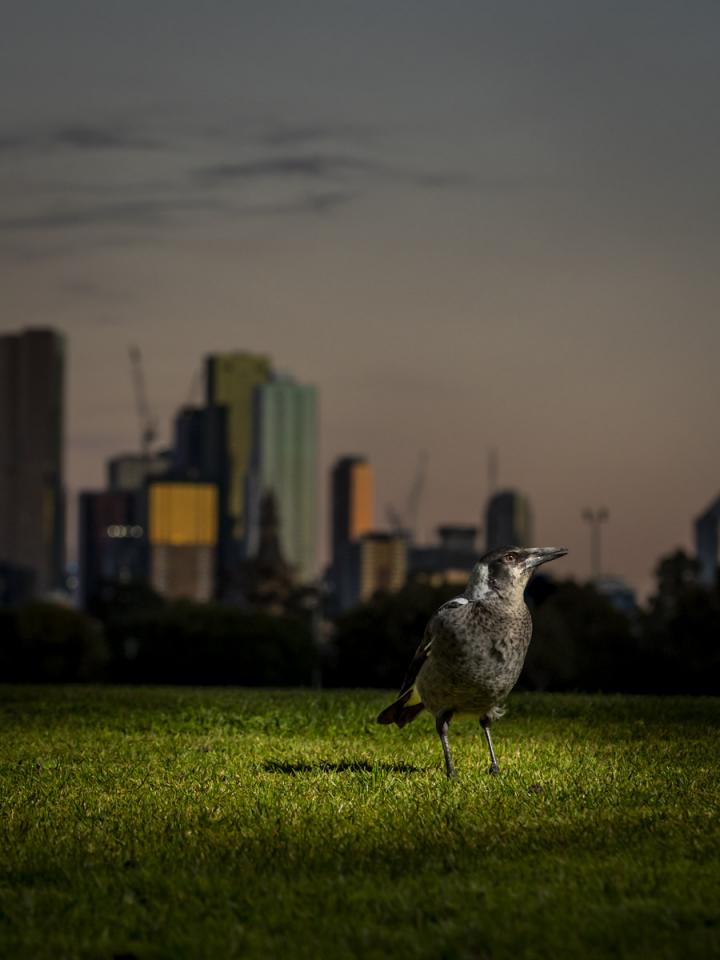
Credit: Photographer Doug Gimesy

Researchers are urging city-dwellers to switch off their garden lights at night-time after a study of magpies and pigeons revealed the harmful impact artificial light is having on the birds’ sleep patterns.

The study by La Trobe University and University of Melbourne, published today in Current Biology, is the first to measure neurological responses to light pollution in wildlife.

The researchers looked at how birds’ sleep was affected by artificial white light and the apparently more “sleep-friendly” amber light.

They found light comparable in intensity to street lighting can disrupt the length, structure and intensity of sleep in magpies and pigeons, regardless of the light’s colour.

Utilising miniature sensors to measure magpie and pigeon brain activity, researchers found their non-rapid eye movement (NREM) and REM sleep cycles were altered when exposed to white and amber lighting at night, but that the magnitude of these effects differed between the species.

La Trobe University sleep expert Dr John Lesku said that while magpie sleep is more disrupted under white light compared to amber light, both types of light are equally disruptive for sleep in pigeons.

“Both magpies and pigeons average 10 hours of sleep per night. We found that magpies lost more NREM sleep under white light than amber light. By comparison, pigeons lost around 4 hours of sleep under both white and amber light,” Dr Lesku said.

“Interestingly, neither species fully recovered sleep lost to white or amber light exposure.”

University of Melbourne and La Trobe University researcher Dr Anne Aulsebrook said changes to sleeping patterns in birds, caused by human light pollution, is concerning.

“We know sleep is important for animals to not only function, but thrive,” Dr Aulsebrook said.

“While amber lighting appears to have a less damaging impact than white light on magpies, our findings suggest the relative impacts of light pollution on birds may be species-specific. Amber lighting can reduce sleep disruption in some birds, but it is not a solution for all species.

“Additionally, disrupted sleeping patterns that force birds to catch up on sleep in the daytime could impact their ability to forage for food, fight off predators and search for mates.”

University of Melbourne and La Trobe University graduate researcher Farley Connelly recommended further research into avian circadian rhythms and the implementation of short-term solutions.

“We should think about using artificial light only as and where it’s needed,” Mr Connelly said.

“Switch off that porch light, install sensor lights, remove decorative lights from trees, balconies and other outdoor settings, and keep street and park lights directed to the ground or shielded where possible.

“And if you’re ever woken by the early call of a magpie, remember it could be just as sleep deprived as you are.”

###

Media Contact: Dragana Mrkaja, [email protected], +61 447 508 171

Media Contact
Lito Vilisoni Wilson
[email protected]

Tags: Earth ScienceEcology/EnvironmentGeographyPollution/Remediation
Share12Tweet8Share2ShareShareShare2

Related Posts

Foreign Bodies in Sheep and Goats: Prevalence and Risks

Foreign Bodies in Sheep and Goats: Prevalence and Risks

December 31, 2025
Rethinking Gender Inference from Health Record Algorithms

Rethinking Gender Inference from Health Record Algorithms

December 31, 2025

Mapping RNA Editome Development in Ningxiang Pig Fat

December 31, 2025

Revealing Chloroplast Genomes: Insights on Plant Evolution

December 31, 2025
Please login to join discussion

POPULAR NEWS

  • blank

    PTSD, Depression, Anxiety in Childhood Cancer Survivors, Parents

    112 shares
    Share 45 Tweet 28
  • NSF funds machine-learning research at UNO and UNL to study energy requirements of walking in older adults

    71 shares
    Share 28 Tweet 18
  • Exploring Audiology Accessibility in Johannesburg, South Africa

    52 shares
    Share 21 Tweet 13
  • SARS-CoV-2 Subvariants Affect Outcomes in Elderly Hip Fractures

    44 shares
    Share 18 Tweet 11

About

We bring you the latest biotechnology news from best research centers and universities around the world. Check our website.

Follow us

Recent News

Ultrawideband Polymer Transducers Boost Hemispherical Optoacoustic Imaging

AI Innovations in Non-Small Cell Lung Cancer Care

Asthma Medicine Costs and Access in Nigeria

Subscribe to Blog via Email

Enter your email address to subscribe to this blog and receive notifications of new posts by email.

Join 71 other subscribers
  • Contact Us

Bioengineer.org © Copyright 2023 All Rights Reserved.

Welcome Back!

Login to your account below

Forgotten Password?

Retrieve your password

Please enter your username or email address to reset your password.

Log In
No Result
View All Result
  • Homepages
    • Home Page 1
    • Home Page 2
  • News
  • National
  • Business
  • Health
  • Lifestyle
  • Science

Bioengineer.org © Copyright 2023 All Rights Reserved.