Credit: ©Science China Press
Type 1 diabetes mellitus and type 2 diabetes mellitus (T2DM) are the two main types of diabetes, while T2DM accounts for 90%-95% of those with diabetes. T2DM is a vital risk factor for cerebral infarction, cardiovascular disease, blindness and kidney failure. The human gut microbiota plays a fundamental role in the diseases such as obesity and diabetes. Prebiotics are defined as non-digestible food ingredients which could promote selective increase in the growth, numbers, and activity of the microbial genera or species in the gut microbiota. Traditional Chinese herb medicine had a long history in Asian countries dating from several thousand years ago. One of the most intriguing medicinal plants is Cyclocarya paliurus, which has been used as the drug formulation in traditional Chinese medicine as well as the ingredient in healthy foods and dietary supplements in China. A recent study conducted an animal trial and examined the structural alterations of the gut microbiota and related metabolites profiles for understanding the specific mechanism of the Cyclocarya paliurus polysaccharide on T2DM.
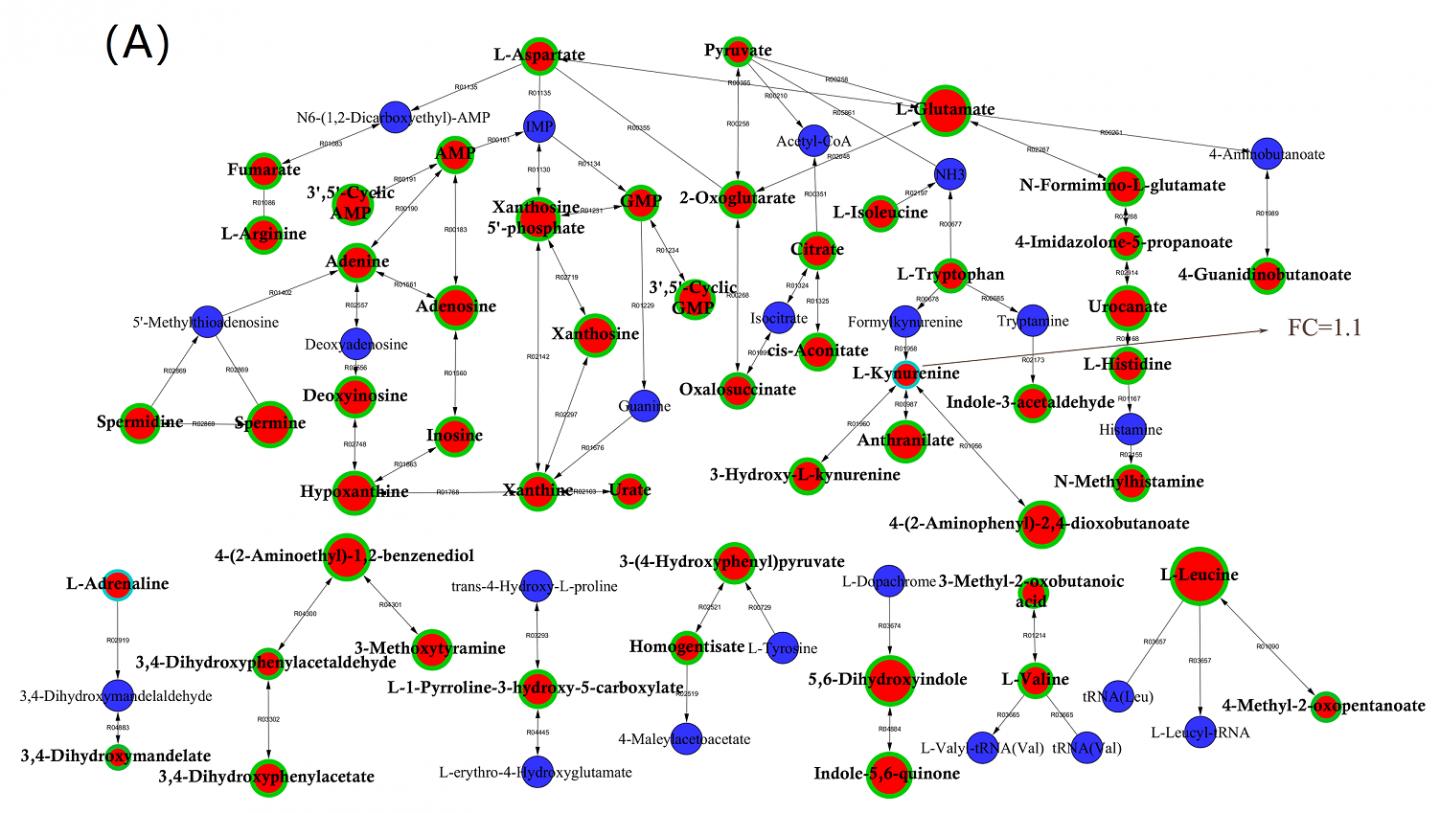
“To our knowledge, this study is the first direct evidence in vivo by rat model that CP can modulate both the gut microbiota and the metabolites by multi-path to alleviate diabetes (Figure 1).” said Prof. Shaoping Nie, the corresponding author for this work. Cyclocarya paliurus polysaccharide treatment increased the beneficial bacteria genus Ruminococcaceae UCG-005 which was reported to be a key genus for protecting against diabetes. “Although previous studies showed that Cyclocarya paliurus polysaccharide lowered serum glucose and produced beneficial effects on T2DM in murine models, the effects of this polysaccharide on diabetic related gut microbiota, metabolites, inflammation, pancreatic injuries and serum hormones had not been wholly investigated”, said Dr. Jielun Hu, the co-first author for this work. Then the amplicon library for the gut microbiota was paired-end sequenced (2 × 250 bp) on an Illumina MiSeq platform, and the UPLC-Triple-TOF/MS analysis of urine samples was carried out according to our established methods. “In our study, the higher abundance of beneficial bacteria (Ruminococcus) due to CP treatment was involved in the amelioration of type 2 diabetes. The change of the beneficial bacteria genus Ruminococcaceae UCG-005 was related to expression of Bax and Bcl-2 in pancreas related to inflammation. Cyclocarya paliurus polysaccharide also could improve 7 metabolism pathways closely with the nutrition metabolisms (amino acids and purine), and energy metabolism (TCA cycle).”, said Prof. Shaoping Nie, the corresponding author for this work.
The mechanistic outcome of this study indicated the specific mechanism for using dietary polysaccharides to alleviate type 2 diabetes through multi-path of gut microbiota and host metabolism, and provides important information for the potential use of the Cyclocarya paliurus polysaccharide for prevention or intervention of type 2 diabetes.
###
The financial support from the National Natural Science Foundation of China for Distinguished Young Scholars (31825020), the Outstanding Science and Technology Innovation Team Project in Jiangxi Province (20165BCB19001), the Project of Academic Leaders of the Major Disciplines in Jiangxi Province (20162BCB22008), the Young Key Project of Natural Science Foundation of Jiangxi Province (20171ACB21013), the Collaborative Project in Agriculture and Food Field between China and Canada (2017ZJGH0102001), and the Research Project of State Key Laboratory of Food Science and Technology (SKLF-ZZA-201611) are gratefully acknowledged.
See the article:
Li, Q., Hu, J., Nie, Q., Chang, X., Fang, Q., Xie, J., Li, H., and Nie, S. (2020). Hypoglycemic mechanism of polysaccharide from Cyclocarya paliurus leaves in type 2 diabetic rats by gut microbiota and host metabolism alteration. Sci China Life Sci 63, https:/
http://engine.
Media Contact
Shaoping, Nie
[email protected]
Related Journal Article
http://dx.