• HOME
  • NEWS
  • EXPLORE
    • CAREER
      • Companies
      • Jobs
    • EVENTS
    • iGEM
      • News
      • Team
    • PHOTOS
    • VIDEO
    • WIKI
  • BLOG
  • COMMUNITY
    • FACEBOOK
    • INSTAGRAM
    • TWITTER
Saturday, December 27, 2025
BIOENGINEER.ORG
No Result
View All Result
  • Login
  • HOME
  • NEWS
  • EXPLORE
    • CAREER
      • Companies
      • Jobs
        • Lecturer
        • PhD Studentship
        • Postdoc
        • Research Assistant
    • EVENTS
    • iGEM
      • News
      • Team
    • PHOTOS
    • VIDEO
    • WIKI
  • BLOG
  • COMMUNITY
    • FACEBOOK
    • INSTAGRAM
    • TWITTER
  • HOME
  • NEWS
  • EXPLORE
    • CAREER
      • Companies
      • Jobs
        • Lecturer
        • PhD Studentship
        • Postdoc
        • Research Assistant
    • EVENTS
    • iGEM
      • News
      • Team
    • PHOTOS
    • VIDEO
    • WIKI
  • BLOG
  • COMMUNITY
    • FACEBOOK
    • INSTAGRAM
    • TWITTER
No Result
View All Result
Bioengineer.org
No Result
View All Result
Home NEWS Science News Biology

No leg to stand on for Australia’s flamingos

Bioengineer by Bioengineer
June 26, 2020
in Biology
Reading Time: 2 mins read
0
IMAGE
Share on FacebookShare on TwitterShare on LinkedinShare on RedditShare on Telegram

Three species thrived until inland lakes dried
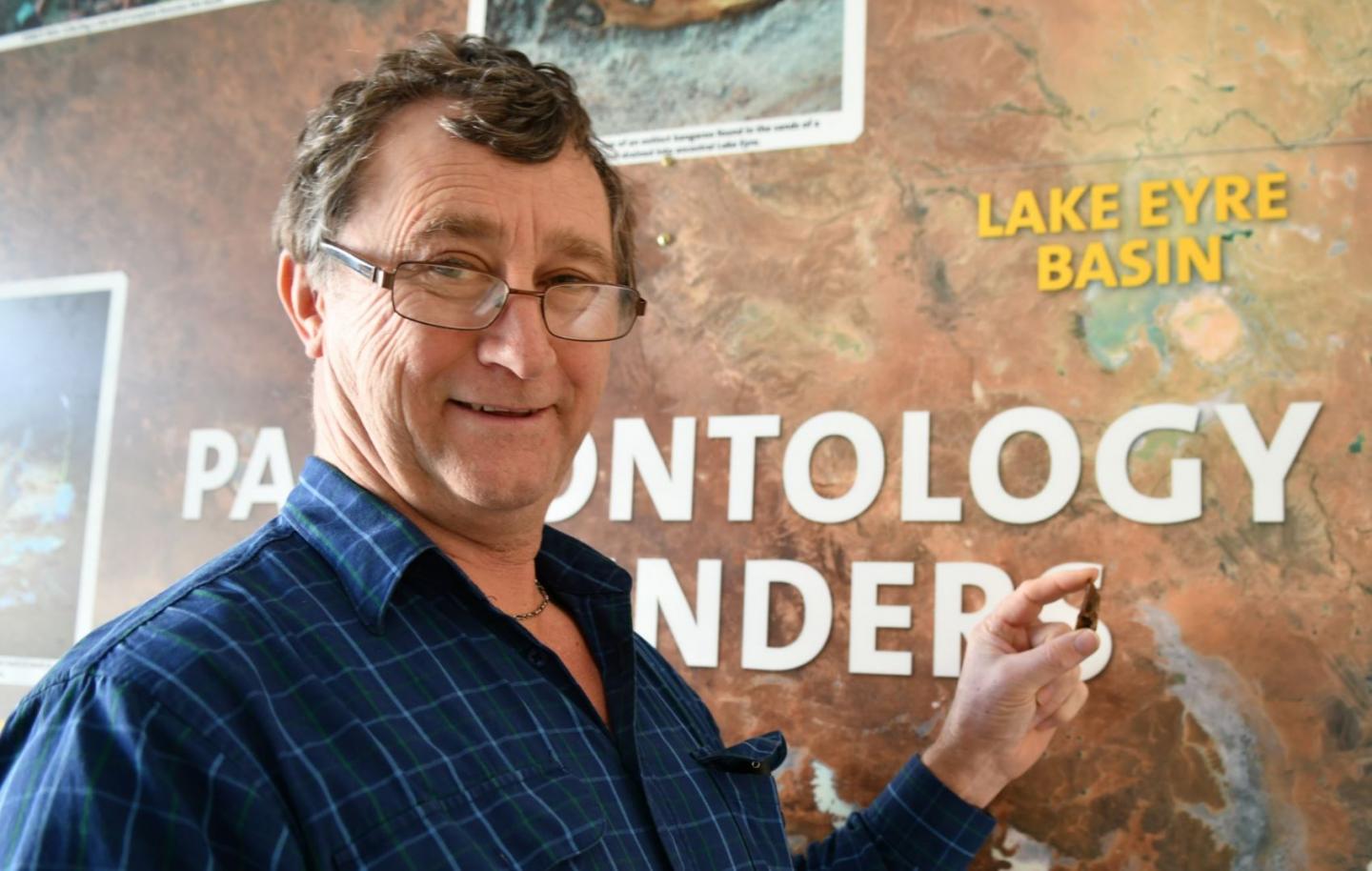
IMAGE

Credit: Flinders University

The sweeping pink salt lakes across Australia’s interior are all that remain of the lush green places three species of pink flamingos once thrived the outback.

Some much larger than flamingos now found in Africa and other parts of the world, Australian flamingos enjoyed a range of freshwater habitats for about 25 million years, Flinders University researchers say.

After several Ice Ages and millions of years, the last Australian flamingos died out about 140,000 years ago as the inland lakes disappeared due to climate change.

“The once verdant interior of the country dried out during the last two Ice Ages,” says Associate Professor Trevor Worthy, an expert in fossil birds of Australia and New Zealand.

“Feeding on tiny crustaceans, which gave them the familiar pink colour, these birds evolved to live in shallow lakes and breed during the seasonal blooms of algae and zooplankton. But when all the lakes dried up, the flamingos were doomed.”

A complete scientific list of all fossil birds in Australia has been published in Transactions of the Royal Society of South Australia, attracting considerable interest from researchers.

While Australia has about 936 species of living birds, the work published by Flinders University Associate Professor Worthy and ARC DECRA bird researcher Dr Jacqueline Nguyen includes nearly 100 bird species known from fossils.

“Flamingos are just some of the bird diversity lost in Australia’s history,” says Associate Professor Worthy, who hopes the list will stimulate future study of ancient extinct birds.

“What we show is that there is much yet to learn about the evolution of Australia’s birds through more work on the fossils described so far.

“It shows we know very little about the evolution of important Australian groups such as raptors, pigeons, parrots and songbirds. In fact, there is much yet to learn about land birds generally,” says Associate Professor Worthy.

Dr Nguyen says: “Our understanding of Australian birds is enriched by the fossil record, which offers a unique window into past bird diversity.”

“This list covers the amazing range of fossil birds that once lived in Australia, such as flamingos and giant penguins, but it also reveals the gaps in our knowledge. We see it as a challenge to fill those gaps.”

###

The article, An annotated checklist of the fossil birds of Australia (June 2020) by Trevor H. Worthy and Jacqueline M. T. Nguyen has been published in Transactions of the Royal Society of South Australia Vol 144, 2020 – Issue 1, Pages 66-108 DOI: 10.1080/03721426.2020.1756560

Media Contact
Trevor Worthy
[email protected]

Related Journal Article

http://dx.doi.org/10.1080/03721426.2020.1756560

Tags: BiologyClimate ChangeEarth ScienceEcology/EnvironmentEvolutionPaleontology
Share12Tweet8Share2ShareShareShare2

Related Posts

Chloroplast Genome of Ecklonia maxima: A Comparative Study

Chloroplast Genome of Ecklonia maxima: A Comparative Study

December 27, 2025
Tissue-Specific Gene Expression Variance in Mice

Tissue-Specific Gene Expression Variance in Mice

December 27, 2025

Sex Differences in Liver Metabolism and Disease

December 27, 2025

SyBValS: Ensuring Accuracy in Biological Pathway Mapping

December 27, 2025
Please login to join discussion

POPULAR NEWS

  • Robotic Waist Tether for Research Into Metabolic Cost of Walking

    NSF funds machine-learning research at UNO and UNL to study energy requirements of walking in older adults

    71 shares
    Share 28 Tweet 18
  • Nurses’ Views on Online Learning: Effects on Performance

    70 shares
    Share 28 Tweet 18
  • Exploring Audiology Accessibility in Johannesburg, South Africa

    51 shares
    Share 20 Tweet 13
  • Unraveling Levofloxacin’s Impact on Brain Function

    55 shares
    Share 22 Tweet 14

About

We bring you the latest biotechnology news from best research centers and universities around the world. Check our website.

Follow us

Recent News

Pilot Study: Haptic VR Simulation for Nursing Students

Unraveling Bisphenol A’s Stroke Toxicity Mechanisms

CAR-T vs. Bispecific Antibodies: A Treatment Showdown

Subscribe to Blog via Email

Success! An email was just sent to confirm your subscription. Please find the email now and click 'Confirm' to start subscribing.

Join 71 other subscribers
  • Contact Us

Bioengineer.org © Copyright 2023 All Rights Reserved.

Welcome Back!

Login to your account below

Forgotten Password?

Retrieve your password

Please enter your username or email address to reset your password.

Log In
No Result
View All Result
  • Homepages
    • Home Page 1
    • Home Page 2
  • News
  • National
  • Business
  • Health
  • Lifestyle
  • Science

Bioengineer.org © Copyright 2023 All Rights Reserved.