• HOME
  • NEWS
  • EXPLORE
    • CAREER
      • Companies
      • Jobs
    • EVENTS
    • iGEM
      • News
      • Team
    • PHOTOS
    • VIDEO
    • WIKI
  • BLOG
  • COMMUNITY
    • FACEBOOK
    • INSTAGRAM
    • TWITTER
Saturday, February 7, 2026
BIOENGINEER.ORG
No Result
View All Result
  • Login
  • HOME
  • NEWS
  • EXPLORE
    • CAREER
      • Companies
      • Jobs
        • Lecturer
        • PhD Studentship
        • Postdoc
        • Research Assistant
    • EVENTS
    • iGEM
      • News
      • Team
    • PHOTOS
    • VIDEO
    • WIKI
  • BLOG
  • COMMUNITY
    • FACEBOOK
    • INSTAGRAM
    • TWITTER
  • HOME
  • NEWS
  • EXPLORE
    • CAREER
      • Companies
      • Jobs
        • Lecturer
        • PhD Studentship
        • Postdoc
        • Research Assistant
    • EVENTS
    • iGEM
      • News
      • Team
    • PHOTOS
    • VIDEO
    • WIKI
  • BLOG
  • COMMUNITY
    • FACEBOOK
    • INSTAGRAM
    • TWITTER
No Result
View All Result
Bioengineer.org
No Result
View All Result
Home NEWS Science News Health

A newly discovered disease may lead to better treatment of cystic fibrosis

Bioengineer by Bioengineer
June 5, 2020
in Health
Reading Time: 3 mins read
0
IMAGE
Share on FacebookShare on TwitterShare on LinkedinShare on RedditShare on Telegram

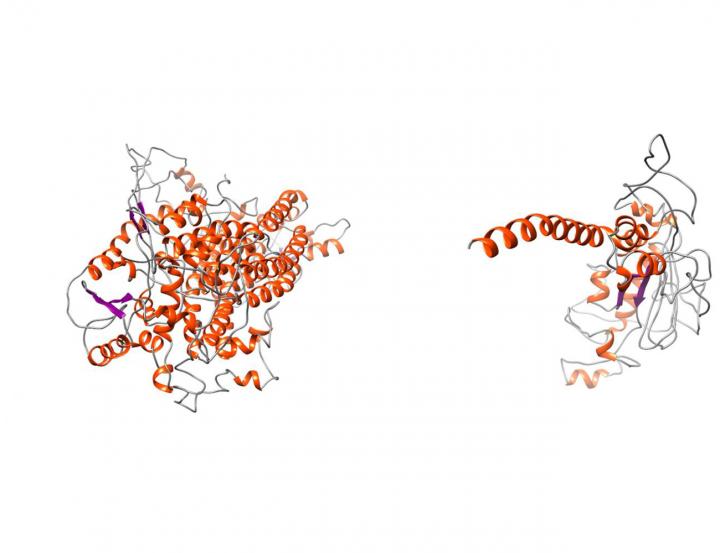
Better understand cystic fibrosis / Study in ‘Journal of Medical Genetics’
IMAGE

Credit: J. Park et al. 2020/ Journal of Medical Genetics

Cystic fibrosis is the most frequent severe inherited disorder worldwide. Every year, hundreds of families are confronted with this diagnosis – and to date, there is no cure for this disease that mainly affects the respiratory system. Besides supportive treatments, a lung transplant is often the only option to save a patient’s live. Researchers of the Universities of Münster and Regensburg have now discovered a novel disease that might lead to a better understanding of cystic fibrosis and new treatment options in the future. The results have been published in the scientific journal Journal of Medical Genetics.

The cause of cystic fibrosis are mutations in the cystic fibrosis transmembrane conductor regulator gene (CFTR). This gene contains the blueprint for a chloride channel on the surface of cells in the body. Normally, this channel mediates the accumulation of salt and fluids on the surface of the airways thereby leading to a continuous cleaning of the airways. Defects in the CFTR channel prevent the transport of chloride ions and thus the humidification of the respiratory tract. As a result, the airways of affected individuals literally get plugged by a thickened, viscous mucus that leads to airway obstruction – patients are at the risk of suffocating.

At the University of Münster, the lab of Prof. Thorsten Marquardt has now discovered a new disease that is caused by defects in another chloride channel, TMEM16A. This channel is also present on the surface of airway cells. In cooperation with the lab of Prof. Karl Kunzelmann of the University of Regensburg, the researchers evaluated the cellular effects of the disorder that is caused by a total loss of TMEM16A function. Surprisingly, they discovered that not only TMEM16A but also CFTR is not functional in these patients. Excitingly, this has the potential to improve the treatment of patients suffering from cystic fibrosis.

“We were astonished that children with TMEM16A deficiency don’t have any respiratory symptoms at all. A loss of CFTR function due to lack of TMEM16A does not lead to clinincal symptoms of cystic fibrosis in these kids”, states Dr. Julien Park, first author and researcher at the Marquardt lab at the Department of General Pediatrics at the University Hospital Münster. Similarly, the group of Prof. Karl Kunzelmann found in a mouse model that a double knock out of CFTR and TMEM16A does not develop lung disease.

Taken together, these results raise an intriguing question: Could the pharmacological inhibition of TMEM16A improve the respiratory symptoms of patients with cystic fibrosis? A significant reduction of mucus production and secretion as a consequence of TMEM16A inhibition has previously been shown under laboratory conditions. The researchers want to study this approach further in the future: “As a next step, we are planning clinical trials to evaluate a treatment of cystic fibrosis with TMEM16A inhibitors”, states Karl Kunzelmann.

###

Media Contact
Thorsten Marquardt
[email protected]

Original Source

https://www.uni-muenster.de/news/view.php?cmdid=11040

Related Journal Article

http://dx.doi.org/10.1136/jmedgenet-2020-106978

Tags: Internal MedicineMedicine/HealthPediatricsPulmonary/Respiratory Medicine
Share12Tweet8Share2ShareShareShare2

Related Posts

Evaluating Pediatric Emergency Care Quality in Ethiopia

February 7, 2026

TPMT Expression Predictions Linked to Azathioprine Side Effects

February 7, 2026

Improving Dementia Care with Enhanced Activity Kits

February 7, 2026

Decoding Prostate Cancer Origins via snFLARE-seq, mxFRIZNGRND

February 7, 2026
Please login to join discussion

POPULAR NEWS

  • Robotic Ureteral Reconstruction: A Novel Approach

    Robotic Ureteral Reconstruction: A Novel Approach

    82 shares
    Share 33 Tweet 21
  • Digital Privacy: Health Data Control in Incarceration

    63 shares
    Share 25 Tweet 16
  • Study Reveals Lipid Accumulation in ME/CFS Cells

    57 shares
    Share 23 Tweet 14
  • Breakthrough in RNA Research Accelerates Medical Innovations Timeline

    53 shares
    Share 21 Tweet 13

About

We bring you the latest biotechnology news from best research centers and universities around the world. Check our website.

Follow us

Recent News

Evaluating Pediatric Emergency Care Quality in Ethiopia

TPMT Expression Predictions Linked to Azathioprine Side Effects

Improving Dementia Care with Enhanced Activity Kits

Subscribe to Blog via Email

Success! An email was just sent to confirm your subscription. Please find the email now and click 'Confirm' to start subscribing.

Join 73 other subscribers
  • Contact Us

Bioengineer.org © Copyright 2023 All Rights Reserved.

Welcome Back!

Login to your account below

Forgotten Password?

Retrieve your password

Please enter your username or email address to reset your password.

Log In
No Result
View All Result
  • Homepages
    • Home Page 1
    • Home Page 2
  • News
  • National
  • Business
  • Health
  • Lifestyle
  • Science

Bioengineer.org © Copyright 2023 All Rights Reserved.