• HOME
  • NEWS
  • EXPLORE
    • CAREER
      • Companies
      • Jobs
    • EVENTS
    • iGEM
      • News
      • Team
    • PHOTOS
    • VIDEO
    • WIKI
  • BLOG
  • COMMUNITY
    • FACEBOOK
    • INSTAGRAM
    • TWITTER
Wednesday, August 19, 2026
BIOENGINEER.ORG
No Result
View All Result
  • Login
  • HOME
  • NEWS
  • EXPLORE
    • CAREER
      • Companies
      • Jobs
        • Lecturer
        • PhD Studentship
        • Postdoc
        • Research Assistant
    • EVENTS
    • iGEM
      • News
      • Team
    • PHOTOS
    • VIDEO
    • WIKI
  • BLOG
  • COMMUNITY
    • FACEBOOK
    • INSTAGRAM
    • TWITTER
  • HOME
  • NEWS
  • EXPLORE
    • CAREER
      • Companies
      • Jobs
        • Lecturer
        • PhD Studentship
        • Postdoc
        • Research Assistant
    • EVENTS
    • iGEM
      • News
      • Team
    • PHOTOS
    • VIDEO
    • WIKI
  • BLOG
  • COMMUNITY
    • FACEBOOK
    • INSTAGRAM
    • TWITTER
No Result
View All Result
Bioengineer.org
No Result
View All Result
Home NEWS Science News Health

UTA teams with UT Southwestern on CPRIT-funded lung cancer project

Bioengineer by Bioengineer
June 5, 2020
in Health
Reading Time: 2 mins read
0
IMAGE
Share on FacebookShare on TwitterShare on LinkedinShare on RedditShare on Telegram

Customized treatment for lung cancer patients
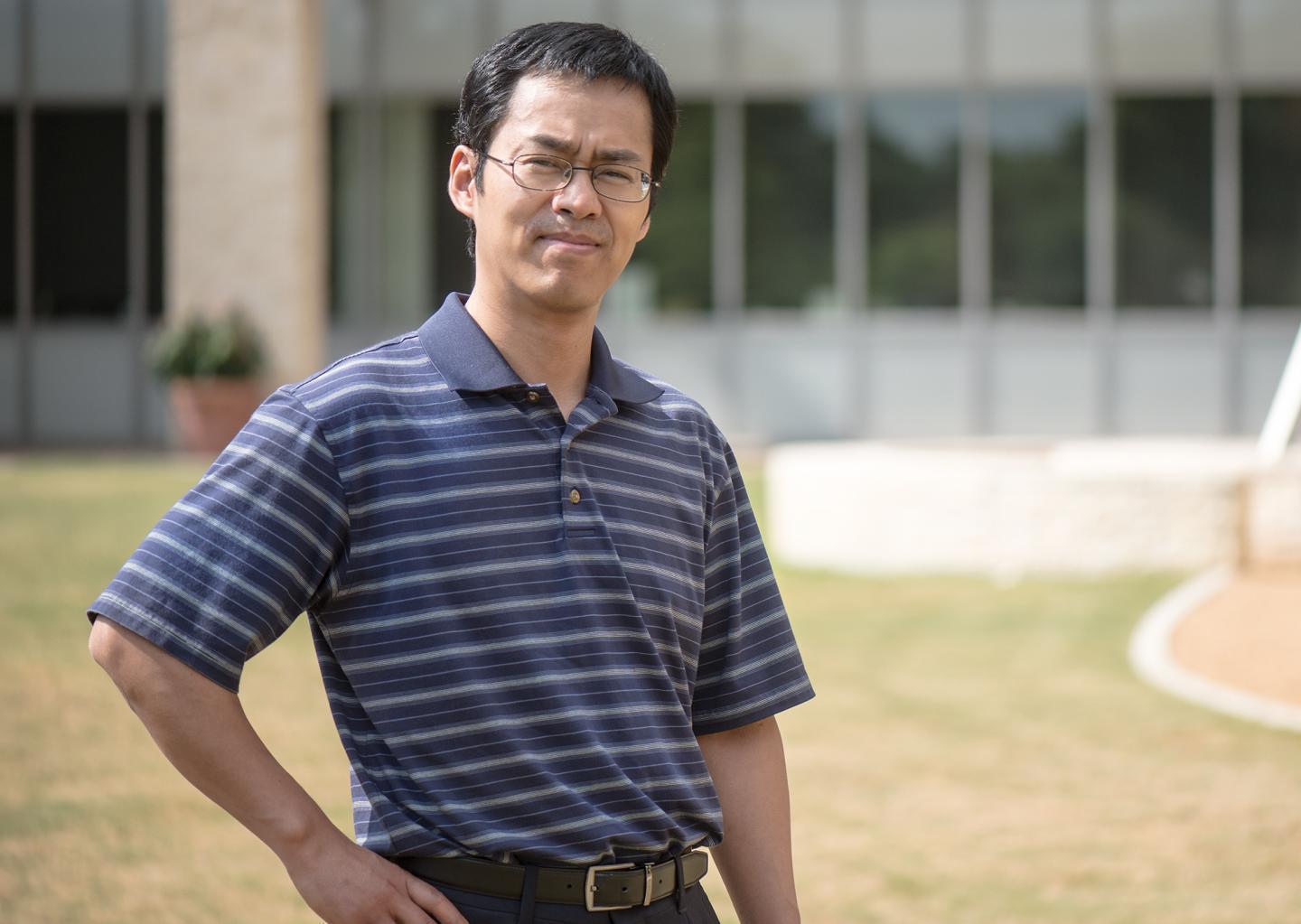
IMAGE

Credit: UT Arlington

A researcher at The University of Texas at Arlington has teamed up with a colleague at UT Southwestern Medical Center on a biopsy image analysis that will help pinpoint care for lung cancer patients.

Junzhou Huang, associate professor of computer science and engineering, is working with UT Southwestern’s Guanghua Xiao on a Cancer Prevention and Research Institute of Texas (CPRIT) project using machine-learning algorithms and computational biology to refine lung cancer treatments.

Huang’s share of the $885,185 grant is $330,649 over three years. His focus is on developing algorithms for predicting clinical outcomes using automated pathological image analyses. Huang provides expertise in the machine learning and image processing sectors. The process uses pattern recognition techniques in the biopsy to understand various cells and patterns.

Xiao, a UT Southwestern professor in the Lyda Hill Department of Bioinformatics, is the lead investigator.

“These algorithms will predict clinical outcomes in lung cancer patients,” Huang said. “The developed algorithms will integrate pathological images with molecular profiling data from those patients for a comprehensive prediction model that will lead to tailored treatments for individual patients. Our ultimate goal is to customize patient treatment.”

Hong Jiang, chair and professor of the Department of Computer Science and Engineering, said Huang’s work is an integral part of UTA’s research portfolio.

“Lung cancer is a leading cause of death in the United States and the world,” Jiang said. “Better prediction methods can lead to better patient care, a more specific care. We’re fortunate to have a partner and sister institution in UT Southwestern. Dr. Huang’s areas of expertise are custom fit for this project.”

CPRIT was established in 2007 to expedite innovation in cancer research and product development, and to enhance access to evidence-based prevention programs throughout the state. Voters authorized the state to issue $3 billion in bonds to fund groundbreaking research and prevention programs and services in Texas.

###

Media Contact
Herb Booth
[email protected]

Original Source

https://www.uta.edu/news/news-releases/2020/06/04/huang-cprit

Tags: Algorithms/ModelsBiomedical/Environmental/Chemical EngineeringBiotechnologycancerComputer ScienceTechnology/Engineering/Computer Science
Share12Tweet8Share2ShareShareShare2

Related Posts

Gut cGAS–STING–IFN signaling promotes obesity by reducing microbiota-derived IAA in male mice

August 19, 2026

Chemigenetic Biosensor Tracks Endogenous Ras Activity in Living Cells During Drug Research

August 19, 2026

Chronic Kidney Disease in Women: Global Burden and Metabolic-Cardiovascular Connections

August 19, 2026

Molecular Self-Assembly Enables High-Throughput DNA Fragment Synthesis from Overlapping Oligonucleotides

August 19, 2026
Please login to join discussion

POPULAR NEWS

  • Microwave Plasmonic Resonators Reach Deep-Subwavelength Exceptional Point to Boost Sensing

    29 shares
    Share 12 Tweet 7
  • Gut cGAS–STING–IFN signaling promotes obesity by reducing microbiota-derived IAA in male mice

    29 shares
    Share 12 Tweet 7
  • Chemigenetic Biosensor Tracks Endogenous Ras Activity in Living Cells During Drug Research

    29 shares
    Share 12 Tweet 7
  • Chronic Kidney Disease in Women: Global Burden and Metabolic-Cardiovascular Connections

    29 shares
    Share 12 Tweet 7

About

We bring you the latest biotechnology news from best research centers and universities around the world. Check our website.

Follow us

Recent News

Microwave Plasmonic Resonators Reach Deep-Subwavelength Exceptional Point to Boost Sensing

Gut cGAS–STING–IFN signaling promotes obesity by reducing microbiota-derived IAA in male mice

Chemigenetic Biosensor Tracks Endogenous Ras Activity in Living Cells During Drug Research

Subscribe to Blog via Email

Enter your email address to subscribe to this blog and receive notifications of new posts by email.

Join 85 other subscribers
  • Contact Us

Bioengineer.org © Copyright 2023 All Rights Reserved.

Welcome Back!

Login to your account below

Forgotten Password?

Retrieve your password

Please enter your username or email address to reset your password.

Log In
No Result
View All Result
  • Homepages
    • Home Page 1
    • Home Page 2
  • News
  • National
  • Business
  • Health
  • Lifestyle
  • Science

Bioengineer.org © Copyright 2023 All Rights Reserved.