• HOME
  • NEWS
  • EXPLORE
    • CAREER
      • Companies
      • Jobs
    • EVENTS
    • iGEM
      • News
      • Team
    • PHOTOS
    • VIDEO
    • WIKI
  • BLOG
  • COMMUNITY
    • FACEBOOK
    • INSTAGRAM
    • TWITTER
Saturday, February 7, 2026
BIOENGINEER.ORG
No Result
View All Result
  • Login
  • HOME
  • NEWS
  • EXPLORE
    • CAREER
      • Companies
      • Jobs
        • Lecturer
        • PhD Studentship
        • Postdoc
        • Research Assistant
    • EVENTS
    • iGEM
      • News
      • Team
    • PHOTOS
    • VIDEO
    • WIKI
  • BLOG
  • COMMUNITY
    • FACEBOOK
    • INSTAGRAM
    • TWITTER
  • HOME
  • NEWS
  • EXPLORE
    • CAREER
      • Companies
      • Jobs
        • Lecturer
        • PhD Studentship
        • Postdoc
        • Research Assistant
    • EVENTS
    • iGEM
      • News
      • Team
    • PHOTOS
    • VIDEO
    • WIKI
  • BLOG
  • COMMUNITY
    • FACEBOOK
    • INSTAGRAM
    • TWITTER
No Result
View All Result
Bioengineer.org
No Result
View All Result
Home NEWS Science News Biology

Study shows today’s atmospheric carbon dioxide levels greater than 23 million-year record

Bioengineer by Bioengineer
June 1, 2020
in Biology
Reading Time: 3 mins read
0
IMAGE
Share on FacebookShare on TwitterShare on LinkedinShare on RedditShare on Telegram

New study published in Geology
IMAGE

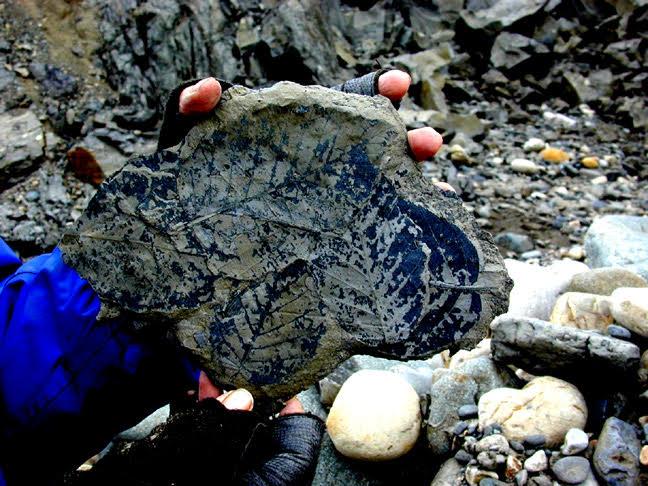
Credit: Photo credit: A. Hope Jahren.

Boulder, Colo., USA: A common message in use to convey the seriousness of climate change to the public is: “Carbon dioxide levels are higher today than they have been for the past one million years!” This new study by Brian Schubert (University of Louisiana at Lafayette) and coauthors Ying Cui and A. Hope Jahren used a novel method to conclude that today’s carbon dioxide (CO2) levels are actually higher than they have been for the past 23 million years.

The team used the fossilized remains of ancient plant tissues to produce a new record of atmospheric CO2 that spans 23 million years of uninterrupted Earth history. They have shown elsewhere that as plants grow, the relative amount of the two stable isotopes of carbon, carbon-12 and carbon-13 changes in response to the amount of CO2 in the atmosphere. This research, published this week in Geology, is a next-level study measuring the relative amount of these carbon isotopes in fossil plant materials and calculating the CO2 concentration of the atmosphere under which the ancient plants grew.

Furthermore, Schubert and colleagues’ new CO2 “timeline” revealed no evidence for any fluctuations in CO2 that might be comparable to the dramatic CO2 increase of the present day, which suggests today’s abrupt greenhouse disruption is unique across recent geologic history.

Another point, important to geological readers, is that because major evolutionary changes over the past 23 million years were not accompanied by large changes in CO2, perhaps ecosystems and temperature might be more sensitive to smaller changes in CO2 than previously thought. As an example: The substantial global warmth of the middle Pliocene (5 to 3 million years ago) and middle Miocene (17 to 15 million years ago), which are sometimes studied as a comparison for current global warming, were associated with only modest increases in CO2.

###

FEATURED ARTICLE

A 23 million-year record of low atmospheric CO2

Ying Cui; Brian A. Schubert; A. Hope Jahren

CONTACT: Brian Schubert, [email protected]

URL: https://pubs.geoscienceworld.org/gsa/geology/article/doi/10.1130/G47681.1/586769/A-23-m-y-record-of-low-atmospheric-CO2

GEOLOGY articles are online at http://geology.geoscienceworld.org/content/early/recent. Representatives of the media may obtain complimentary articles by contacting Kea Giles at the e-mail address above. Please discuss articles of interest with the authors before publishing stories on their work, and please make reference to GEOLOGY in articles published. Non-media requests for articles may be directed to GSA Sales and Service, [email protected].

https://www.geosociety.org

Media Contact
Kea Giles
[email protected]

Original Source

https://www.geosociety.org/GSA/News/pr/2020/20-17.aspx

Tags: Climate ChangeEarth SciencePaleontology
Share12Tweet8Share2ShareShareShare2

Related Posts

Florida Cane Toad: Complex Spread and Selective Evolution

Florida Cane Toad: Complex Spread and Selective Evolution

February 7, 2026
New Study Uncovers Mechanism Behind Burn Pit Particulate Matter–Induced Lung Inflammation

New Study Uncovers Mechanism Behind Burn Pit Particulate Matter–Induced Lung Inflammation

February 6, 2026

DeepBlastoid: Advancing Automated and Efficient Evaluation of Human Blastoids with Deep Learning

February 6, 2026

Navigating the Gut: The Role of Formic Acid in the Microbiome

February 6, 2026
Please login to join discussion

POPULAR NEWS

  • Robotic Ureteral Reconstruction: A Novel Approach

    Robotic Ureteral Reconstruction: A Novel Approach

    82 shares
    Share 33 Tweet 21
  • Digital Privacy: Health Data Control in Incarceration

    63 shares
    Share 25 Tweet 16
  • Study Reveals Lipid Accumulation in ME/CFS Cells

    57 shares
    Share 23 Tweet 14
  • Breakthrough in RNA Research Accelerates Medical Innovations Timeline

    53 shares
    Share 21 Tweet 13

About

We bring you the latest biotechnology news from best research centers and universities around the world. Check our website.

Follow us

Recent News

Menopause Care: Insights from Workforce Review and Consultation

LRRK2R1627P Mutation Boosts Gut Inflammation, α-Synuclein

3D Gut-Brain-Vascular Model Reveals Disease Links

Subscribe to Blog via Email

Enter your email address to subscribe to this blog and receive notifications of new posts by email.

Join 73 other subscribers
  • Contact Us

Bioengineer.org © Copyright 2023 All Rights Reserved.

Welcome Back!

Login to your account below

Forgotten Password?

Retrieve your password

Please enter your username or email address to reset your password.

Log In
No Result
View All Result
  • Homepages
    • Home Page 1
    • Home Page 2
  • News
  • National
  • Business
  • Health
  • Lifestyle
  • Science

Bioengineer.org © Copyright 2023 All Rights Reserved.