Credit: NIAID
Wastewater could be used as a surveillance tool to monitor the invasion, spread and eradication of COVID-19 in communities.
A recent review paper from an international research group involving Hokkaido University and the University of Yamanashi in Japan shows how wastewater could provide a useful tool for monitoring COVID-19 and highlights the further research needed to develop this as a viable method for tracking virus outbreaks. This research was published in Science of the Total Environment.
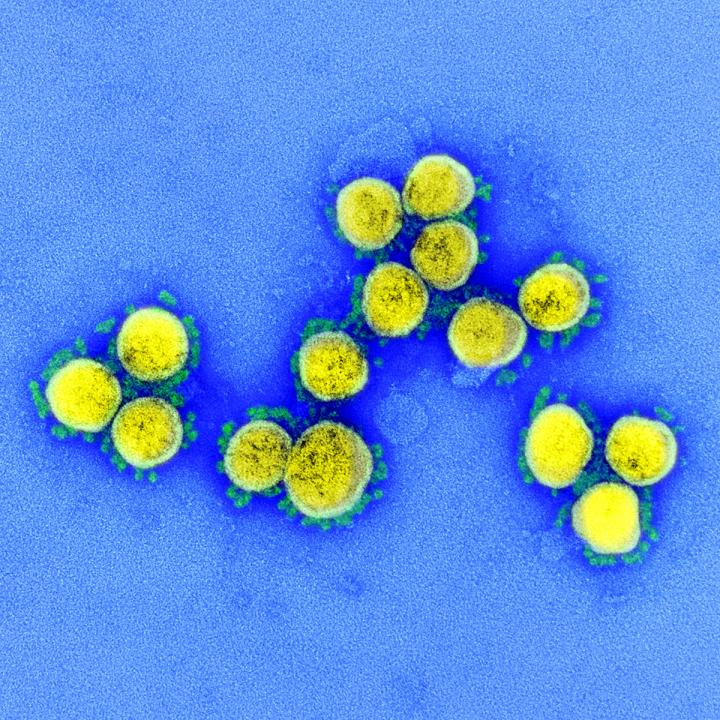
The major transmission routes of SARS-CoV-2, the virus that causes COVID-19, are via inhalation from person to person, aerosol or droplets, and transmission via hands or contaminated materials. However, there is growing evidence of gastrointestinal symptoms such as diarrhea amongst COVID-19 patients, and genetic material from the virus has been found not only in patients’ feces but also in wastewater.
“The presence of SARS-CoV-2 genetic material in wastewater provides an opportunity to monitor the spread of COVID-19 in a community. Although wastewater is not widely used as a disease surveillance tool, it is starting to gain some traction,” says Masaaki Kitajima, an environmental engineer at Hokkaido University.
According to the paper, using wastewater to monitor COVID-19 offers several advantages over other methods, such as clinical testing. It can detect low levels of virus particles and detect the virus when patients are asymptomatic, meaning it could provide an early warning system for new outbreaks or resurgence in communities. It could be especially useful in developing countries where clinical diagnosis and reporting systems may be limited, making it easier to make fair comparisons between countries. Wastewater monitoring could help detect genetic variation between circulating strains in different regions, enabling scientists to monitor the evolution of the virus genome over time. It could also be used to see whether infections have decreased as a result of public health interventions, such as lockdown, social isolation and social distancing.
However, the paper also highlights several challenges for wastewater monitoring. “Although multiple efforts are underway to develop environmental surveillance programs for SARS-CoV-2, there are gaps in our knowledge and further research is needed before we can reliably use wastewater to monitor COVID-19 outbreaks,” says Kitajima.
One major challenge is the absence of a standardized protocol for monitoring SARS-CoV-2 in wastewater. Detecting viral genetic material in wastewater requires a virus concentration step to enable extraction and detection, but there is limited knowledge on how to do this efficiently for SARS-CoV-2. In order to evaluate human health risks, it is also crucial to know how the virus decays in water environments – at present, the stability of the SARS-CoV-2 genome in wastewater is largely unknown. In addition, it is still unknown whether aerosols from wastewater can contain the virus and be a potential health risk for workers at wastewater treatment plants.
“The use of national and international wastewater surveillance campaigns could provide a better understanding of the spread of the COVID-19 and aid the decision making of public health officials, but further research is needed before wastewater monitoring for SARS-CoV-2 can be widely used,” the researchers conclude.
###
Media Contact
Naoki Namba
[email protected]
Original Source
https:/
Related Journal Article
http://dx.