• HOME
  • NEWS
  • EXPLORE
    • CAREER
      • Companies
      • Jobs
    • EVENTS
    • iGEM
      • News
      • Team
    • PHOTOS
    • VIDEO
    • WIKI
  • BLOG
  • COMMUNITY
    • FACEBOOK
    • INSTAGRAM
    • TWITTER
Monday, May 11, 2026
BIOENGINEER.ORG
No Result
View All Result
  • Login
  • HOME
  • NEWS
  • EXPLORE
    • CAREER
      • Companies
      • Jobs
        • Lecturer
        • PhD Studentship
        • Postdoc
        • Research Assistant
    • EVENTS
    • iGEM
      • News
      • Team
    • PHOTOS
    • VIDEO
    • WIKI
  • BLOG
  • COMMUNITY
    • FACEBOOK
    • INSTAGRAM
    • TWITTER
  • HOME
  • NEWS
  • EXPLORE
    • CAREER
      • Companies
      • Jobs
        • Lecturer
        • PhD Studentship
        • Postdoc
        • Research Assistant
    • EVENTS
    • iGEM
      • News
      • Team
    • PHOTOS
    • VIDEO
    • WIKI
  • BLOG
  • COMMUNITY
    • FACEBOOK
    • INSTAGRAM
    • TWITTER
No Result
View All Result
Bioengineer.org
No Result
View All Result
Home NEWS Science News Chemistry

Cancer research breakthrough as DNA behavior is uncovered in 3D models

Bioengineer by Bioengineer
May 11, 2020
in Chemistry
Reading Time: 3 mins read
0
IMAGE
Share on FacebookShare on TwitterShare on LinkedinShare on RedditShare on Telegram

Multidisciplined team lead the first ever epigenetic study in 3D model human cancer cells
IMAGE

Credit: Dr Manel Esteller

Scientists have used 3D models to break down the DNA behavior of cancer cells, in a breakthrough new study which could revolutionize treatment for the disease.

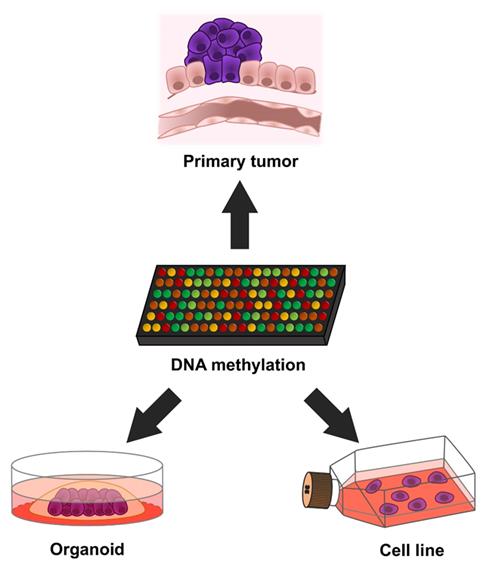
In what is a first for science, a research team led by Dr Manel Esteller, Director of the Josep Carreras Leukaemia Research Institute (IJC), demonstrated how 3D models (known as organoids) can now be used to develop a characterization of the DNA make-up – or the epigenetic fingerprint – of human cancer.

Pubished in Epigenetics, the research validates the use of these 3D samples for cancer research that could deliver new oncology treatments.

Dr Esteller, who is also Chaiman of Genetics at the University of Barcelona, explains: “Frequently, promising cancer therapies fail when applied to patients in the real clinical setting. This occurs despite many of these new treatments demonstrating promising results at the preclinical stage in the lab. One explanation is that many of the tumor models used in early research phases are established cell lines that have been growing for many decades and in two dimension (2D) culture flasks. These cancer cells might not completely resemble the features of real tumors from patients that expand into three dimensions (3D). Very recently, it has been possible to grow cancers in the laboratories but respecting the 3D structure: these models are called ‘organoids’. We know very little about these cells and if they actually mimic the conformation of the tumor within the body, particularly the chemical behaviors (known as modifications) of DNA that are called epigenetics (“beyond the genetics”), such as DNA methylation.

“What our article solves is this unmet biomedical need in the cancer research field: the characterization of the epigenetic fingerprint of human cancer organoids. The developed study shows that these tumor models can be very useful for the biomedical research community and the pharmaceutical companies developing anti-cancer drugs.”

Specifically looking at 25 human cancer organoids, made available from the American Type Culture Collection (ATTC), Dr Esteller, an ICREA Research Professor, states that during their research the team made some interesting findings around the properties of the cancer cells.

“First, we found that every cancer organoid retains the properties of the tissue of origin, so this shows that if the samples were obtained from the surgery of a colon or pancreatic cancer, the organoid closely resembles the original primary tumor.

“Second, we discovered that there is no contamination of normal cells, thus, the malignant pure transformed cells can be analyzed without interferences. And finally, the 3D organoid cancers are closer to the patient tumors than the commonly used 2D cell lines.”

The study will now be used to help form Big Data, as the team’s samples will be shared in easily accessible public databases between researchers to promote more collaborative studies.

“This will enable further data mining to produce new cancer discoveries using different biometric approaches or focusing on particular genes,” explains Dr Esteller.

“And most importantly, the characterized cancer organoids can be readily obtainable from a reliable provider (the ATCC) researchers around the world can use the epigenetic information of these sharable samples to develop their own investigations.”

###

Media Contact
Simon Wesson
[email protected]

Original Source

https://www.tandfonline.com/doi/10.1080/15592294.2020.1762398

Related Journal Article

http://dx.doi.org/10.1080/15592294.2020.1762398

Tags: Biomechanics/BiophysicsBiomedical/Environmental/Chemical EngineeringBiotechnologycancerCell BiologyCritical Care/Emergency MedicineGeneticsMedicine/HealthPharmaceutical SciencePharmaceutical Sciences
Share12Tweet8Share2ShareShareShare2

Related Posts

Miniature Sensor Uses Light to Detect Touch — Chemistry

Miniature Sensor Uses Light to Detect Touch

May 8, 2026
Iron Minerals Determine Whether Dissolved Organic Matter Fuels Microbes or Becomes Long-Term Carbon Storage — Chemistry

Iron Minerals Determine Whether Dissolved Organic Matter Fuels Microbes or Becomes Long-Term Carbon Storage

May 8, 2026

Kate Evans Appointed Associate Lab Director for Biological and Environmental Systems Science at ORNL

May 8, 2026

Advancing Multiscale Modeling and Overcoming Operational Challenges in Autothermal COâ‚‚-to-Methanol Reactors

May 8, 2026
Please login to join discussion

POPULAR NEWS

  • Research Indicates Potential Connection Between Prenatal Medication Exposure and Elevated Autism Risk

    841 shares
    Share 336 Tweet 210
  • New Study Reveals Plants Can Detect the Sound of Rain

    728 shares
    Share 290 Tweet 182
  • Salmonella Haem Blocks Macrophages, Boosts Infection

    62 shares
    Share 25 Tweet 16
  • Breastmilk Balances E. coli and Beneficial Bacteria in Infant Gut Microbiomes

    57 shares
    Share 23 Tweet 14

About

We bring you the latest biotechnology news from best research centers and universities around the world. Check our website.

Follow us

Recent News

Lipid Profiles in Amygdala: Sporadic vs GBA Parkinson’s

Charting a Path to Safer and More Transparent AI in Protein Design

Breast Cancer Cells That Slowly Tick Could Unlock Secrets to Late Relapse

Subscribe to Blog via Email

Enter your email address to subscribe to this blog and receive notifications of new posts by email.

Join 82 other subscribers
  • Contact Us

Bioengineer.org © Copyright 2023 All Rights Reserved.

Welcome Back!

Login to your account below

Forgotten Password?

Retrieve your password

Please enter your username or email address to reset your password.

Log In
No Result
View All Result
  • Homepages
    • Home Page 1
    • Home Page 2
  • News
  • National
  • Business
  • Health
  • Lifestyle
  • Science

Bioengineer.org © Copyright 2023 All Rights Reserved.