• HOME
  • NEWS
  • EXPLORE
    • CAREER
      • Companies
      • Jobs
    • EVENTS
    • iGEM
      • News
      • Team
    • PHOTOS
    • VIDEO
    • WIKI
  • BLOG
  • COMMUNITY
    • FACEBOOK
    • INSTAGRAM
    • TWITTER
Monday, March 30, 2026
BIOENGINEER.ORG
No Result
View All Result
  • Login
  • HOME
  • NEWS
  • EXPLORE
    • CAREER
      • Companies
      • Jobs
        • Lecturer
        • PhD Studentship
        • Postdoc
        • Research Assistant
    • EVENTS
    • iGEM
      • News
      • Team
    • PHOTOS
    • VIDEO
    • WIKI
  • BLOG
  • COMMUNITY
    • FACEBOOK
    • INSTAGRAM
    • TWITTER
  • HOME
  • NEWS
  • EXPLORE
    • CAREER
      • Companies
      • Jobs
        • Lecturer
        • PhD Studentship
        • Postdoc
        • Research Assistant
    • EVENTS
    • iGEM
      • News
      • Team
    • PHOTOS
    • VIDEO
    • WIKI
  • BLOG
  • COMMUNITY
    • FACEBOOK
    • INSTAGRAM
    • TWITTER
No Result
View All Result
Bioengineer.org
No Result
View All Result
Home NEWS Science News Biology

Fishing can disrupt mating systems

Bioengineer by Bioengineer
May 8, 2020
in Biology
Reading Time: 3 mins read
0
IMAGE
Share on FacebookShare on TwitterShare on LinkedinShare on RedditShare on Telegram

IMAGE

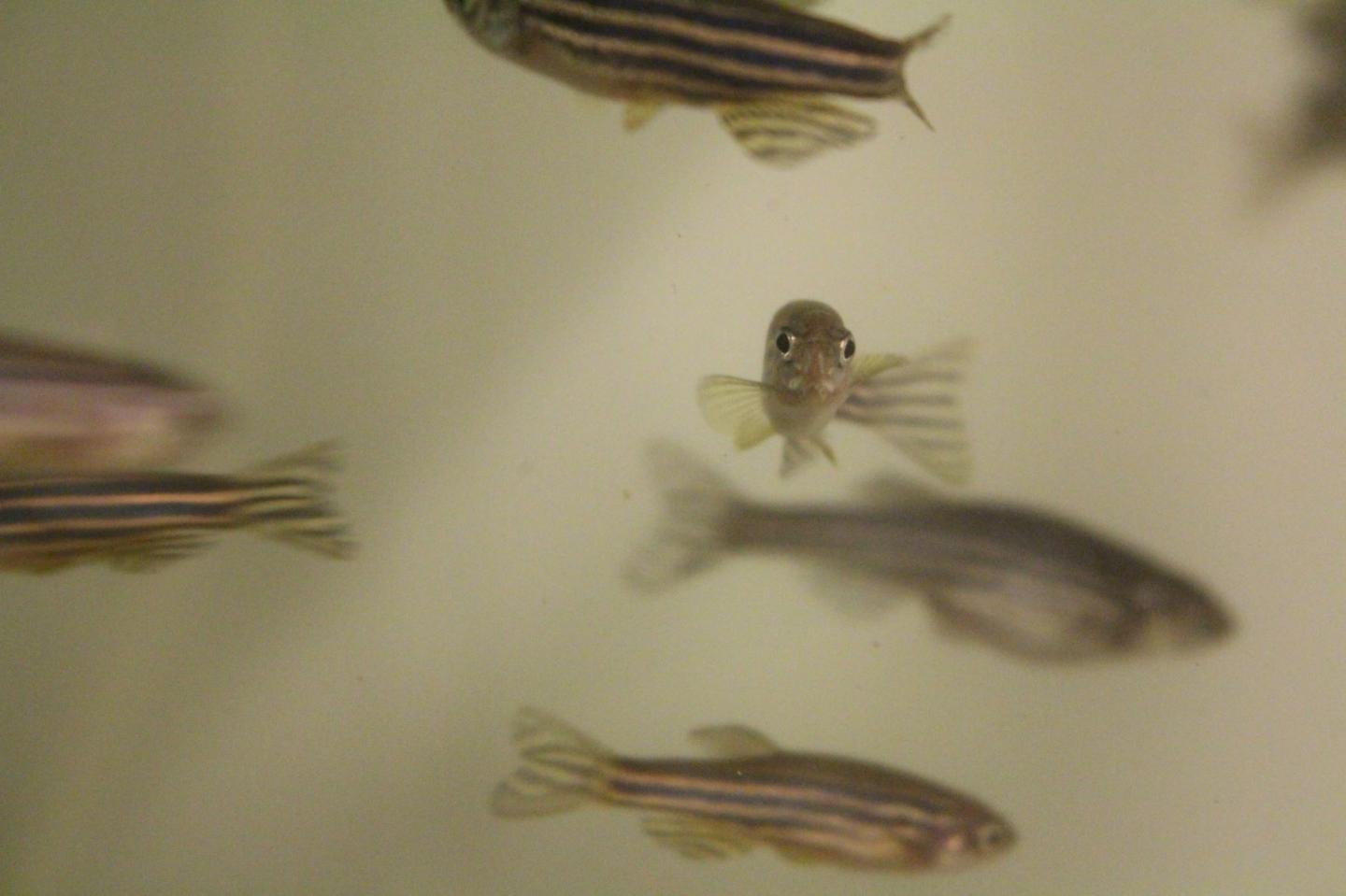
Credit: The University of Jyväskylä/Johanna Hippeläinen

In many fish species body size plays an important role in sexual selection. Large individuals are preferred mating partners because they can enhance offspring survival by providing better quality resources than small individuals. While large females and males are often favored by sexual selection, fishing targets and removes these reproductively superior individuals. Academy Research Fellow Silva Uusi-Heikkilä discusses in her recent literature review the implications fisheries selection might have on sexual selection, individual reproductive success and population viability.

Sexual selection depends on the advantage certain individuals have over other conspecifics. It creates important filters for reproductive success and can consequently increase fitness and population viability. A large male can provide more intensive care for the developing offspring than small male and is therefore preferred by a female. A large female salmon, on the other hand, is more fecund than a small one and attracts multiple males. Sexual selection in fish have been studied using model species, such as guppy, zebrafish and three-spine stickleback.

– Zebrafish female prefers a large male as a mating partner and releases more eggs for him compared to a small male. In some species females also produce higher quality eggs towards large males, says Academy Fellow Silva Uusi-Heikkilä from the University of Jyväskylä.

Fisheries often remove the largest individuals from the population, thus operates in the opposite direction than sexual selection. The effects of fisheries selection on sexual selection has received relatively little attention.

– Studying mate choice in natural conditions can be challenging, says Uusi-Heikkilä.

Therefore, the mating systems of many commercially valuable fish species are poorly known, perhaps excluding cod and salmon. Experimental studies have revealed a great deal about cod mating systems. Salmon, on the other hand, spawn in their home rivers, where it is easier to observe mate choice and mate competition compared to the great depths of the oceans where many commercially important fish species spawn.

Uusi-Heikkilä points out that we should focus more on how size-selective fisheries affect fish mating systems, how persistent these effects are and how this might affect population growth, viability and resilience.

– Large females and males often have higher reproductive success than small ones. Thus, size-selective fisheries may impair population growth. It is tempting to think that sexual selection could buffer the adverse effects of fishing and rescue exploited populations. This is not going to happen, if there are now large females and males left. Overall, if fishing reduces body size variation in a population, sexual selection cannot operate effectively, concludes Uusi-Heikkilä.

###

The study was funded by the Academy of Finland.

Link to the article in Evolutionary Applications: https://doi.org/10.1111/eva.12988

More information:

Academy Fellow Silva Uusi-Heikkilä, [email protected]

Communications officer Tanja Heikkinen, [email protected], tel. 358 50 581 8351

The Faculty of Mathematics and Science:

https://www.jyu.fi/science/en

Twitter: jyscience

Media Contact
Silva Uusi-Heikkilä
[email protected]

Original Source

https://www.jyu.fi/en/current/archive/2020/05/fishing-can-disrupt-mating-systems

Related Journal Article

http://dx.doi.org/10.1111/eva.12988

Tags: BiologyEcology/EnvironmentEvolutionMarine/Freshwater Biology
Share12Tweet8Share2ShareShareShare2

Related Posts

blank

New Brain Wiring Model Could Accelerate Discovery of Medicines

March 30, 2026
Detection of Antimicrobial Resistance Genes in Wastewater Samples from a South African City

Detection of Antimicrobial Resistance Genes in Wastewater Samples from a South African City

March 30, 2026

RNA Decay Controls Antigen Expression in Trypanosomes

March 30, 2026

Conserved Pathway Breaks Down Homarine in Bacteria

March 30, 2026
Please login to join discussion

POPULAR NEWS

  • blank

    Revolutionary AI Model Enhances Precision in Detecting Food Contamination

    96 shares
    Share 38 Tweet 24
  • Imagine a Social Media Feed That Challenges Your Views Instead of Reinforcing Them

    1005 shares
    Share 397 Tweet 248
  • Promising Outcomes from First Clinical Trials of Gene Regulation in Epilepsy

    51 shares
    Share 20 Tweet 13
  • Advancements in EV Battery Technology to Surpass Climate Change-Induced Degradation

    45 shares
    Share 18 Tweet 11

About

We bring you the latest biotechnology news from best research centers and universities around the world. Check our website.

Follow us

Recent News

Scientists Showcase Integrated Stabilized Laser Chips Executing Clock and Quantum Operations on Room-Temperature Trapped Ion Qubits

Discovery of Unanticipated Bacterial Symbiosis in Fungus Responsible for Angular Leaf Spot

U.S. Infant Mortality Trends by Gestational Age

Subscribe to Blog via Email

Enter your email address to subscribe to this blog and receive notifications of new posts by email.

Join 78 other subscribers
  • Contact Us

Bioengineer.org © Copyright 2023 All Rights Reserved.

Welcome Back!

Login to your account below

Forgotten Password?

Retrieve your password

Please enter your username or email address to reset your password.

Log In
No Result
View All Result
  • Homepages
    • Home Page 1
    • Home Page 2
  • News
  • National
  • Business
  • Health
  • Lifestyle
  • Science

Bioengineer.org © Copyright 2023 All Rights Reserved.