

• HOME
  • NEWS
  • EXPLORE
    • CAREER
      • Companies
      • Jobs
    • EVENTS
    • iGEM
      • News
      • Team
    • PHOTOS
    • VIDEO
    • WIKI
  • BLOG
  • COMMUNITY
    • FACEBOOK
    • INSTAGRAM
    • TWITTER
Saturday, February 7, 2026
BIOENGINEER.ORG
No Result
View All Result
  • Login
  • HOME
  • NEWS
  • EXPLORE
    • CAREER
      • Companies
      • Jobs
        • Lecturer
        • PhD Studentship
        • Postdoc
        • Research Assistant
    • EVENTS
    • iGEM
      • News
      • Team
    • PHOTOS
    • VIDEO
    • WIKI
  • BLOG
  • COMMUNITY
    • FACEBOOK
    • INSTAGRAM
    • TWITTER
  • HOME
  • NEWS
  • EXPLORE
    • CAREER
      • Companies
      • Jobs
        • Lecturer
        • PhD Studentship
        • Postdoc
        • Research Assistant
    • EVENTS
    • iGEM
      • News
      • Team
    • PHOTOS
    • VIDEO
    • WIKI
  • BLOG
  • COMMUNITY
    • FACEBOOK
    • INSTAGRAM
    • TWITTER
No Result
View All Result
Bioengineer.org
No Result
View All Result
Home NEWS Science News Biology

A drug proves effective in the treatment of intestinal ischemia-reperfusion in animals

Bioengineer by Bioengineer
May 5, 2020
in Biology
Reading Time: 2 mins read
0
IMAGE
Share on FacebookShare on TwitterShare on LinkedinShare on RedditShare on Telegram

IMAGE

Credit: University of Córdoba

Ischemia is a disease that occurs when tissue stops receiving the vascular supply it needs. Though it can affect several organs, the digestive system is one of the most harmed by the loss of blood circulation, making it one of the most common veterinarian emergencies, especially among certain animals such as dogs and horses.

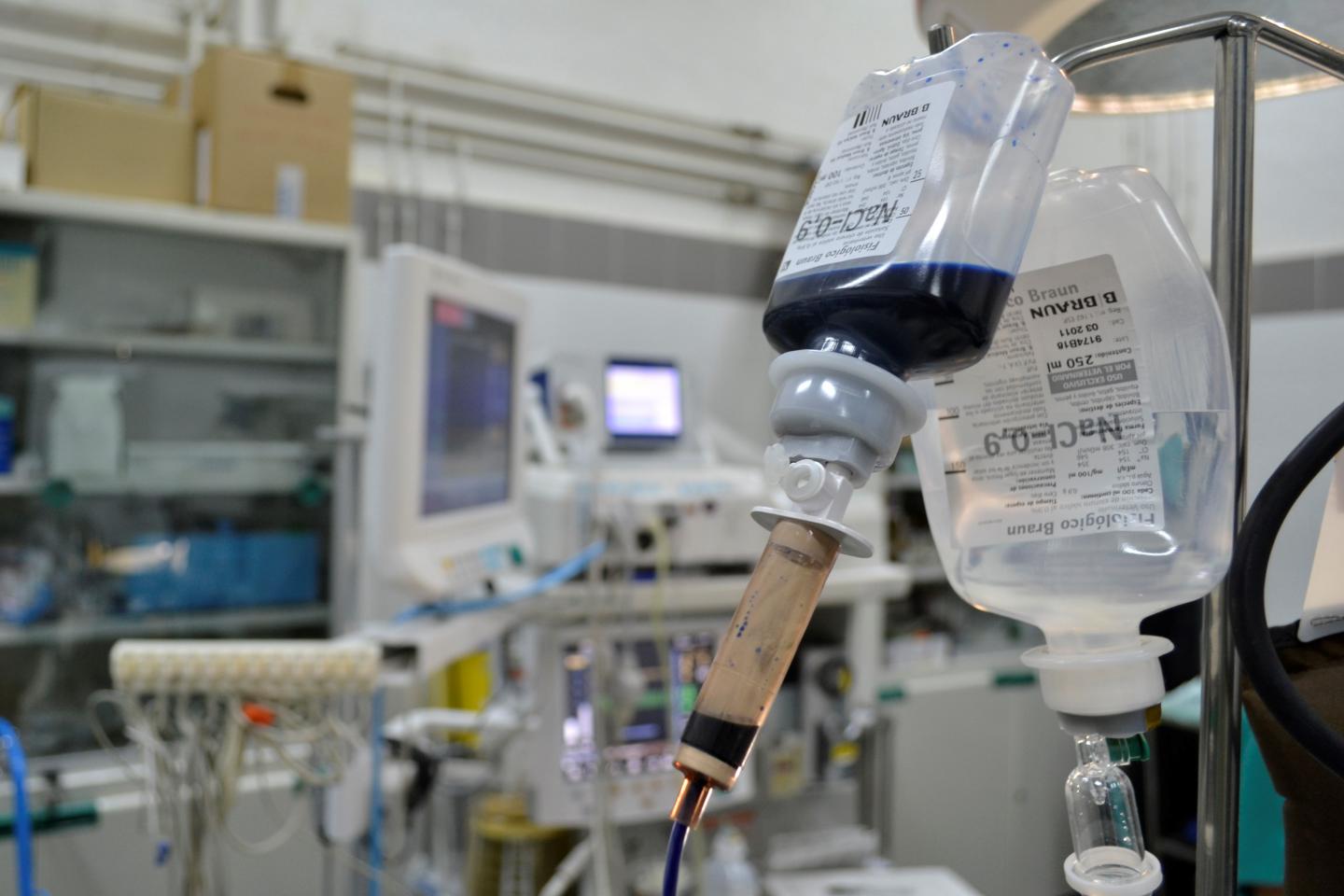
A new study published by the University of Cordoba tested the effectiveness of a drug that reduces side effects from the treatment of this intestinal disease on rabbit models. Its name is methylene blue, an organic coloring and a drug known in the medical field for its usefulness in different therapeutic procedures.

Although the disease can occur for several reasons, “part of the treatment consists of repositioning the affected organ and restoring the blood supply, which is known as reperfusion”, explains the lead author of the study and UCO Department of Animal Medicine and Surgery researcher Juan Morgaz. The problem is that this procedure also has negative consequences. During the time that the cells do not receive nutrients from the blood, they try to get this energy intake by means of other mechanisms. This produces toxic substances that are emitted via the blood stream once the intestine has recovered. As a consequence, cardiac problems and other reactions arise that can cause the animal’s death.

More specifically, in addition to helping restore blood flow, the drug decreases the effects of this chain reaction and has a protective effect on the rest of the organism.

According to the study’s results, after administering the drug, tissue damage, inflammation and degree of necrosis are lower, and heart rate and blood pressure are significantly improved.

Dosage is key

After having analyzed the influence of dosage, the research team concluded that the best strategy for administering the drug is in small doses continually. “This is a medicine with a fast metabolism and the intestine usually takes time to recover after an ischemia, so, a larger dosis does not guarantee a greater protective effect, but rather the exact opposite”, explains the lead author.

The next stage is to assess the effect of the drug on animal models who tend to have this disease more frequently. For instance, certain dog breeds are more susceptible to having rotations in the stomach that stop their blood flow, a disease known as ‘gastric dilatation volvulus’ that could result in death. The aim, as the researcher points out “is to study this medicine and adjust the dosage in these animals in order to prevent complications and increase the survival rate.”

###

Media Contact
Elena Lázaro Real
[email protected]

Related Journal Article

http://dx.doi.org/10.1186/s12917-020-02279-6

Tags: BiologyZoology/Veterinary Science
Share12Tweet8Share2ShareShareShare2

Related Posts

Florida Cane Toad: Complex Spread and Selective Evolution

Florida Cane Toad: Complex Spread and Selective Evolution

February 7, 2026
New Study Uncovers Mechanism Behind Burn Pit Particulate Matter–Induced Lung Inflammation

New Study Uncovers Mechanism Behind Burn Pit Particulate Matter–Induced Lung Inflammation

February 6, 2026

DeepBlastoid: Advancing Automated and Efficient Evaluation of Human Blastoids with Deep Learning

February 6, 2026

Navigating the Gut: The Role of Formic Acid in the Microbiome

February 6, 2026
Please login to join discussion

POPULAR NEWS

  • Robotic Ureteral Reconstruction: A Novel Approach

    Robotic Ureteral Reconstruction: A Novel Approach

    82 shares
    Share 33 Tweet 21
  • Digital Privacy: Health Data Control in Incarceration

    63 shares
    Share 25 Tweet 16
  • Study Reveals Lipid Accumulation in ME/CFS Cells

    57 shares
    Share 23 Tweet 14
  • Breakthrough in RNA Research Accelerates Medical Innovations Timeline

    53 shares
    Share 21 Tweet 13

About

We bring you the latest biotechnology news from best research centers and universities around the world. Check our website.

Follow us

Recent News

Evaluating Pediatric Emergency Care Quality in Ethiopia

TPMT Expression Predictions Linked to Azathioprine Side Effects

Improving Dementia Care with Enhanced Activity Kits

Subscribe to Blog via Email

Success! An email was just sent to confirm your subscription. Please find the email now and click 'Confirm' to start subscribing.

Join 73 other subscribers
  • Contact Us

Bioengineer.org © Copyright 2023 All Rights Reserved.

Welcome Back!

Login to your account below

Forgotten Password?

Retrieve your password

Please enter your username or email address to reset your password.

Log In
No Result
View All Result
  • Homepages
    • Home Page 1
    • Home Page 2
  • News
  • National
  • Business
  • Health
  • Lifestyle
  • Science

Bioengineer.org © Copyright 2023 All Rights Reserved.

