• HOME
  • NEWS
  • EXPLORE
    • CAREER
      • Companies
      • Jobs
    • EVENTS
    • iGEM
      • News
      • Team
    • PHOTOS
    • VIDEO
    • WIKI
  • BLOG
  • COMMUNITY
    • FACEBOOK
    • INSTAGRAM
    • TWITTER
Saturday, February 7, 2026
BIOENGINEER.ORG
No Result
View All Result
  • Login
  • HOME
  • NEWS
  • EXPLORE
    • CAREER
      • Companies
      • Jobs
        • Lecturer
        • PhD Studentship
        • Postdoc
        • Research Assistant
    • EVENTS
    • iGEM
      • News
      • Team
    • PHOTOS
    • VIDEO
    • WIKI
  • BLOG
  • COMMUNITY
    • FACEBOOK
    • INSTAGRAM
    • TWITTER
  • HOME
  • NEWS
  • EXPLORE
    • CAREER
      • Companies
      • Jobs
        • Lecturer
        • PhD Studentship
        • Postdoc
        • Research Assistant
    • EVENTS
    • iGEM
      • News
      • Team
    • PHOTOS
    • VIDEO
    • WIKI
  • BLOG
  • COMMUNITY
    • FACEBOOK
    • INSTAGRAM
    • TWITTER
No Result
View All Result
Bioengineer.org
No Result
View All Result
Home NEWS Science News Health

Sanfilippo C syndrome: New brain cell models to evaluate therapies

Bioengineer by Bioengineer
April 24, 2020
in Health
Reading Time: 2 mins read
0
IMAGE
Share on FacebookShare on TwitterShare on LinkedinShare on RedditShare on Telegram

Fighting degenerative diseases
IMAGE

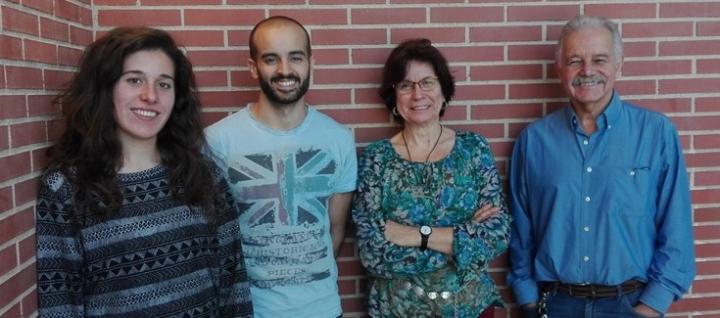
Credit: UNIVERSITY OF BARCELONA – CIBERER

The Sanfilippo syndrome type C is a severe neurodegenerative disease which appearws during the first years of life and for which there is no treatment yet. A recent study, published in Journal of Clinical Medicine, has created brain cell models of neurons and astrocytes that allow researchers to better know the mechanisms of this syndrome and assess potential therapies.

The study was coordinated by a team of the Faculty of Biology of the University of Barcelona and the Institute of Biomedicine of the University of Barcelona (IBUB), the Rare Diseases Networking Biomedical Research Centre (CIBERER), the Research Institute Sant Joan de Déu (IRSJD), in collaboration with a group from Lund University (Sweden). Researchers from the Hospital Clínic de Barcelona took part in the study too.

The Sanfilippo syndrome type C is a lysosomal storage disorder caused by mutations in the HGSNAT gene, which takes part in the degradation of the heparan sulphate (HS), a polysaccharide which accumulates over the course of this pathology. In the study, researchers used the technology of induced pluripotent stem cells (iPSC) -an efficient methodology to study human diseases in cell models- to differentiate in neurons and astrocytes that reproduced the main features of this syndrome.

“The obtained results show the existing differences between the cell types and the importance of having relevant cell models to assess therapeutic approaches for specific diseases”, notes Daniel Grinberg, co-author of the study and researcher at the UB, IBUB, CIBERER and IRSJD.

These iPSC cells -differentiated in cell lines of neurons and astrocytes- have shed light on experimental studies with each of both cell types and even their joint use in culture experiments to better reproduce the human brain.

In particular, the expressed neurons and astrocytes in specific cell markers show there is a differentiation in the cell lineage. The experts have assessed the presence of Sanfilippo C- typical phenotypes in induced neurons that showed a tendency to increase the heparan sulphate and lysosomal storage (cell organelles related to molecule degradation).

In previous studies, the research team had tested a therapeutic approach on the reduction of substrate in non-neural cell models (fibroblasts) using RNA interference. However, the use of this cell type shows obvious limitations, since it does not allow a reproduction of neurological problems of the Sanfilippo C disease. Moreover, treatments that were successfully tested in these fibroblast models could be ineffective in neurons and astrocytes, which proves the importance of research with different cell types.

More recently, the experts created and validated two different iPSC lines with the mutated HGSNAT gene with the original iPSC using the CRISPS/CAS9 technology (Benetó et al., 2019). Using the CRISP/CAS9 technology, researchers generated other isogenic iPSC lines with mutations in the NAGLU gene, the responsible for the Sanfilippo syndrome type B (Benetó et al., 2020).

###

Media Contact
Rosa Martinez
[email protected]

Related Journal Article

http://dx.doi.org/10.3390/jcm9030644

Tags: Disease in the Developing WorldGene TherapyGenesGeneticsMedicine/HealthMetabolism/Metabolic DiseasesneurobiologyNeurochemistryOrthopedic MedicinePharmaceutical Science
Share12Tweet8Share2ShareShareShare2

Related Posts

Evaluating Pediatric Emergency Care Quality in Ethiopia

February 7, 2026

TPMT Expression Predictions Linked to Azathioprine Side Effects

February 7, 2026

Improving Dementia Care with Enhanced Activity Kits

February 7, 2026

Decoding Prostate Cancer Origins via snFLARE-seq, mxFRIZNGRND

February 7, 2026
Please login to join discussion

POPULAR NEWS

  • Robotic Ureteral Reconstruction: A Novel Approach

    Robotic Ureteral Reconstruction: A Novel Approach

    82 shares
    Share 33 Tweet 21
  • Digital Privacy: Health Data Control in Incarceration

    63 shares
    Share 25 Tweet 16
  • Study Reveals Lipid Accumulation in ME/CFS Cells

    57 shares
    Share 23 Tweet 14
  • Breakthrough in RNA Research Accelerates Medical Innovations Timeline

    53 shares
    Share 21 Tweet 13

About

We bring you the latest biotechnology news from best research centers and universities around the world. Check our website.

Follow us

Recent News

Evaluating Pediatric Emergency Care Quality in Ethiopia

TPMT Expression Predictions Linked to Azathioprine Side Effects

Improving Dementia Care with Enhanced Activity Kits

Subscribe to Blog via Email

Success! An email was just sent to confirm your subscription. Please find the email now and click 'Confirm' to start subscribing.

Join 73 other subscribers
  • Contact Us

Bioengineer.org © Copyright 2023 All Rights Reserved.

Welcome Back!

Login to your account below

Forgotten Password?

Retrieve your password

Please enter your username or email address to reset your password.

Log In
No Result
View All Result
  • Homepages
    • Home Page 1
    • Home Page 2
  • News
  • National
  • Business
  • Health
  • Lifestyle
  • Science

Bioengineer.org © Copyright 2023 All Rights Reserved.