• HOME
  • NEWS
  • EXPLORE
    • CAREER
      • Companies
      • Jobs
    • EVENTS
    • iGEM
      • News
      • Team
    • PHOTOS
    • VIDEO
    • WIKI
  • BLOG
  • COMMUNITY
    • FACEBOOK
    • INSTAGRAM
    • TWITTER
Monday, May 18, 2026
BIOENGINEER.ORG
No Result
View All Result
  • Login
  • HOME
  • NEWS
  • EXPLORE
    • CAREER
      • Companies
      • Jobs
        • Lecturer
        • PhD Studentship
        • Postdoc
        • Research Assistant
    • EVENTS
    • iGEM
      • News
      • Team
    • PHOTOS
    • VIDEO
    • WIKI
  • BLOG
  • COMMUNITY
    • FACEBOOK
    • INSTAGRAM
    • TWITTER
  • HOME
  • NEWS
  • EXPLORE
    • CAREER
      • Companies
      • Jobs
        • Lecturer
        • PhD Studentship
        • Postdoc
        • Research Assistant
    • EVENTS
    • iGEM
      • News
      • Team
    • PHOTOS
    • VIDEO
    • WIKI
  • BLOG
  • COMMUNITY
    • FACEBOOK
    • INSTAGRAM
    • TWITTER
No Result
View All Result
Bioengineer.org
No Result
View All Result
Home NEWS Science News Biology

Rising carbon dioxide levels will change marine habitats and fish communities

Bioengineer by Bioengineer
April 20, 2020
in Biology
Reading Time: 2 mins read
0
IMAGE
Share on FacebookShare on TwitterShare on LinkedinShare on RedditShare on Telegram

IMAGE

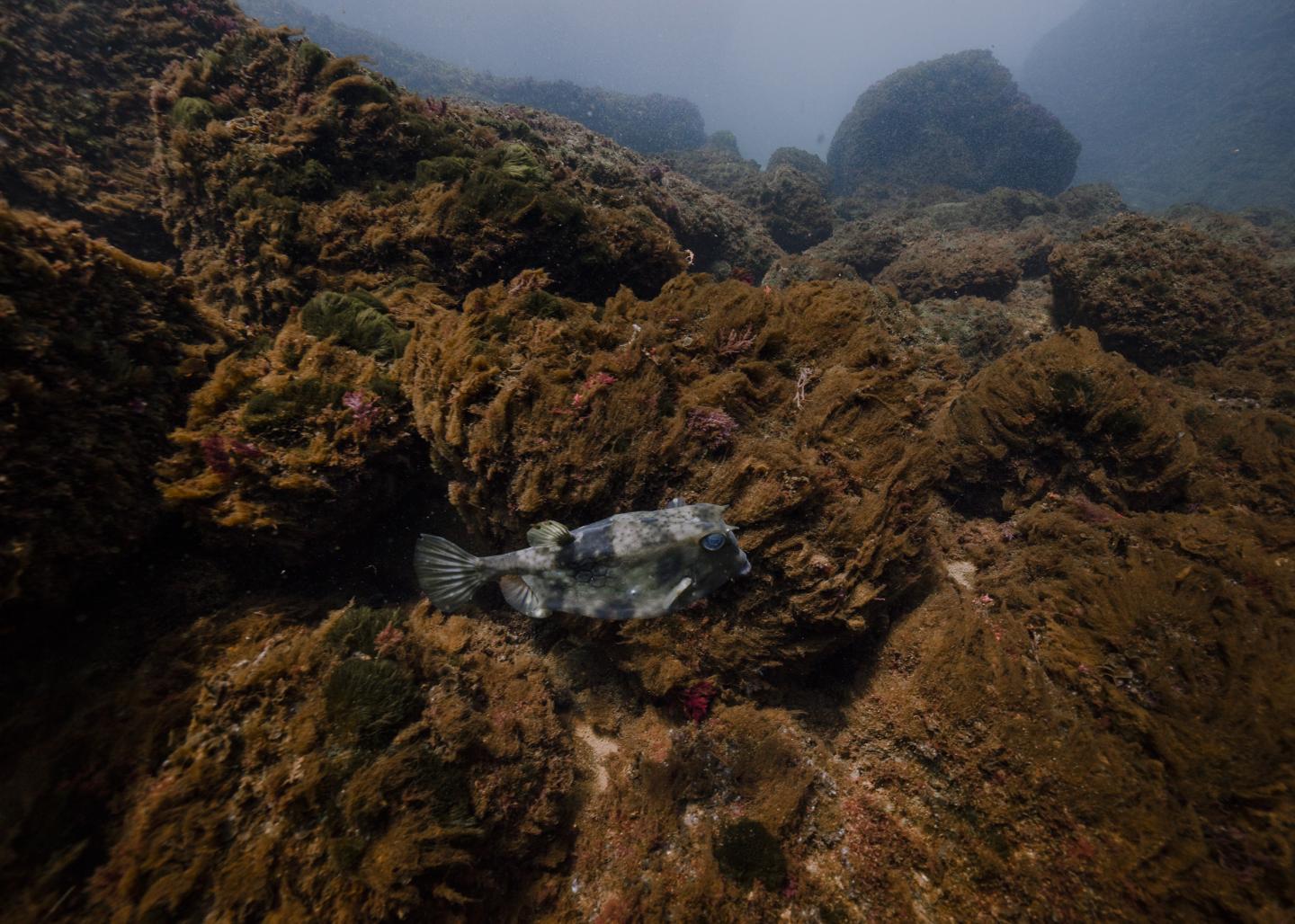
Credit: Nicolas Floc’h

Rising carbon dioxide in the atmosphere and the consequent changes created through ocean acidification will cause severe ecosystem effects, impacting reef-forming habitats and the associated fish, according to new research.

Using submerged natural CO2 seeps off the Japanese Island of Shikine, an international team of marine biologists showed that even slightly higher CO2 concentrations than those existing today may cause profound changes in marine habitats and the fish that rely on them.

Writing in Science of The Total Environment, researchers from the Universities of Palermo (Italy), Tsukuba (Japan) and Plymouth (UK) showed that under elevated dissolved CO2 conditions, habitats are dominated by few ephemeral algae.

In such conditions, species such as complex corals and canopy-forming macroalgae mostly disappeared. This shift from complex reefs to habitats dominated by opportunistic low-profile algae led to a 45% decrease of fish diversity, with a loss of coral-associated species and a rearrangement of feeding behaviour.

Lead author Dr Carlo Cattano, from the University of Palermo, said: “Our findings show that the CO2-induced habitat shifts and food web simplification, which we observed along a volcanic gradient in a climatic transition zone, will impact specialist tropical species favouring temperate generalist fish. Our data also suggests that near-future projected ocean acidification levels will oppose the ongoing poleward expansion of corals (and consequently of reef-associated fish) due to global warming.”

“Submerged volcanic degassing systems may provide realistic insights into future ocean conditions,” added Dr Sylvain Agostini, from Shimoda Marine Research Center. “Studying organism and ecosystem responses off submerged CO2 seeps may help us to understand how the oceans will look in the future if anthropogenic CO2 emissions won’t be reduced.”

In addition to the new findings, the study also reinforces previous research which has demonstrated the ecological effects of habitat changes due to ongoing ocean acidification.

This has shown that decreased seawater pH may impair calcification and accelerate dissolution for many calcifying habitat-formers, while rising CO2 concentrations may favour non-calcifying autotrophs enhancing the primary production and carbon fixation rates.

As a result, there will be losers and winners under increasingly acidified conditions, and fish species that rely on specific resources during their different life stages could disappear. This would lead to the composition of fish communities changing in the near future with potential severe consequences for marine ecosystem functioning and the goods and services they provide to humans.

Jason Hall-Spencer, Professor of Marine Biology at the University of Plymouth, said: “Our work at underwater volcanic seeps shows that coastal fish are strongly affected by ocean acidification, with far fewer varieties of fish able to cope with the effects of carbon dioxide in the water. This underlines the importance of reducing greenhouse gas emissions to safeguard ocean resources for the future.”

###

Media Contact
Alan Williams
[email protected]

Original Source

https://www.plymouth.ac.uk/news/rising-carbon-dioxide-levels-will-change-marine-habitats-and-fish-communities

Related Journal Article

http://dx.doi.org/10.1016/j.scitotenv.2020.138501

Tags: BiodiversityBiologyClimate ChangeEcology/EnvironmentMarine/Freshwater BiologyPollution/Remediation
Share12Tweet8Share2ShareShareShare2

Related Posts

In-Depth Analysis Reveals Advances in Multiple Sclerosis Research Models — Biology

In-Depth Analysis Reveals Advances in Multiple Sclerosis Research Models

May 18, 2026
Uncovering C. elegans Immunity via Genetic Screens — Biology

Uncovering C. elegans Immunity via Genetic Screens

May 16, 2026

Single mother must adapt swiftly — the survival of her colony depends on it

May 15, 2026

Why Are Nearly Everyone Right-Handed? It Might Be Linked to How We Learned to Walk

May 15, 2026
Please login to join discussion

POPULAR NEWS

  • Research Indicates Potential Connection Between Prenatal Medication Exposure and Elevated Autism Risk

    844 shares
    Share 338 Tweet 211
  • New Study Reveals Plants Can Detect the Sound of Rain

    731 shares
    Share 292 Tweet 182
  • Salmonella Haem Blocks Macrophages, Boosts Infection

    62 shares
    Share 25 Tweet 16
  • Breastmilk Balances E. coli and Beneficial Bacteria in Infant Gut Microbiomes

    58 shares
    Share 23 Tweet 15

About

We bring you the latest biotechnology news from best research centers and universities around the world. Check our website.

Follow us

Recent News

Rapid Genomic Sequencing in Critically Ill Infants: Challenges and Prospects

Elevated Epithelial Alarmins and Food Challenge Results

Brain’s Garbage Collectors Stop Working in Fatal Disease

Subscribe to Blog via Email

Enter your email address to subscribe to this blog and receive notifications of new posts by email.

Join 82 other subscribers
  • Contact Us

Bioengineer.org © Copyright 2023 All Rights Reserved.

Welcome Back!

Login to your account below

Forgotten Password?

Retrieve your password

Please enter your username or email address to reset your password.

Log In
No Result
View All Result
  • Homepages
    • Home Page 1
    • Home Page 2
  • News
  • National
  • Business
  • Health
  • Lifestyle
  • Science

Bioengineer.org © Copyright 2023 All Rights Reserved.