• HOME
  • NEWS
  • EXPLORE
    • CAREER
      • Companies
      • Jobs
    • EVENTS
    • iGEM
      • News
      • Team
    • PHOTOS
    • VIDEO
    • WIKI
  • BLOG
  • COMMUNITY
    • FACEBOOK
    • INSTAGRAM
    • TWITTER
Sunday, June 28, 2026
BIOENGINEER.ORG
No Result
View All Result
  • Login
  • HOME
  • NEWS
  • EXPLORE
    • CAREER
      • Companies
      • Jobs
        • Lecturer
        • PhD Studentship
        • Postdoc
        • Research Assistant
    • EVENTS
    • iGEM
      • News
      • Team
    • PHOTOS
    • VIDEO
    • WIKI
  • BLOG
  • COMMUNITY
    • FACEBOOK
    • INSTAGRAM
    • TWITTER
  • HOME
  • NEWS
  • EXPLORE
    • CAREER
      • Companies
      • Jobs
        • Lecturer
        • PhD Studentship
        • Postdoc
        • Research Assistant
    • EVENTS
    • iGEM
      • News
      • Team
    • PHOTOS
    • VIDEO
    • WIKI
  • BLOG
  • COMMUNITY
    • FACEBOOK
    • INSTAGRAM
    • TWITTER
No Result
View All Result
Bioengineer.org
No Result
View All Result
Home NEWS Science News Health

Chemist developing 3D simulations of coronavirus spike proteins

Bioengineer by Bioengineer
April 14, 2020
in Health
Reading Time: 2 mins read
0
IMAGE
Share on FacebookShare on TwitterShare on LinkedinShare on RedditShare on Telegram

Research will show how the virus binds to human cell receptors and will aid the development of vaccines and therapeutics
IMAGE

Credit: University of Arkansas

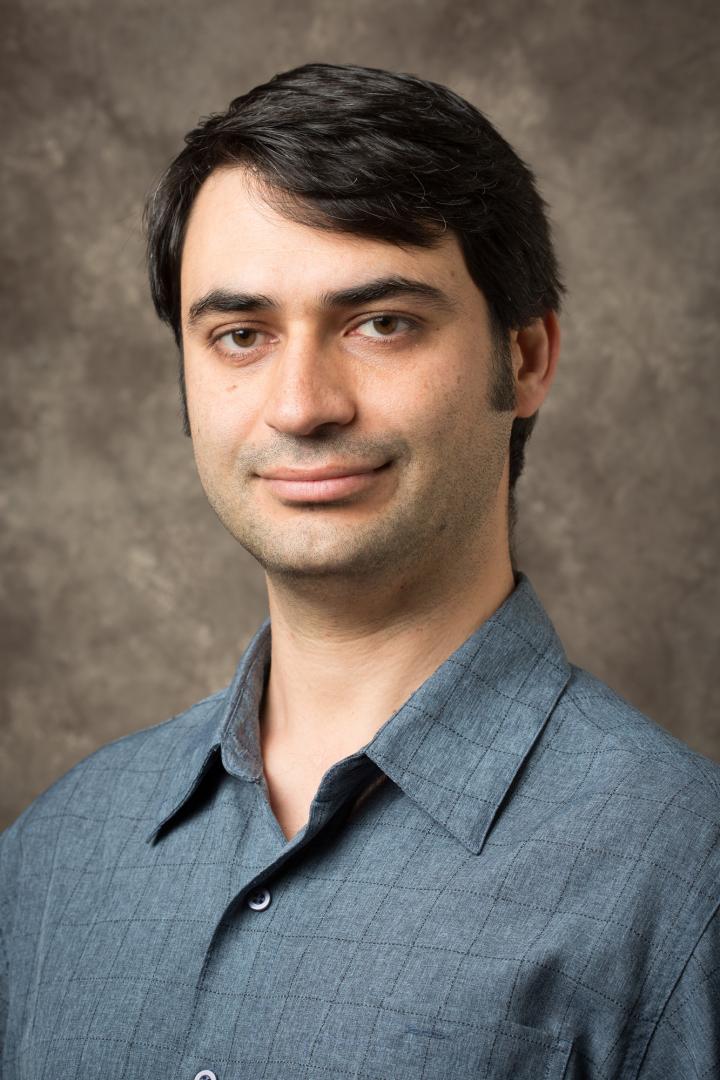
Computational chemist Mahmoud Moradi will develop enhanced, 3D simulations of the molecular dynamics of coronavirus spike glycoproteins to gain better understanding of how the virus binds to human cells.

Mapping how these proteins undergo conformational changes to bind to host cell receptors is critical to the development of coronavirus vaccines and therapeutics.
Simulations are especially important because a framework for drug design will require dynamic, three-dimensional visualizations of cell structures and behavior, rather than a static picture.

“As with other viruses, a crucial step in the coronavirus infection process is viral entry,” said Moradi, assistant professor in the J. William Fulbright College of Arts and Sciences. “With coronaviruses, we know these spike glycoproteins mediate entry into the human cell. Both SARS-CoV-2, the cause of COVID-19, and SARS-CoV, the cause of the 2002-2003 SARS epidemic, have spike proteins that attach to the same receptor in human cells.”

Moradi’s work is part of the COVID-19 High Performance Computing Consortium, a collaboration of government, industry and academic partners focused on computing resources for COVID-19 research. Spearheaded by the White House Office of Science and Technology Policy, the U.S. Department of Energy and IBM, the consortium volunteers free compute time and resources on some of the world’s most powerful supercomputers.

To perform the simulations, Moradi has been granted access to Frontera, a National Science Foundation-sponsored supercomputer housed at the University of Texas at Austin. Frontera is the largest supercomputer on any university campus.

Moradi’s project benefits from several recent, high-resolution 3D models of the coronavirus spike proteins. These models can be used as initial structures to begin simulations that will enable analysis of the detailed mechanisms of the proteins and their behavior upon viral entry. Enhanced, detailed simulations of such molecular dynamics will provide a complete picture of proteins’ structural changes, as well as how they bind to angiotensin-converting enzyme 2, the specific human cell receptor.

Moradi’s research lies at the intersection of biology, physics, chemistry, mathematics, statistics and computer science. His biomolecular simulations and computational theories explain how proteins, the workhorse molecules of cells, function at the molecular level. His work improves geometric models to describe how proteins change their shape and how these changes affect a protein’s behavior. In February, he received a $650,000 National Science Foundation Faculty Early Career Development award for this work.

###

Media Contact
Matt McGowan
[email protected]

Original Source

https://researchfrontiers.uark.edu/chemist-developing-3d-simulations-of-coronavirus-spike-proteins/

Tags: BacteriologyCell BiologyChemistry/Physics/Materials SciencesDisease in the Developing WorldEpidemiologyInfectious/Emerging DiseasesMicrobiologyMolecular BiologyVirology
Share12Tweet8Share2ShareShareShare2

Related Posts

Tracking Lanthanide-Labeled Microplastics in Plants

June 25, 2026

Neural Design Enables Zero-Shot Drug-Binding Proteins

June 25, 2026

Genomic Insights into Human Skin Fungi Diversity

June 25, 2026

Chiral Laser Gyroscopes Surpass Lock-In Limit

June 25, 2026
Please login to join discussion

POPULAR NEWS

  • Saying Goodbye to PGY-6: Pediatric Fellowship Realities

    103 shares
    Share 41 Tweet 26
  • Multi-Hospital Study Reveals Long Covid Burden Is Twice as High as Current Estimates

    92 shares
    Share 36 Tweet 23
  • Detection of EDCs in Breast Milk and Infant Urine Up to Six Months Highlights Early Exposure Risks

    77 shares
    Share 31 Tweet 19
  • New Drug Candidate Developed at McMaster Shows Potential for Treating Brain Cancer

    58 shares
    Share 23 Tweet 15

About

We bring you the latest biotechnology news from best research centers and universities around the world. Check our website.

Follow us

Recent News

Tracking Lanthanide-Labeled Microplastics in Plants

POSTECH Researchers Slash Cost of Reconstituted Cell-Free Systems by 95%

AI and Physics Collaborate to Design Advanced Hydrogen Storage Materials

Subscribe to Blog via Email

Success! An email was just sent to confirm your subscription. Please find the email now and click 'Confirm' to start subscribing.

Join 82 other subscribers
  • Contact Us

Bioengineer.org © Copyright 2023 All Rights Reserved.

Welcome Back!

Login to your account below

Forgotten Password?

Retrieve your password

Please enter your username or email address to reset your password.

Log In
No Result
View All Result
  • Homepages
    • Home Page 1
    • Home Page 2
  • News
  • National
  • Business
  • Health
  • Lifestyle
  • Science

Bioengineer.org © Copyright 2023 All Rights Reserved.