• HOME
  • NEWS
  • EXPLORE
    • CAREER
      • Companies
      • Jobs
    • EVENTS
    • iGEM
      • News
      • Team
    • PHOTOS
    • VIDEO
    • WIKI
  • BLOG
  • COMMUNITY
    • FACEBOOK
    • INSTAGRAM
    • TWITTER
Monday, June 29, 2026
BIOENGINEER.ORG
No Result
View All Result
  • Login
  • HOME
  • NEWS
  • EXPLORE
    • CAREER
      • Companies
      • Jobs
        • Lecturer
        • PhD Studentship
        • Postdoc
        • Research Assistant
    • EVENTS
    • iGEM
      • News
      • Team
    • PHOTOS
    • VIDEO
    • WIKI
  • BLOG
  • COMMUNITY
    • FACEBOOK
    • INSTAGRAM
    • TWITTER
  • HOME
  • NEWS
  • EXPLORE
    • CAREER
      • Companies
      • Jobs
        • Lecturer
        • PhD Studentship
        • Postdoc
        • Research Assistant
    • EVENTS
    • iGEM
      • News
      • Team
    • PHOTOS
    • VIDEO
    • WIKI
  • BLOG
  • COMMUNITY
    • FACEBOOK
    • INSTAGRAM
    • TWITTER
No Result
View All Result
Bioengineer.org
No Result
View All Result
Home NEWS Science News Biology

Climate change may be making migration harder by shortening nightingales’ wings

Bioengineer by Bioengineer
April 1, 2020
in Biology
Reading Time: 2 mins read
0
IMAGE
Share on FacebookShare on TwitterShare on LinkedinShare on RedditShare on Telegram

IMAGE

Credit: Javier de la Puente

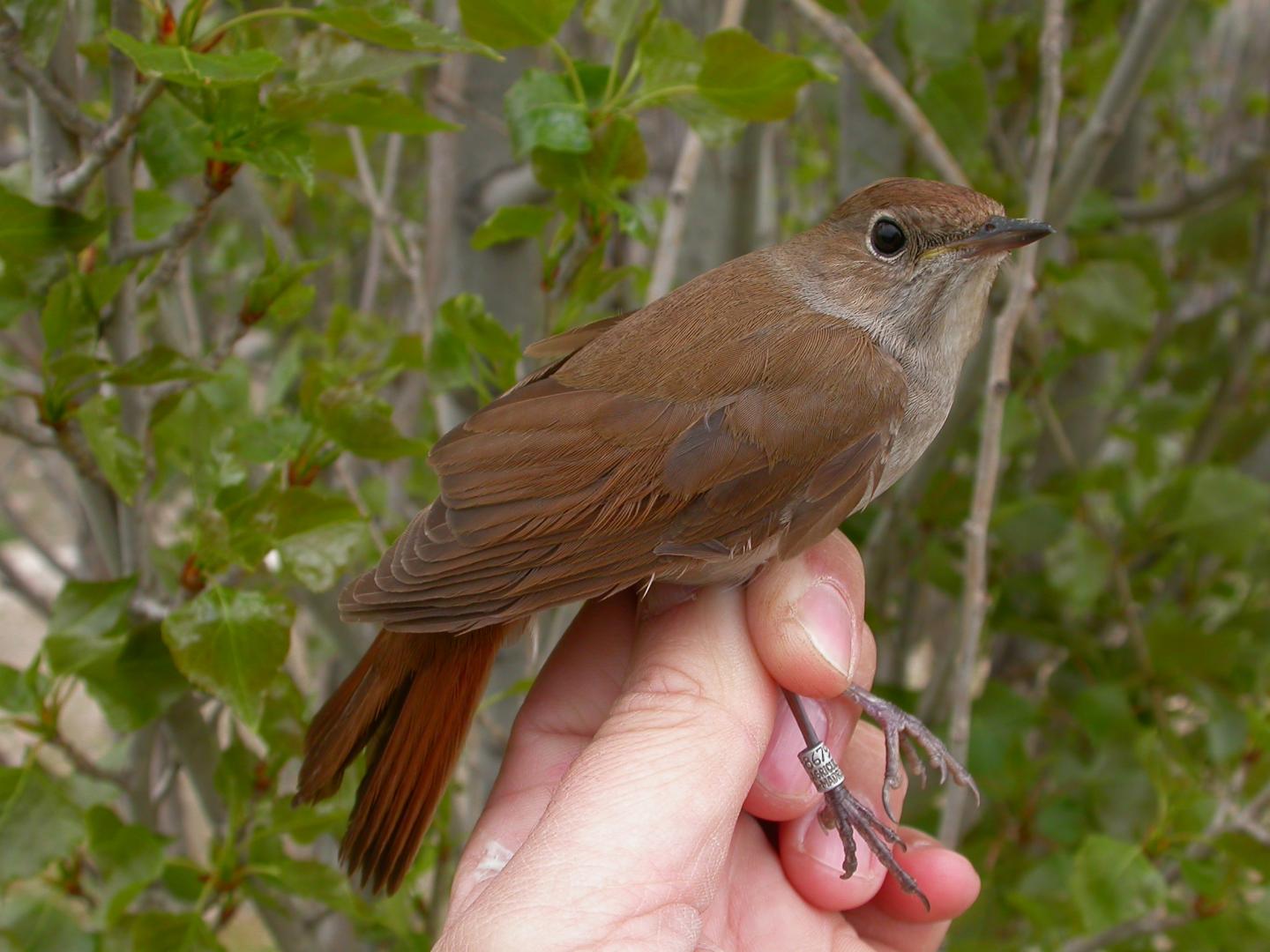
The Common Nightingale, known for its beautiful song, breeds in Europe and parts of Asia and migrates to sub-Saharan Africa every winter. A new study published in The Auk: Ornithological Advances suggests that natural selection driven by climate change is causing these iconic birds to evolve shorter wings, which might make them less likely to survive their annual migration.

Complutense University of Madrid’s Carolina Remacha and Javier PĂ©rez-Tris and their colleagues analyzed twenty years of data on wing shape variation and survival in two populations of nightingales from central Spain. They found that nightingales’ average wing length relative to their body size has decreased over the past two decades, becoming less optimal for migration. Shorter-winged birds were less likely to return to their breeding grounds after their first round-trip to Africa. But if this change in wing length is negatively affecting survival, what is driving it?

The “migratory gene package” hypothesis predicts that a suite of adaptations related to migration — including a long wingspan as well as a higher resting metabolic rate, larger clutch size, and shorter lifespan — may all be controlled by a set of genes that are linked so that selective pressures on one trait also affect the others. In recent decades, the timing of spring has shifted in central Spain and summer droughts have become longer and more intense, leaving nightingales with a shorter window in which to raise their young. This means the most successful birds may be those that lay smaller clutches of eggs, giving them fewer young to care for. And if natural selection is favoring smaller clutches, it may simultaneously push nightingales away from all of the linked traits in the “migratory gene package.”

Natural selection on clutch size that inadvertently leads to shorter wings and, therefore, reduced survival is an example of “maladaptation,” where organisms’ responses to changing conditions end up being harmful instead of helpful. “There is much evidence that climate change is having an effect on migratory birds, changing their arrival and laying dates and their physical features over the last few decades,” says lead author Carolina Remacha. “If we are to fully understand how bird populations adapt to new environments in order to help them tackle the challenges of a rapidly changing world, it is important to call attention to the potential problems of maladaptive change.”

###

“Climate change and maladaptive wing shortening in a long-distance migratory bird” will be available April 1, 2020, at https://academic.oup.com/auk/article-lookup/doi/10.1093/auk/ukaa012.

About the journal: The Auk: Ornithological Advances is a peer-reviewed, international journal of ornithology published by the American Ornithological Society. The Auk commenced publication in 1884 and in 2009 was honored as one of the 100 most influential journals of biology and medicine over the past 100 years.

Media Contact
Rebecca Heisman
[email protected]

Tags: BiodiversityBiologyClimate ChangeEcology/EnvironmentEvolutionGeneticsPopulation BiologyZoology/Veterinary Science
Share12Tweet8Share2ShareShareShare2

Related Posts

Natural Hallucinogens: Evolution’s Ecological Tools, Not Mere Chemical Byproducts

June 25, 2026

This Famous Butterfly Revealed: Three Distinct Species Hidden in One

June 25, 2026

Scientists Attack Soybean Cyst Nematode by Starving Its Food Source

June 25, 2026

Decoding the Secret Code of a Crucial Immune Sensor

June 24, 2026
Please login to join discussion

POPULAR NEWS

  • Saying Goodbye to PGY-6: Pediatric Fellowship Realities

    103 shares
    Share 41 Tweet 26
  • Multi-Hospital Study Reveals Long Covid Burden Is Twice as High as Current Estimates

    92 shares
    Share 36 Tweet 23
  • Detection of EDCs in Breast Milk and Infant Urine Up to Six Months Highlights Early Exposure Risks

    77 shares
    Share 31 Tweet 19
  • New Drug Candidate Developed at McMaster Shows Potential for Treating Brain Cancer

    58 shares
    Share 23 Tweet 15

About

We bring you the latest biotechnology news from best research centers and universities around the world. Check our website.

Follow us

Recent News

Tracking Lanthanide-Labeled Microplastics in Plants

POSTECH Researchers Slash Cost of Reconstituted Cell-Free Systems by 95%

AI and Physics Collaborate to Design Advanced Hydrogen Storage Materials

Subscribe to Blog via Email

Success! An email was just sent to confirm your subscription. Please find the email now and click 'Confirm' to start subscribing.

Join 82 other subscribers
  • Contact Us

Bioengineer.org © Copyright 2023 All Rights Reserved.

Welcome Back!

Login to your account below

Forgotten Password?

Retrieve your password

Please enter your username or email address to reset your password.

Log In
No Result
View All Result
  • Homepages
    • Home Page 1
    • Home Page 2
  • News
  • National
  • Business
  • Health
  • Lifestyle
  • Science

Bioengineer.org © Copyright 2023 All Rights Reserved.