Credit: Virginia Dignum
Umeå University in Sweden is leading a team of researchers across Europe in the development of a coronavirus simulation framework that can support decision makers to experiment and evaluate possible interventions and their combined effects, in a simulated controlled world.
“No one can predict the future but with the ASSOCC framework you can accurately explore a wide range of possible scenarios, gain an understanding of the connections between health, economy and well-being, and therefore be better prepared to take decisions on the policies to implement”, says Frank Dignum, team leader and professor at the Department of Computing science at Umeå University in Sweden.
The coronavirus pandemic is the biggest crisis in our time. In their efforts to limit the spread of the virus, decision makers are struggling to balance their responses to the health situation with the needs of societies and economies. The interactions are complex and contextual and short-term steps can have large long-term consequences.
“We have developed a few initial scenarios based on theoretical models of epidemics, social behaviour and economics as an illustration of the framework. We invite decision makers and researchers to apply ASSOCC to their specific questions and empirical data”, says Frank Dignum.
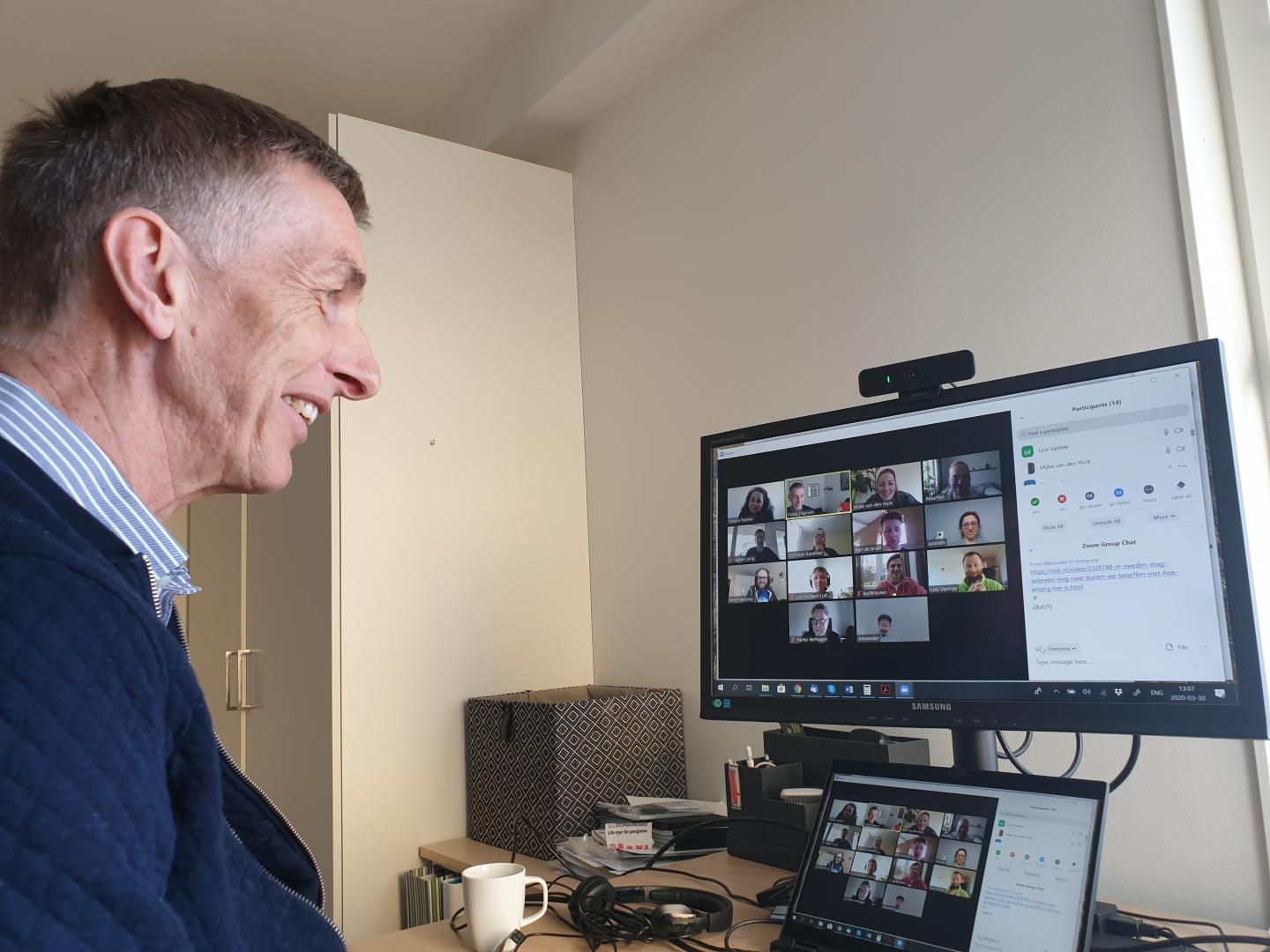
“We have gathered a group of experienced researchers from all over Europe to work on this project. All are contributing their time and expertise voluntarily and without any funding. It is heart-warming to see the commitment and results from all team members who are working day and night since two weeks”, continues Frank Dignum.
At this moment, the team is already applying the framework to specific questions from the UK, Australia and the Netherlands. At the same time, they are working on the release of an app through which Swedish inhabitants can report on their daily movements and household situation. This will enable to calibrate ASSOCC scenarios to the Swedish situation.
The ASSOCC framework does not make predictions but helps to explore possible different paths ahead of this pandemic. It describes an agent-based model that simulates the behaviour of a synthetic population given a set of policies (for example lock-down or voluntary isolation). This enables to study the effects on both the spread of the contagion and on how people can be expected to react to the policies (for example potential violations or workarounds).
The ASSOCC framework models both the possible effects on the spread of the coronavirus and the socio-economic effects of the policies, and will support understanding for example the following questions:
- How might policies premised on achieving drastic behavioural change go wrong?
- How to decide when and how to lift restrictions?
- What are the possible dangers of social polarisation between vulnerable older people and the young who want to get together?
- How to deal with the social effects of isolation and loss of contacts with other generations?
###
About ASSOCC:
ASSOCC (Agent-based Social Simulation of the Coronavirus Crisis) is based on the NetLogo platform and provides a visual interface build in Unity. All code and documentation is available open source to any group interested in experimenting with it, through a Creative Commons Attribution-NonCommercial 4.0 International License.
More information about the ASSOCC framework, including the code, is available at https:/
Media Contact
Ingrid Söderbergh
[email protected]
Original Source
https:/