• HOME
  • NEWS
  • EXPLORE
    • CAREER
      • Companies
      • Jobs
    • EVENTS
    • iGEM
      • News
      • Team
    • PHOTOS
    • VIDEO
    • WIKI
  • BLOG
  • COMMUNITY
    • FACEBOOK
    • INSTAGRAM
    • TWITTER
Tuesday, October 6, 2026
BIOENGINEER.ORG
No Result
View All Result
  • Login
  • HOME
  • NEWS
  • EXPLORE
    • CAREER
      • Companies
      • Jobs
        • Lecturer
        • PhD Studentship
        • Postdoc
        • Research Assistant
    • EVENTS
    • iGEM
      • News
      • Team
    • PHOTOS
    • VIDEO
    • WIKI
  • BLOG
  • COMMUNITY
    • FACEBOOK
    • INSTAGRAM
    • TWITTER
  • HOME
  • NEWS
  • EXPLORE
    • CAREER
      • Companies
      • Jobs
        • Lecturer
        • PhD Studentship
        • Postdoc
        • Research Assistant
    • EVENTS
    • iGEM
      • News
      • Team
    • PHOTOS
    • VIDEO
    • WIKI
  • BLOG
  • COMMUNITY
    • FACEBOOK
    • INSTAGRAM
    • TWITTER
No Result
View All Result
Bioengineer.org
No Result
View All Result
Home NEWS Science News Biology

Coronavirus SARS-CoV2: BESSY II data accelerate drug development

Bioengineer by Bioengineer
March 20, 2020
in Biology
Reading Time: 2 mins read
0
IMAGE
Share on FacebookShare on TwitterShare on LinkedinShare on RedditShare on Telegram

At the Berlin X-ray source BESSY II, researchers have decoded the protein responsible for the replication of the corona virus. Analysing the 3D architecture allows the systematic development of drugs which inhibit the reproduction oft he virus.
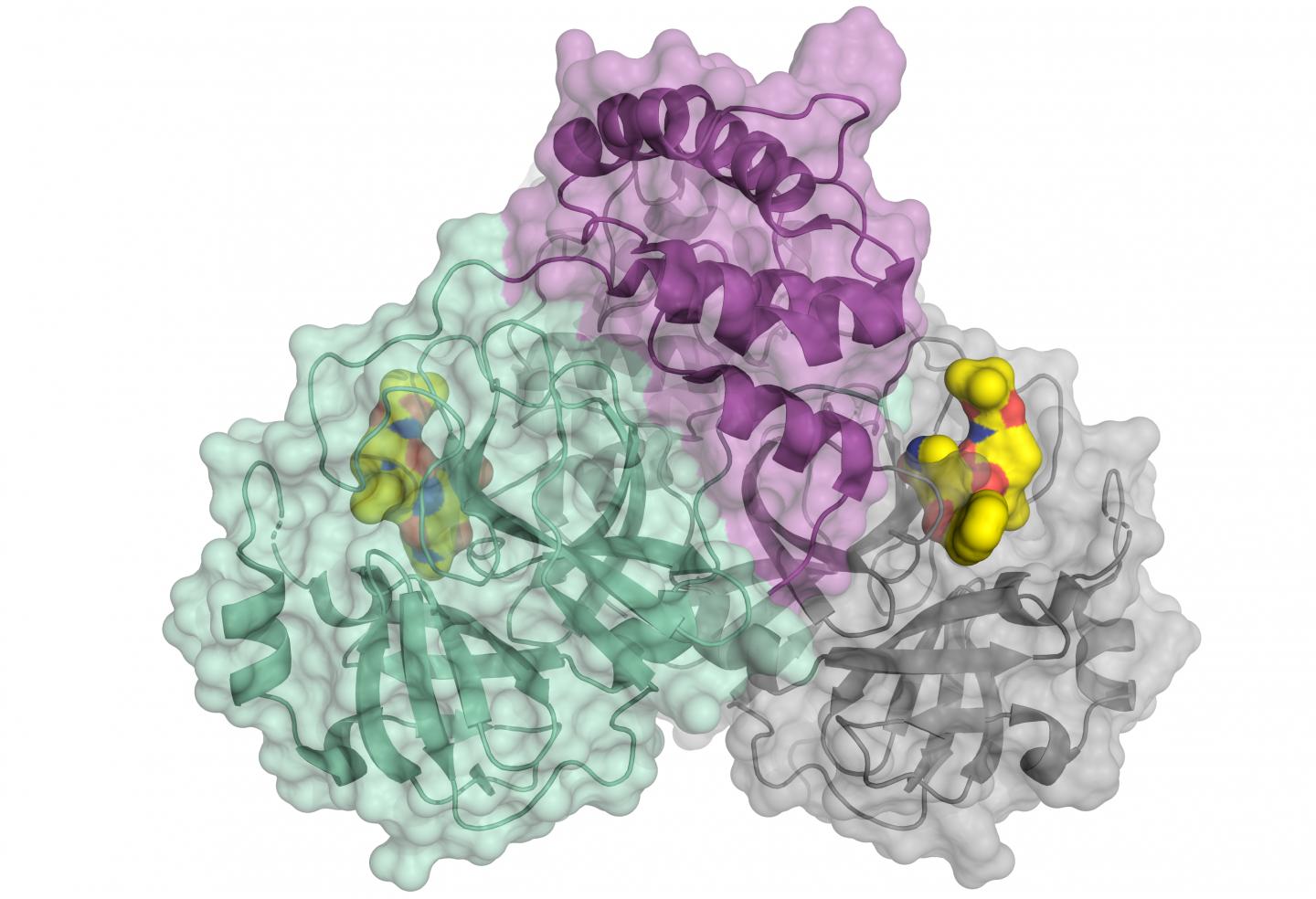
IMAGE

Credit: HZB


Teams around the world are working hard to develop active substances against SARS-CoV-2. The structural analysis of functional proteins of the virus is very helpful for this goal. The function of a protein is closely related to its 3D architecture. If this 3D architecture is known, it is possible to identify specific points of attack for active substances.

A special protein is responsible for the reproduction of the viruses: the viral main protease (Mpro or also 3CLpro). A team led by Prof. Dr. Rolf Hilgenfeld, University of Lübeck, has now decoded the 3D architecture of the main protease of SARS-CoV-2. The researchers have used the high-intensity X-ray light from the BESSY II facility of the Helmholtz-Zentrum Berlin.

“For such issues of highest relevance, we can offer fast track access to our instruments”, says Dr. Manfred Weiss, who heads the Research Group Macromolecular Crystallography (MX) at HZB. At the so-called MX instruments tiny protein crystals can be analysed with highly brilliant X-ray light. The images contain information about the 3D architecture of the protein molecules. The complex shape of the protein molecule and its electron density is then calculated by computer algorithms.

The 3D architecture provides concrete starting points for developing active substances or inhibitors. These drugs could dock specifically to target points of the macromolecule and impede its function. Rolf Hilgenfeld is a world-renowned expert in the field of virology and already developed an inhibitor against the SARS-virus during the 2002/2003 SARS pandemic. In 2016, he succeeded in deciphering an enzyme of the Zika virus.

###

Media Contact
Antonia Roetger
[email protected]

Original Source

https://www.helmholtz-berlin.de/pubbin/news_seite?nid=21204;sprache=en;seitenid=1

Related Journal Article

http://dx.doi.org/10.1126/science.abb3405

Tags: Atomic/Molecular/Particle PhysicsBiochemistryBiologyChemistry/Physics/Materials SciencesInfectious/Emerging DiseasesMedicine/HealthMolecular BiologyVirology
Share12Tweet8Share2ShareShareShare2

Related Posts

Human Density, Not Climate, Drives Rodent-Borne Hemorrhagic Fever Risk in Southwest China

Human Density, Not Climate, Drives Rodent-Borne Hemorrhagic Fever Risk in Southwest China

October 6, 2026
Hidden Protein Networks Emerge as Central Players in Huntington's Disease

Hidden Protein Networks Emerge as Central Players in Huntington’s Disease

October 6, 2026

Hibernating Squirrels Hold Clues to Diabetes and Muscle Loss in New NIH-Funded Study

October 6, 2026

Microbe Team Turns CO2 Electrolysis Waste Into Valuable Chemicals

October 6, 2026
Please login to join discussion

POPULAR NEWS

  • Alloys That Shrink Their Own Grains: New PIX Mechanism Refines Metals With Heat Alone

    Alloys That Shrink Their Own Grains: New PIX Mechanism Refines Metals With Heat Alone

    29 shares
    Share 12 Tweet 7
  • Endurance Exercise Reshapes the Liver in Males and Females Through Distinct Molecular Routes

    29 shares
    Share 12 Tweet 7
  • Single Transcription Factor PU.1 Rapidly Converts Fibroblasts into Macrophage-Lineage Cells

    29 shares
    Share 12 Tweet 7
  • New Scale Measures How Ready Nurse Educators Really Are for the AI Era

    29 shares
    Share 12 Tweet 7

About

We bring you the latest biotechnology news from best research centers and universities around the world. Check our website.

Follow us

Recent News

Alloys That Shrink Their Own Grains: New PIX Mechanism Refines Metals With Heat Alone

Endurance Exercise Reshapes the Liver in Males and Females Through Distinct Molecular Routes

Single Transcription Factor PU.1 Rapidly Converts Fibroblasts into Macrophage-Lineage Cells

Subscribe to Blog via Email

Success! An email was just sent to confirm your subscription. Please find the email now and click 'Confirm' to start subscribing.

Join 85 other subscribers
  • Contact Us

Bioengineer.org © Copyright 2023 All Rights Reserved.

Welcome Back!

Login to your account below

Forgotten Password?

Retrieve your password

Please enter your username or email address to reset your password.

Log In
No Result
View All Result
  • Homepages
    • Home Page 1
    • Home Page 2
  • News
  • National
  • Business
  • Health
  • Lifestyle
  • Science

Bioengineer.org © Copyright 2023 All Rights Reserved.