

• HOME
  • NEWS
  • EXPLORE
    • CAREER
      • Companies
      • Jobs
    • EVENTS
    • iGEM
      • News
      • Team
    • PHOTOS
    • VIDEO
    • WIKI
  • BLOG
  • COMMUNITY
    • FACEBOOK
    • INSTAGRAM
    • TWITTER
Saturday, February 7, 2026
BIOENGINEER.ORG
No Result
View All Result
  • Login
  • HOME
  • NEWS
  • EXPLORE
    • CAREER
      • Companies
      • Jobs
        • Lecturer
        • PhD Studentship
        • Postdoc
        • Research Assistant
    • EVENTS
    • iGEM
      • News
      • Team
    • PHOTOS
    • VIDEO
    • WIKI
  • BLOG
  • COMMUNITY
    • FACEBOOK
    • INSTAGRAM
    • TWITTER
  • HOME
  • NEWS
  • EXPLORE
    • CAREER
      • Companies
      • Jobs
        • Lecturer
        • PhD Studentship
        • Postdoc
        • Research Assistant
    • EVENTS
    • iGEM
      • News
      • Team
    • PHOTOS
    • VIDEO
    • WIKI
  • BLOG
  • COMMUNITY
    • FACEBOOK
    • INSTAGRAM
    • TWITTER
No Result
View All Result
Bioengineer.org
No Result
View All Result
Home NEWS Science News Health

MAFLD: A new name and definition brings hope for patients with fatty liver disease

Bioengineer by Bioengineer
March 18, 2020
in Health
Reading Time: 2 mins read
0
IMAGE
Share on FacebookShare on TwitterShare on LinkedinShare on RedditShare on Telegram

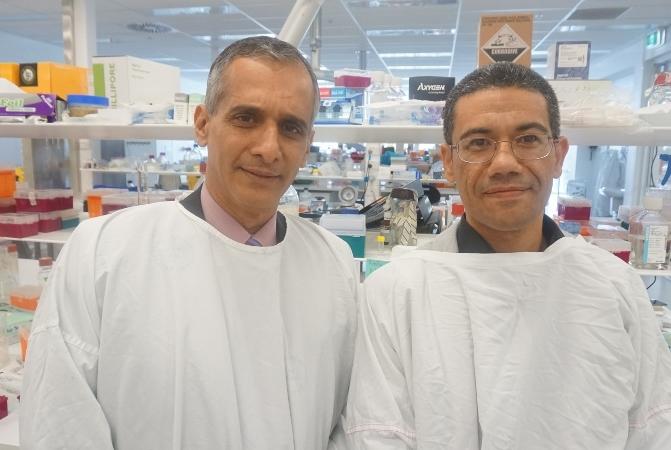
An international consensus panel, led by WIMR researchers, has highlighted the need to redefine non-alcoholic fatty liver disease
IMAGE

Credit: The Westmead Institute for Medical Research (WIMR)


An international consensus panel led by researchers from The Westmead Institute for Medical Research (WIMR) has highlighted the need to redefine Non-Alcoholic Fatty Liver Disease (NAFLD), and to name it Metabolic Associated Fatty Liver Disease (MAFLD). Researchers highlighted that the new terminology will better reflect its causes, and improve public health initiatives.

MAFLD is a condition characterised by a build-up of fat in the liver and affects over one billion people. Over time, this can lead to complications including cirrhosis, liver failure, liver cancer, and heart health issues. The consensus panel found that both the term ‘NAFLD’ and its diagnostic criteria must be updated in order to better reflect our current understanding of the disease.

Associate Professor Mohammed Eslam, co-lead author of the paper said, “Since it was first described in 1980, we haven’t revisited the appropriateness of the name, or the criteria used to diagnose fatty liver disease.

“By updating terminology and definitions, we can shift towards more precise and personalised treatment pathways, trial design and drug development.”

Professor Jacob George, co-lead author of the paper said, “Initially, the disease was defined as fatty liver in the absence of significant alcohol intake. This definition was problematic and has resulted in a ‘one-size-fits-all’ approach to treatment, despite the significant variation we see in people affected by the disease.

“This may be one of the reasons why we are seeing relatively low response rates in our current trials.

“The proposed name and definition recognises that the disease we are looking at is associated with metabolic dysfunction. It also acknowledges that there are multiple overlapping causes and drivers of the disease.”

Researchers are now conducting further studies to characterise the different sub-types and causes of MAFLD to help design new clinical trials, and best practices for patient management.

“Ultimately, we hope that by strengthening the diagnostic criteria and language surrounding MAFLD, we can help reduce the progression of the disease, and reduce the number of people affected worldwide,” Professor George concluded.

###

The paper was authored by an international consensus panel and published in Gastroenterology: https://www.gastrojournal.org/article/S0016-5085(20)30171-2/fulltext

Professor Jacob George is affiliated with WIMR, the University of Sydney and Western Sydney Local Health District. Associate Professor Mohammed Eslam is affiliated with WIMR and the University of Sydney.

Media Contact
Alison Grinyer
[email protected]
028-627-3024

Original Source

https://www.westmeadinstitute.org.au/news-and-events/2020/mafld-a-new-name-and-definition-brings-hope-for-pa

Related Journal Article

http://dx.doi.org/10.1053/j.gastro.2019.11.312

Tags: GastroenterologyInternal MedicineMedicine/HealthPublic Health
Share12Tweet8Share2ShareShareShare2

Related Posts

Evaluating Pediatric Emergency Care Quality in Ethiopia

February 7, 2026

TPMT Expression Predictions Linked to Azathioprine Side Effects

February 7, 2026

Improving Dementia Care with Enhanced Activity Kits

February 7, 2026

Decoding Prostate Cancer Origins via snFLARE-seq, mxFRIZNGRND

February 7, 2026
Please login to join discussion

POPULAR NEWS

  • Robotic Ureteral Reconstruction: A Novel Approach

    Robotic Ureteral Reconstruction: A Novel Approach

    82 shares
    Share 33 Tweet 21
  • Digital Privacy: Health Data Control in Incarceration

    63 shares
    Share 25 Tweet 16
  • Study Reveals Lipid Accumulation in ME/CFS Cells

    57 shares
    Share 23 Tweet 14
  • Breakthrough in RNA Research Accelerates Medical Innovations Timeline

    53 shares
    Share 21 Tweet 13

About

We bring you the latest biotechnology news from best research centers and universities around the world. Check our website.

Follow us

Recent News

Evaluating Pediatric Emergency Care Quality in Ethiopia

TPMT Expression Predictions Linked to Azathioprine Side Effects

Improving Dementia Care with Enhanced Activity Kits

Subscribe to Blog via Email

Success! An email was just sent to confirm your subscription. Please find the email now and click 'Confirm' to start subscribing.

Join 73 other subscribers
  • Contact Us

Bioengineer.org © Copyright 2023 All Rights Reserved.

Welcome Back!

Login to your account below

Forgotten Password?

Retrieve your password

Please enter your username or email address to reset your password.

Log In
No Result
View All Result
  • Homepages
    • Home Page 1
    • Home Page 2
  • News
  • National
  • Business
  • Health
  • Lifestyle
  • Science

Bioengineer.org © Copyright 2023 All Rights Reserved.

