


Exposure to microplastics causes cellular changes in fish and may disrupt endocrine systems
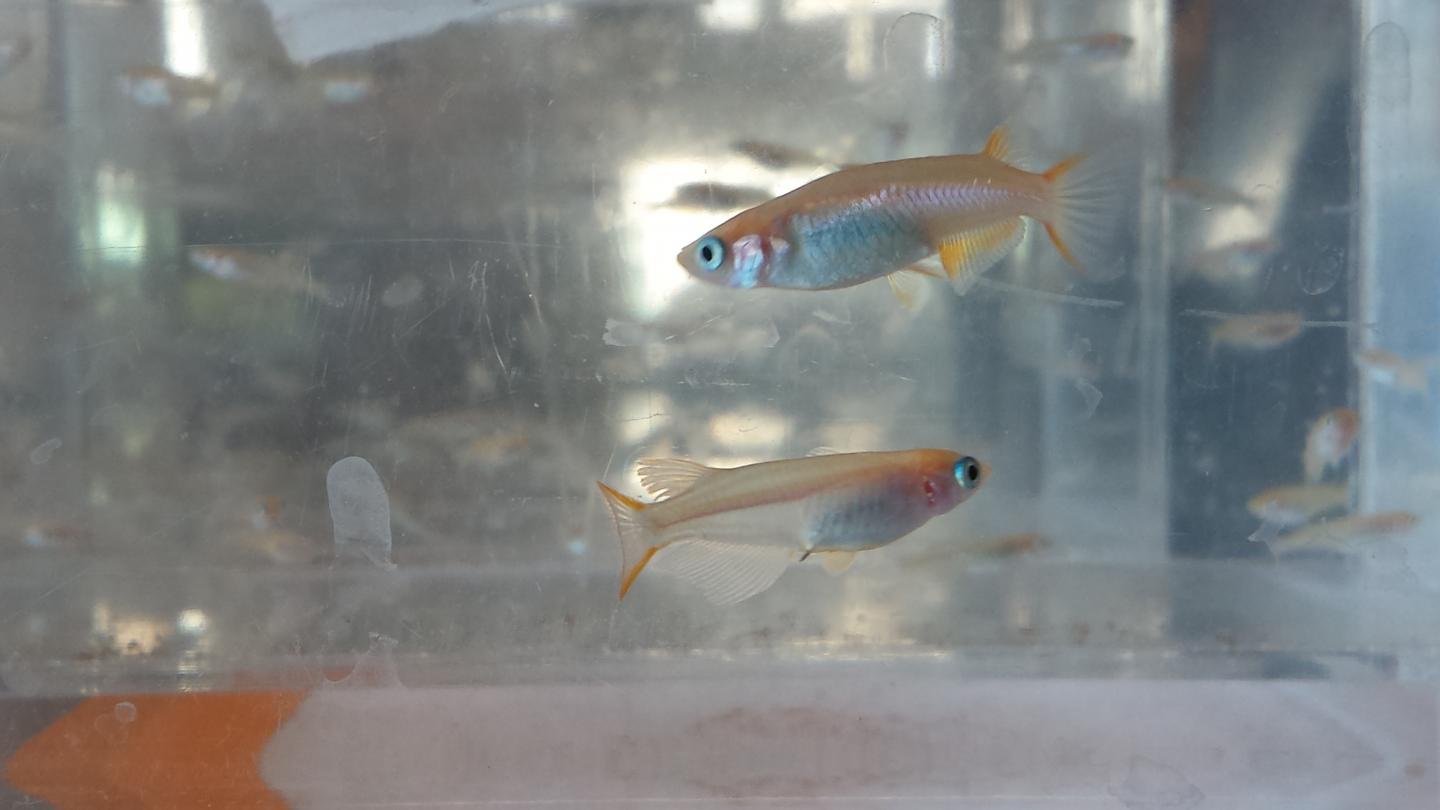
Credit: Melissa Chernick, Duke University
DURHAM, N.C. — Chronic exposure to microplastic fibers causes aneurysms, erosion of surface layers and other serious damage to fish gills, and increases egg production in female fish, a sign that chemicals in the fibers may be acting as endocrine disruptors, a new study by U.S. and Chinese scientists finds.
The minuscule fibers, which are made of polyester, polypropylene and other types of plastics, are shed or washed off of synthetic textiles used in clothing and other consumer and industrial products. Once shed, they enter wastewater and accumulate in oceans, rivers and lakes worldwide, accounting for more than 90% of microplastic pollution in some areas.
“Past field studies have shown that many fish eat large quantities of the fibers every day but have protective mechanisms within the gut that seem to be preventing damage,” said David E. Hinton, Nicholas Distinguished Professor of Environmental Quality at Duke University. “But when you extend your study down to the tissue and cellular levels, as we did, harmful changes are observed.”
“In addition to the fibers that fish eat, hundreds or thousands of microfibers also pass through their gills each day, and we find that this is where much of the damage occurs,” said Melissa Chernick, a researcher in Hinton’s lab at Duke’s Nicholas School of the Environment.
The team published its peer-reviewed findings March 9 in the open-access journal PLoS ONE.
Fish exposed to high levels of microfibers in their tank water for 21 days exhibited aneurysms, fused membranes and increased mucus production in their gills as well as significant changes to the epithelial cells lining their gills and other effects.
“There were severe changes, and a lot of them. And each change can affect respiration,” Chernick said. “If you’re a fish in the wild with gill damage and you’re in a low-oxygen environment or being chased by a predator, you’re in trouble. The same goes if you’re competing with other fish for food. Just having these damages would cause you to be less competitive.”
Though the gut itself seems to be protected from similar damage, the new study finds that when microplastic fibers are in the gut, they may release chemical coatings that are taken up into the fish’s bloodstream.
The researchers are still working to identify these chemicals and determine their impacts, but one troubling effect has already been observed. Female fish exposed to fibers containing polypropylene produced more eggs over time, suggesting that chemicals that may be leaching from the microfibers are acting as endocrine disruptors.
Worldwide, nearly six million tons of synthetic fibers such as polyester or polypropylene were produced in 2016. These textiles shed microfibers during washing or regular use. A single garment can shed nearly 2,000 microfibers per wash, Chernick noted, and because wastewater treatment plants aren’t equipped to remove the fibers, they escape into downstream surface waters and accumulate in the environment. They can also enter the environment through sewage release, stormwater runoff or atmospheric deposition.
“Even if they are released miles from the ocean, they can work their way down there. So they affect both freshwater and marine organisms,” Hinton said.
Hinton and Chernick conducted the new study with Lingling Hu of Zhejiang University of Technology in China, and Lee Ferguson and Anne Lewis of Duke. Ferguson is an associate professor of civil and environmental engineering, ecotoxicology and environmental health. Lewis is a doctoral candidate in civil and environmental engineering.
To conduct the research, they placed 27 breeding pairs of healthy Japanese medaka fish (Oryzias latipes) in water tanks with high levels of suspended microplastic fibers. They monitored fish weights, egg production, and ingestion and egestion of fibers – how much fiber went in, how much was excreted out – weekly. After 21 days, they examined the fish’s tissues to see what changes, if any, had occurred. Tank water was changed weekly and stored for chemical analysis, to determine what dyes or additives had been released.
“Microplastic pollution is an environmental threat that poses increasing risks for species and ecosystems worldwide,” Chernick said. “Until now, most studies have focused primarily on looking for the presence of plastics in animals, without identifying what the effects on various tissues might be. But that’s exactly where our study suggests the science needs to go.”
###
Primary support for the study came from the China Scholarship Council, with additional funding from the Duke Compact for Open Access Publishing Equity Fund. Sample preparation and imaging for scanning electron microscopy was performed at the Duke University Shared Materials Instrumentation Facility, a member of the North Carolina Research Triangle Nanotechnology Network which is supported by the National Science Foundation as part of the National Nanotechnology Coordinated Infrastructure.
CITATION: “Chronic Microfiber Exposure in Adult Japanese Medaka (Oryzias latipes),” Lingling Hu, Melissa Chernick, Anna M. Lewis, P. Lee Ferguson and David E. Hinton. PLoS ONE, March 9, 2020. DOI: https:/
Media Contact
Tim Lucas
[email protected]
919-613-8084
Related Journal Article
http://dx.


