• HOME
  • NEWS
  • EXPLORE
    • CAREER
      • Companies
      • Jobs
    • EVENTS
    • iGEM
      • News
      • Team
    • PHOTOS
    • VIDEO
    • WIKI
  • BLOG
  • COMMUNITY
    • FACEBOOK
    • INSTAGRAM
    • TWITTER
Sunday, December 28, 2025
BIOENGINEER.ORG
No Result
View All Result
  • Login
  • HOME
  • NEWS
  • EXPLORE
    • CAREER
      • Companies
      • Jobs
        • Lecturer
        • PhD Studentship
        • Postdoc
        • Research Assistant
    • EVENTS
    • iGEM
      • News
      • Team
    • PHOTOS
    • VIDEO
    • WIKI
  • BLOG
  • COMMUNITY
    • FACEBOOK
    • INSTAGRAM
    • TWITTER
  • HOME
  • NEWS
  • EXPLORE
    • CAREER
      • Companies
      • Jobs
        • Lecturer
        • PhD Studentship
        • Postdoc
        • Research Assistant
    • EVENTS
    • iGEM
      • News
      • Team
    • PHOTOS
    • VIDEO
    • WIKI
  • BLOG
  • COMMUNITY
    • FACEBOOK
    • INSTAGRAM
    • TWITTER
No Result
View All Result
Bioengineer.org
No Result
View All Result
Home NEWS Science News Health

Directed species loss from species-rich forests strongly decreases productivity

Bioengineer by Bioengineer
March 2, 2020
in Health
Reading Time: 3 mins read
0
IMAGE
Share on FacebookShare on TwitterShare on LinkedinShare on RedditShare on Telegram

IMAGE

Credit: Yuanyuan Huang


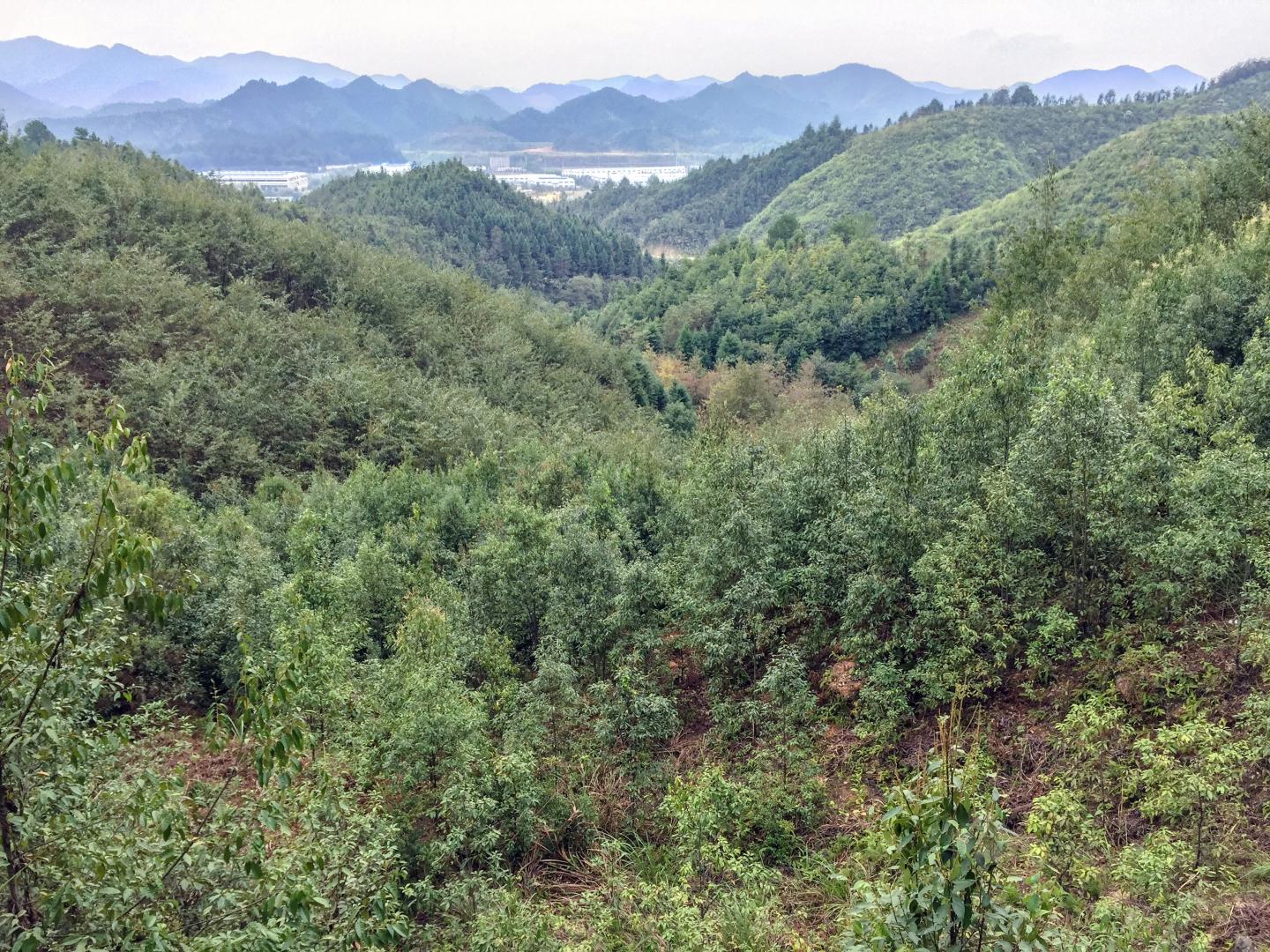
The forest biodiversity experiment BEF-China began in 2009 with the collaboration among institutions in China, Germany and Switzerland and is one of the world’s biggest field experiment. In the subtropical forests in southeastern China the international team planted over 500 plots of 670 square meters of land with 400 trees each – with each plot receiving between one and 16 tree species in various combinations. The researchers simulated both random and directed species extinction scenarios and analyzed the data.

Directed loss of species reduces productivity

After eight years, directed species loss in species-rich forest ecosystems, in which evolutionary distinct species had higher extinction risks, showed much stronger reductions in forest productivity than did treatments that were subject to random species loss. “These findings have significant implications for biodiversity conservation and climate mitigation, because more productive forests also removed more carbon dioxide from the air,” says Bernhard Schmid, professor at the Department of Geography of the University of Zurich (UZH) and last author of the study.

Diversity alone does not protect against losses

“Our results suggest that species loss can severely hamper ecosystem functioning already at high species richness, when many species still remain in the ecosystem. It challenges the decade-long assumption derived from studies based on random species loss,” says Schmid. This assumption is that species loss from high-diversity communities would have only little impact on ecosystem functioning, because the remaining species could take over the functions of extinct species due to species redundancy.

Extinct species missing from the network

Why could directed species loss lead to such strong productivity reduction? “We think two processes associated with directed species loss might lead to the results. When species loss is directed, we may lose the most functionally distinct species first, if that functionally distinctiveness is also the cause of extinction,” explains first author of the study Yuxin Chen, former post-doc at UZH and now associate professor at Xiamen University in China. “Species do not live independently, but participate in complex networks of species interactions. Losing species can change these interaction networks. The loss of species interactions contributed significantly to the observed results.”

China responds with new laws

The ongoing impacts of a severe coronavirus epidemic this winter has prompted China to speed up biosecurity legislation and elevate it to a national security issue. The biosecurity law would cover various areas including conserving biodiversity. “Our research is grounded in one of the diversity hotspots in China. The findings are timely for supporting the legislation of biosecurity,” says Keping Ma professor at the Chinese Academy of Sciences and co-founder of the BEF-China experiment. “Diversity loss from species-rich forests could also increase the risk of pest and disease outbreaks. Some other research teams are studying this issue”.

###

Media Contact
Bernhard Schmid
[email protected]
41-446-355-205

Original Source

https://www.media.uzh.ch/en/Press-Releases/2020/Direct-Species-Loss.html

Related Journal Article

http://dx.doi.org/10.1038/s41559-020-1127-4

Tags: BiologyClimate ChangeEcology/EnvironmentForestryInfectious/Emerging DiseasesPlant Sciences
Share12Tweet8Share2ShareShareShare2

Related Posts

New Insights on Angiogenesis and Cell Death in Spinal Cord Injury

December 28, 2025

Assessing Surgical Nurses’ AI Literacy and Readiness

December 28, 2025

Link Between Physical Activity and Youth Mental Health

December 28, 2025

LncRNA AC040169.1 Enhances Ovarian Cancer via m6A Regulation

December 28, 2025
Please login to join discussion

POPULAR NEWS

  • Robotic Waist Tether for Research Into Metabolic Cost of Walking

    NSF funds machine-learning research at UNO and UNL to study energy requirements of walking in older adults

    71 shares
    Share 28 Tweet 18
  • Nurses’ Views on Online Learning: Effects on Performance

    70 shares
    Share 28 Tweet 18
  • Exploring Audiology Accessibility in Johannesburg, South Africa

    51 shares
    Share 20 Tweet 13
  • SARS-CoV-2 Subvariants Affect Outcomes in Elderly Hip Fractures

    44 shares
    Share 18 Tweet 11

About

We bring you the latest biotechnology news from best research centers and universities around the world. Check our website.

Follow us

Recent News

AI-Fueled Matching: Bridging Industry and Education

Evaluating Genetic Diversity in Rice Seedling Vigor

Advancements in Road Accident Prediction Models

Subscribe to Blog via Email

Enter your email address to subscribe to this blog and receive notifications of new posts by email.

Join 71 other subscribers
  • Contact Us

Bioengineer.org © Copyright 2023 All Rights Reserved.

Welcome Back!

Login to your account below

Forgotten Password?

Retrieve your password

Please enter your username or email address to reset your password.

Log In
No Result
View All Result
  • Homepages
    • Home Page 1
    • Home Page 2
  • News
  • National
  • Business
  • Health
  • Lifestyle
  • Science

Bioengineer.org © Copyright 2023 All Rights Reserved.