• HOME
  • NEWS
  • EXPLORE
    • CAREER
      • Companies
      • Jobs
    • EVENTS
    • iGEM
      • News
      • Team
    • PHOTOS
    • VIDEO
    • WIKI
  • BLOG
  • COMMUNITY
    • FACEBOOK
    • INSTAGRAM
    • TWITTER
Saturday, February 7, 2026
BIOENGINEER.ORG
No Result
View All Result
  • Login
  • HOME
  • NEWS
  • EXPLORE
    • CAREER
      • Companies
      • Jobs
        • Lecturer
        • PhD Studentship
        • Postdoc
        • Research Assistant
    • EVENTS
    • iGEM
      • News
      • Team
    • PHOTOS
    • VIDEO
    • WIKI
  • BLOG
  • COMMUNITY
    • FACEBOOK
    • INSTAGRAM
    • TWITTER
  • HOME
  • NEWS
  • EXPLORE
    • CAREER
      • Companies
      • Jobs
        • Lecturer
        • PhD Studentship
        • Postdoc
        • Research Assistant
    • EVENTS
    • iGEM
      • News
      • Team
    • PHOTOS
    • VIDEO
    • WIKI
  • BLOG
  • COMMUNITY
    • FACEBOOK
    • INSTAGRAM
    • TWITTER
No Result
View All Result
Bioengineer.org
No Result
View All Result
Home NEWS Science News Biology

Clemson researchers ID protein function in parasites that cause sometimes fatal diseases

Bioengineer by Bioengineer
February 24, 2020
in Biology
Reading Time: 3 mins read
0
IMAGE
Share on FacebookShare on TwitterShare on LinkedinShare on RedditShare on Telegram

IMAGE

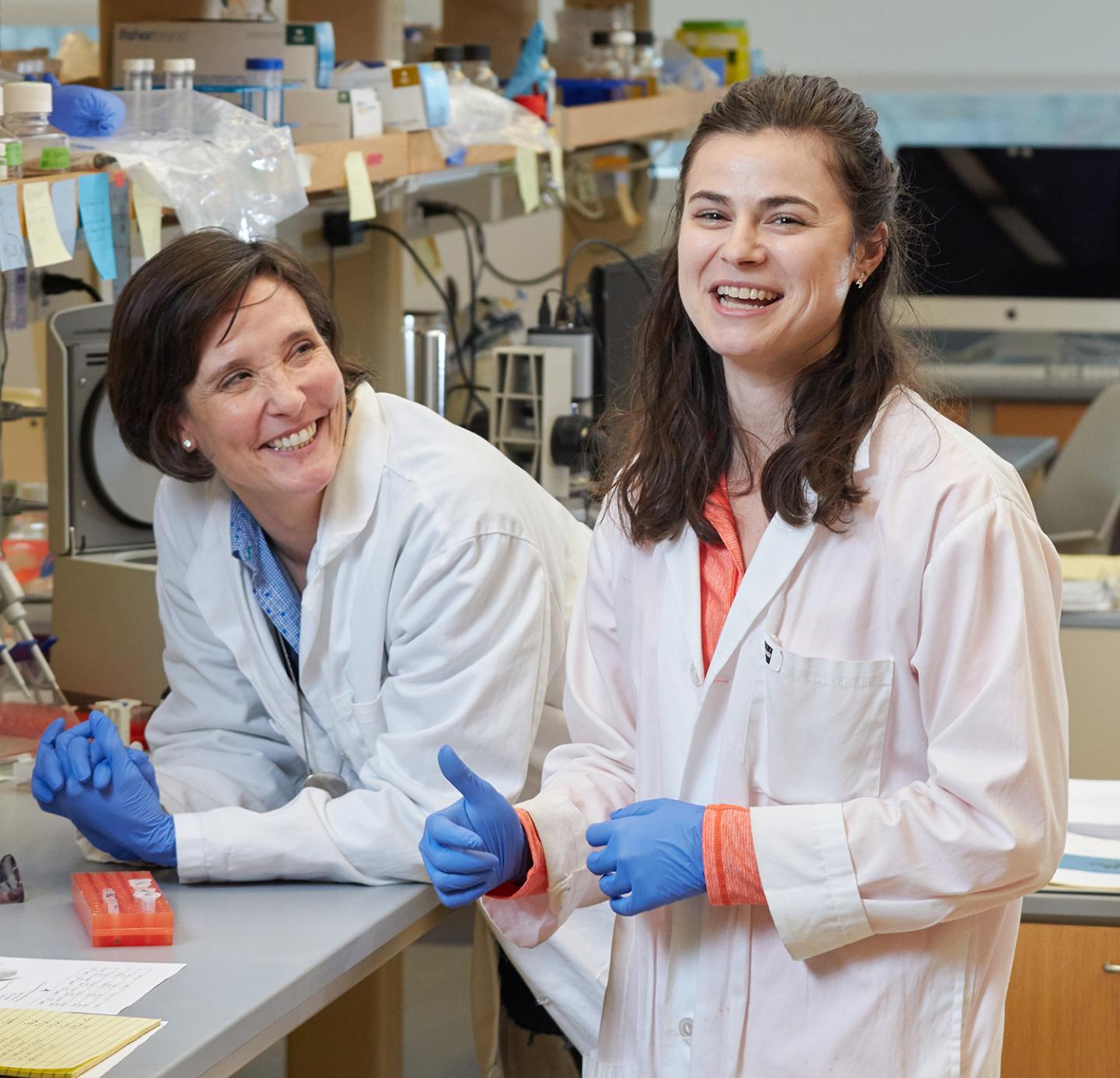
Credit: Pete Martin, College of Science


CLEMSON, South Carolina — In the quest to develop more effective treatments for parasitic diseases like African sleeping sickness, Chagas disease and Leishmaniasis, scientists look for weaknesses in the organisms’ molecular machinery. These weaknesses can then be targeted with drug therapies designed to kill the parasites.

While they’ve made significant strides in recent years, scientists are still trying to unravel how the parasites’ complex molecular systems work.

A team of Clemson University College of Science researchers recently contributed to that understanding by discovering the function of a specific protein in the three related parasites — Trypanosama brucei, Trypanosoma cruzi and Leishmania — which afflict millions worldwide with diseases that are sometimes fatal.

According to genetics and biochemistry associate professor Meredith Morris, the parasites share some of  the same molecular makeup as humans, so drugs that can kill the parasites often do harm or have adverse side effects to the human hosts.

“We are always looking for ways that the parasites differ from us,” Morris said. “One of the main differences is that the parasites have a specialized cellular compartment or organelle that is absolutely essential to their survival.”

Morris and her team reported their results in mSphere on Feb. 19, 2020. The title of their paper is “Trypanosoma brucei Pex13.2 is an accessory peroxin that functions in the import of PTS2 proteins and localizes to subdomains of the glycosome.”

That parasite-specific organelle is called the glycosome, which plays a crucial role in cell processes, particularly energy metabolism. The glycosome organelle is surrounded by a single membrane, where several proteins reside. These proteins (Pex13.1, 13.2 and 14) import other proteins required for normal cell functioning.

In their study, Morris and her students used biochemical approaches to partially resolve the composition of those three glycosome proteins. In the process, they demonstrated that Pex13.2 is an integral glycosome membrane protein that interacts with Pex13.1 and Pex14, which was previously not known.

Utilizing the advanced microscopy technology in Clemson’s Light Imaging Facility, they also obtained very high-resolution images, and found that Pex13.2 exhibits a unique localization pattern that may be critical to its function.

“No one knew what Pex13.2 was doing, but our study adds to that understanding,” said Morris, a member of Clemson’s Eukaryotic Pathogens Innovation Center (EPIC). “Now we know that it plays a role in import of proteins and the division of the organelles.”

The team also silenced Pex13.2, which resulted in parasites with fewer, larger glycosomes. Without 13.2, the parasite couldn’t import glycosome proteins, resulting in the parasite’s death.

“Others have shown that when 13.2 is knocked out, the cell dies,” said Morris, noting that by fully understanding the organelle’s parts and functions, drug companies could someday design rational approaches to disrupting the system and killing the parasite.

###

In addition to Morris, the research team included lead author Logan Crowe (Ph.D. 2019), now a post-doctoral fellow at the University of Georgia; graduate student Christina Wilkinson; and Kathleen Nicholson (B.S. 2017), now a doctoral student at the University of Notre Dame.

Media Contact
Laura Schmitt
[email protected]
864-656-9348

Original Source

https://newsstand.clemson.edu/mediarelations/clemson-scientists-working-to-find-new-ways-to-combat-parasitic-diseases-that-afflict-millions/

Related Journal Article

http://dx.doi.org/10.1128/mSphere.00744-19

Tags: BiologyDisease in the Developing WorldMicrobiologyParasitology
Share12Tweet8Share2ShareShareShare2

Related Posts

Florida Cane Toad: Complex Spread and Selective Evolution

Florida Cane Toad: Complex Spread and Selective Evolution

February 7, 2026
New Study Uncovers Mechanism Behind Burn Pit Particulate Matter–Induced Lung Inflammation

New Study Uncovers Mechanism Behind Burn Pit Particulate Matter–Induced Lung Inflammation

February 6, 2026

DeepBlastoid: Advancing Automated and Efficient Evaluation of Human Blastoids with Deep Learning

February 6, 2026

Navigating the Gut: The Role of Formic Acid in the Microbiome

February 6, 2026
Please login to join discussion

POPULAR NEWS

  • Robotic Ureteral Reconstruction: A Novel Approach

    Robotic Ureteral Reconstruction: A Novel Approach

    82 shares
    Share 33 Tweet 21
  • Digital Privacy: Health Data Control in Incarceration

    63 shares
    Share 25 Tweet 16
  • Study Reveals Lipid Accumulation in ME/CFS Cells

    57 shares
    Share 23 Tweet 14
  • Breakthrough in RNA Research Accelerates Medical Innovations Timeline

    53 shares
    Share 21 Tweet 13

About

We bring you the latest biotechnology news from best research centers and universities around the world. Check our website.

Follow us

Recent News

Evaluating Pediatric Emergency Care Quality in Ethiopia

TPMT Expression Predictions Linked to Azathioprine Side Effects

Improving Dementia Care with Enhanced Activity Kits

Subscribe to Blog via Email

Success! An email was just sent to confirm your subscription. Please find the email now and click 'Confirm' to start subscribing.

Join 73 other subscribers
  • Contact Us

Bioengineer.org © Copyright 2023 All Rights Reserved.

Welcome Back!

Login to your account below

Forgotten Password?

Retrieve your password

Please enter your username or email address to reset your password.

Log In
No Result
View All Result
  • Homepages
    • Home Page 1
    • Home Page 2
  • News
  • National
  • Business
  • Health
  • Lifestyle
  • Science

Bioengineer.org © Copyright 2023 All Rights Reserved.