• HOME
  • NEWS
  • EXPLORE
    • CAREER
      • Companies
      • Jobs
    • EVENTS
    • iGEM
      • News
      • Team
    • PHOTOS
    • VIDEO
    • WIKI
  • BLOG
  • COMMUNITY
    • FACEBOOK
    • INSTAGRAM
    • TWITTER
Thursday, January 15, 2026
BIOENGINEER.ORG
No Result
View All Result
  • Login
  • HOME
  • NEWS
  • EXPLORE
    • CAREER
      • Companies
      • Jobs
        • Lecturer
        • PhD Studentship
        • Postdoc
        • Research Assistant
    • EVENTS
    • iGEM
      • News
      • Team
    • PHOTOS
    • VIDEO
    • WIKI
  • BLOG
  • COMMUNITY
    • FACEBOOK
    • INSTAGRAM
    • TWITTER
  • HOME
  • NEWS
  • EXPLORE
    • CAREER
      • Companies
      • Jobs
        • Lecturer
        • PhD Studentship
        • Postdoc
        • Research Assistant
    • EVENTS
    • iGEM
      • News
      • Team
    • PHOTOS
    • VIDEO
    • WIKI
  • BLOG
  • COMMUNITY
    • FACEBOOK
    • INSTAGRAM
    • TWITTER
No Result
View All Result
Bioengineer.org
No Result
View All Result
Home NEWS Science News Health

Extra chromosomes in cancers can be good or bad

Bioengineer by Bioengineer
February 24, 2020
in Health
Reading Time: 2 mins read
0
IMAGE
Share on FacebookShare on TwitterShare on LinkedinShare on RedditShare on Telegram

IMAGE

Credit: Sheltzer lab/CSHL, 2020

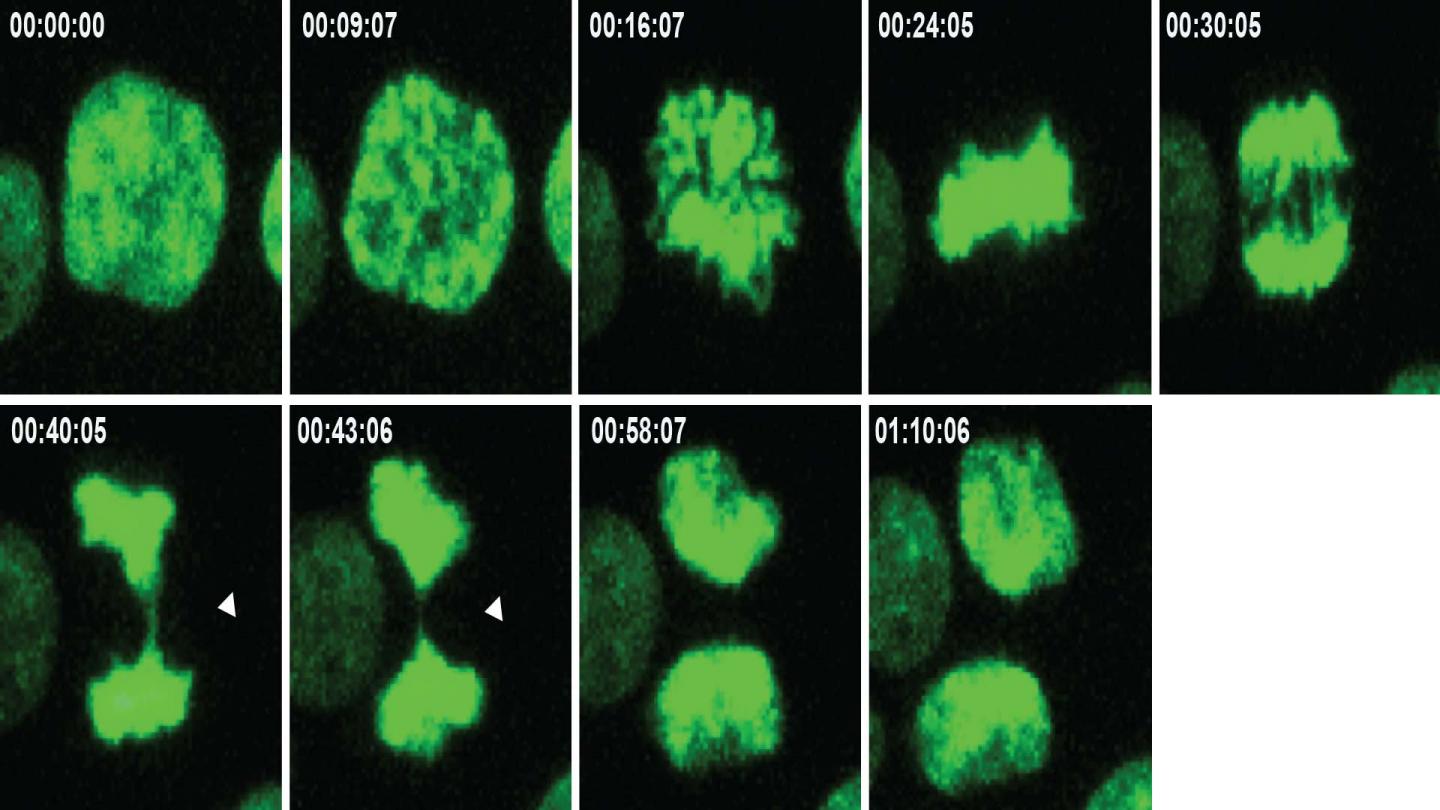
Cancer cells are notorious for their genetic disarray. A tumor cell can contain an abundance of DNA mutations and most have the wrong number of chromosomes. A missing or extra copy of a single chromosome creates an imbalance called aneuploidy, which can skew the activity of hundreds or thousands of genes. As cancer progresses, so does aneuploidy. Some advanced tumors can harbor cells that have accumulated more than 100 chromosomes, instead of 46 in normal cells.

High levels of aneuploidy are associated with aggressive cancers and a poor prognosis for patients. But according to Cold Spring Harbor Laboratory investigator Jason Sheltzer and colleagues, not all aneuploidies spur cancer’s progression. In the journal Developmental Cell, they report that some aneuploidies inhibit a cancer’s ability to metastasize.

Sheltzer says that although aneuploidy is very common in cancer cells, it hasn’t been clear whether these abnormalities help drive the disease. His team collaborated with Zuzana Storchová at the University of Kaiserslautern, developing new tools to investigate how cancer cells’ behavior changes when they acquire an extra chromosome. They engineered sets of human cells that each had an extra copy of a different chromosome, but were otherwise identical.

When postdoctoral researcher Anand Vasudevan tested these cells in the laboratory, the results were surprising. “Since highly aggressive cancers tend to be aneuploid, we expected that all or most aneuploidies would contribute to metastatic behavior,” Sheltzer says. “But it is actually a more complicated relationship. We found that different chromosomes can have all sorts of different impacts.” Some extra chromosomes had no impact on metastasis, whereas others actually suppressed it.

Analysis of patient data revealed something similar. While survival is poorest among patients whose cancers have a high level of aneuploidy overall, the team identified certain chromosomes for which extra copies were associated with increased survival. These beneficial aneuploidies were less common than those linked to poor survival. This is probably because changes that help a tumor flourish are the ones most likely to persist as the disease progresses. Their presence indicates that the clinical impacts of aneuploidy are likely to be just as complicated as the lab experiments suggest, Sheltzer says.

Sheltzer’s team is exploring the single aneuploidy that enhanced metastasis in their experiments to understand how an extra copy of that chromosome strengthens cancer cells’ invasive behavior. They will also use their new aneuploid cell lines to screen for potential drugs and genetic changes that eliminate cancer cells by targeting these abnormalities.

###

Media Contact
Sara Roncero-Menendez
[email protected]
516-367-6866

Related Journal Article

http://dx.doi.org/10.1016/j.devcel.2020.01.034

Tags: BiologycancerCell BiologyGeneticsMedicine/Health
Share12Tweet8Share2ShareShareShare2

Related Posts

Neural Mechanisms of Microstimulation for Sensory Recovery

January 15, 2026

Empowering Family Caregivers: Navigating Stigma in Autism

January 15, 2026

Integrating Care for Cancer and Multimorbidity Challenges

January 15, 2026

Advancing Fetal Ultrasound with Visual Language Models

January 15, 2026
Please login to join discussion

POPULAR NEWS

  • Enhancing Spiritual Care Education in Nursing Programs

    155 shares
    Share 62 Tweet 39
  • PTSD, Depression, Anxiety in Childhood Cancer Survivors, Parents

    147 shares
    Share 59 Tweet 37
  • Robotic Ureteral Reconstruction: A Novel Approach

    76 shares
    Share 30 Tweet 19
  • Study Reveals Lipid Accumulation in ME/CFS Cells

    53 shares
    Share 21 Tweet 13

About

We bring you the latest biotechnology news from best research centers and universities around the world. Check our website.

Follow us

Recent News

Birth Defects Linked to Prenatal Oil Well Exposure

MicroRNAs in Cancer: AI-Driven Translational Insights

Neural Mechanisms of Microstimulation for Sensory Recovery

Subscribe to Blog via Email

Enter your email address to subscribe to this blog and receive notifications of new posts by email.

Join 71 other subscribers
  • Contact Us

Bioengineer.org © Copyright 2023 All Rights Reserved.

Welcome Back!

Login to your account below

Forgotten Password?

Retrieve your password

Please enter your username or email address to reset your password.

Log In
No Result
View All Result
  • Homepages
    • Home Page 1
    • Home Page 2
  • News
  • National
  • Business
  • Health
  • Lifestyle
  • Science

Bioengineer.org © Copyright 2023 All Rights Reserved.