In the paper, published in the journal Cell Reports, the Schizosaccharomyces pombe yeast model has been used to investigate the protein quality control process
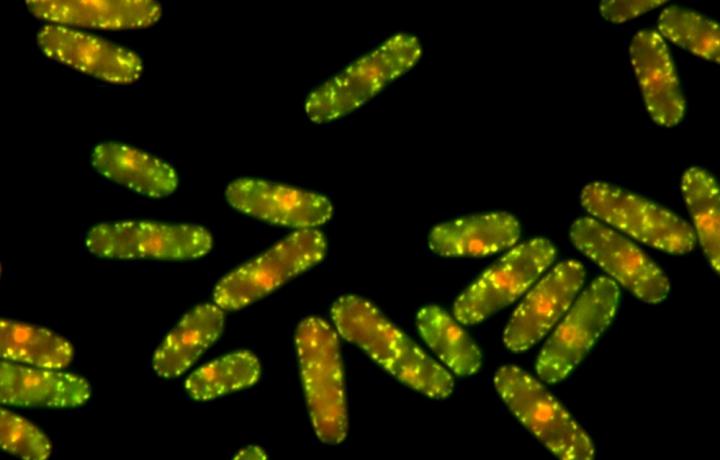
Credit: Margarita Cabrera
A new article by the Oxidative Stress and Cell Cycle research group at UPF identifies the main strategy of cells to deal with the accumulation of misfolded proteins. In the paper, published today in the journal Cell Reports, the Schizosaccharomyces pombe yeast model has been used to investigate the protein quality control process. The study was led by Elena Hidalgo, and postdoctoral researchers Margarita Cabrera and Susanna Boronat are its first authors.
Proteins are made up of chains of amino acids and during their formation they must fold to acquire an appropriate shape enabling them to perform their functions. However, when cells are subjected to stress or harm, such as high temperatures, some of the proteins may not fold properly. In this study, the researchers posed the question: what do cells do with misfolded proteins?
There are three ways to solve the problem. The first option is to try to fix the folding in order to regain function, but this can be tricky because if stress conditions continue, the proteins continue unfolding. A second way is to destroy proteins that have not properly folded by way of a machinery called proteasome. “But, in this study we reveal that the dominant route in yeast is a third option consisting of the formation of aggregates to protect misfolded proteins from degradation”, Elena Hidalgo explains.
The dual role of chaperones
Chaperones are small biological machines whose function is to fold proteins to achieve their optimal performance form. They are usually involved in the folding process and their function is often to prevent aggregation. “However, under stress conditions due to high temperatures, we have identified chaperones that play a key role in enhancing the aggregation route”, Margarita Cabrera explains. “They detect that protein folding is not the solution and thus will actively promote the aggregation route”, she adds.
The chaperones in question work in pairs, one of them is responsible for recognizing the substrate that is misfolded –detecting regions that should be inside the protein and when not correctly folded remain exposed– and transferring it to the other. “Therefore, we have determined that under stress, chaperones slightly change their role to promote aggregation”, Susanna Boronat comments.
Although aggregates are usually associated with toxicity and adverse effects, for example in neurodegenerative diseases, in this case they are favourable. The main advantage of promoting aggregation in regard to degradation is that when the conditions return to optimal, the proteins can fold again and recover their function. Synthesizing proteins is a costly task for the cell because it requires resources and by keeping a reservoir it can save having to make them again. “As an example of stress conditions we use high temperatures, though for a very short time, to ensure that the damage is reversible”, Susanna Boronat adds.
Schizosaccharomyces pombe, a model for understanding complex mechanisms
The team of researchers from the Department of Experimental and Health Sciences (DCEXS) at UPF has conducted this research on Schizosaccharomyces pombe yeast, an organism that has the advantage of simple, easily manipulated genetics, that allows handling many different conditions. Moreover, many of yeasts’ basic molecular mechanisms can be extrapolated to other eukaryotic organisms. When dealing with as complex a process as protein stability it is always good to have a model that is very simple in order to lay the foundations.
In the words of Margarita Cabrera: “we would like to start a new line of research and study the formation of protein aggregates in other model organisms and during the ageing process”.
The research team is made up of Margarita Cabrera, Susanna Boronat, Luis Marte, Montserrat Vega, José Ayté and Elena Hidalgo at UPF, and Pilar Pérez at the Institute of Functional Biology and Genomics (IBFG) of the CSIC and the University of Salamanca.
###
Media Contact
UPF
[email protected]
Original Source
https:/
Related Journal Article
http://dx.