• HOME
  • NEWS
  • EXPLORE
    • CAREER
      • Companies
      • Jobs
    • EVENTS
    • iGEM
      • News
      • Team
    • PHOTOS
    • VIDEO
    • WIKI
  • BLOG
  • COMMUNITY
    • FACEBOOK
    • INSTAGRAM
    • TWITTER
Friday, May 15, 2026
BIOENGINEER.ORG
No Result
View All Result
  • Login
  • HOME
  • NEWS
  • EXPLORE
    • CAREER
      • Companies
      • Jobs
        • Lecturer
        • PhD Studentship
        • Postdoc
        • Research Assistant
    • EVENTS
    • iGEM
      • News
      • Team
    • PHOTOS
    • VIDEO
    • WIKI
  • BLOG
  • COMMUNITY
    • FACEBOOK
    • INSTAGRAM
    • TWITTER
  • HOME
  • NEWS
  • EXPLORE
    • CAREER
      • Companies
      • Jobs
        • Lecturer
        • PhD Studentship
        • Postdoc
        • Research Assistant
    • EVENTS
    • iGEM
      • News
      • Team
    • PHOTOS
    • VIDEO
    • WIKI
  • BLOG
  • COMMUNITY
    • FACEBOOK
    • INSTAGRAM
    • TWITTER
No Result
View All Result
Bioengineer.org
No Result
View All Result
Home NEWS Science News

Pill-sized ‘heater’ could increase accessibility in diagnosing infectious disease

Bioengineer by Bioengineer
February 20, 2020
in Science News
Reading Time: 2 mins read
0
IMAGE
Share on FacebookShare on TwitterShare on LinkedinShare on RedditShare on Telegram

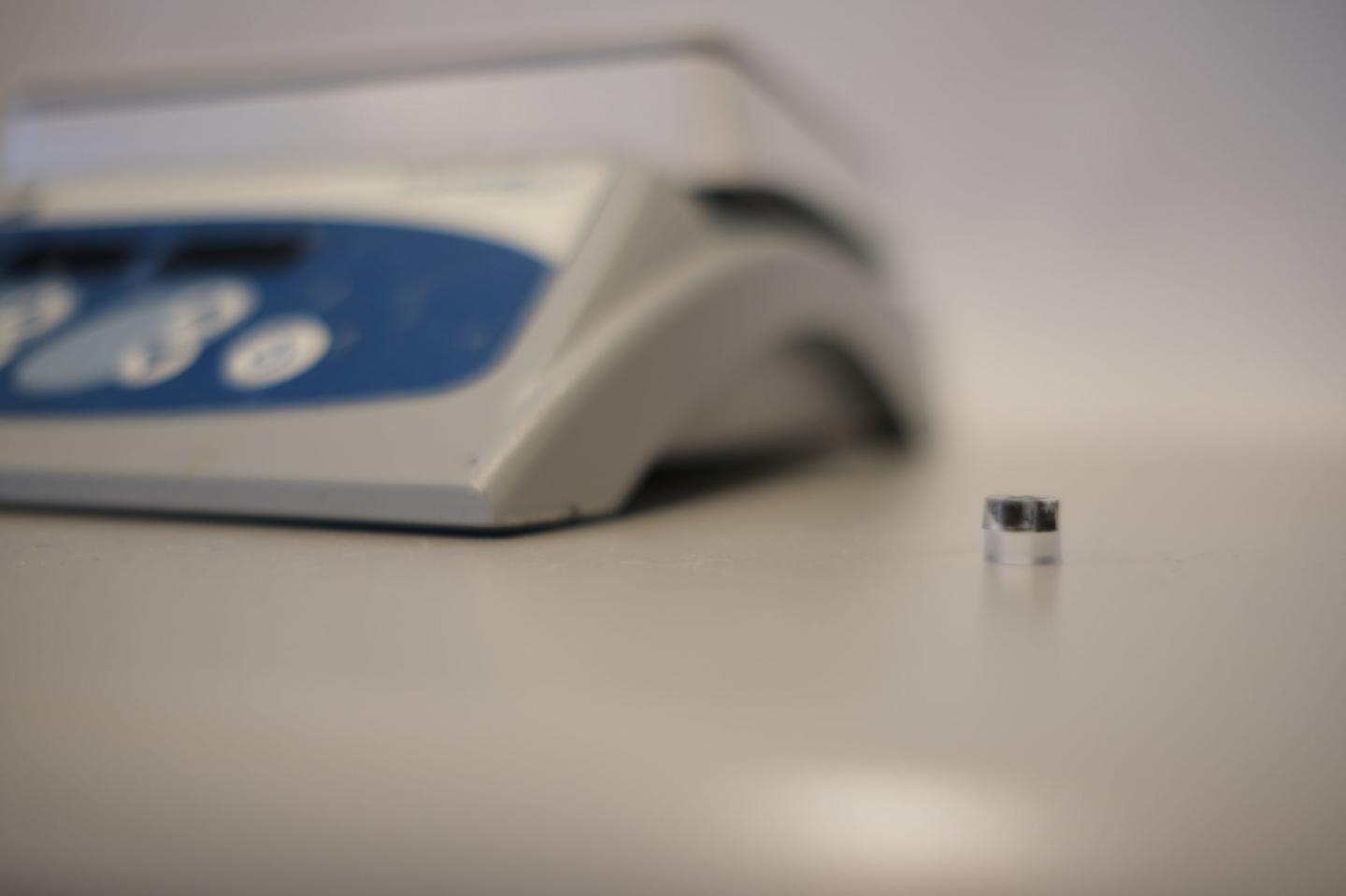
Device developed at University of Toronto Engineering regulates the temperature of biological samples through different stages of diagnostic testing
IMAGE

Credit: Qin Dai / University of Toronto Engineering


Researchers at the University of Toronto Engineering have developed a tiny “heater” – about the size of a pill – that could allow resource-limited regions around the world to test for infectious diseases without the need for specialized training or costly lab equipment.

The technology regulates the temperature of biological samples through different stages of diagnostic testing, which is crucial to the accuracy of test results.

“The precision and flexibility of our heater opens the door to a future of do-it-yourself diagnostic kits,” says PhD candidate Pranav Kadhiresan, who developed the device alongside PhD candidate Buddhisha Udugama, under the supervision of Professor Warren Chan.

“We could combine the simplicity of a high school chemistry set with the precision of cutting-edge lab instruments,” adds Kadhiresan. The technology behind the team’s miniaturized heater invention is describe in a paper published in the journal of Proceedings of the National Academy of Sciences (PNAS).

In a typical diagnostic test for infectious pathogens, multiple temperature-regulation steps are involved. The ability to control temperature is especially important in areas where access to large research facilities are limited.

“The lack of electricity adds a layer of complexity,” says Udugama. “Our miniature heater addresses that. It can be used in various settings to detect viruses without the need for electricity. If we were to summarize the benefits of our technology, it would be accessibility, portability and precision.”

The outside of the heater tablet is composed of a non-reactive acrylic mould that encapsulates lithium, a reactive element that is commonly found in battery cells. When dissolved in water, the reactive lithium interacts with the solution to release heat and hydrogen gas. This results in an increase of temperature for an extended period of time.

The researchers observed that the reproducibility of the temperature profile is controlled by constant gas release, which is dictated by the shape of the lithium mould. After testing multiple shapes of the lithium mould – from circles to triangles – they found the star shape, measuring just 8 millimetres in diameter, to be the most ideal for precise heating.

Consolidating multiple steps into a single tablet also means specialized training is not required to operate any diagnostic testing, reducing the chance of human error and making the device accessible to the public.

“Tablets are conventionally used for medications such as aspirins. But we have now developed a series of tablets and pills that can diagnose diseases,” says Chan.

“Combined with smartphone technology, everyone would have a portable system that can track, monitor and diagnose infections. This is critical for preventing the spread of diseases.”

###

Media Contact
Fahad Martin Pinto
[email protected]
416-978-4498

Original Source

https://news.engineering.utoronto.ca/u-of-t-engineering-researchers-develop-pill-sized-heating-device-for-diagnostic-testing/

Related Journal Article

http://dx.doi.org/10.1073/pnas.1916562117

Tags: Biomedical/Environmental/Chemical EngineeringBiotechnologyDiagnosticsDisease in the Developing WorldInfectious/Emerging DiseasesTechnology TransferTechnology/Engineering/Computer Science
Share12Tweet8Share2ShareShareShare2

Related Posts

Digital Health Fear Patterns in Older Cancer Patients

May 15, 2026

A*STAR Scientists Unveil Novel Technique to Decipher RNA Structure’s Impact on Health and Disease

May 15, 2026

Smart Hydrogels Revolutionize Information Security with Photo-Patterning and Multi-Stimuli Responsive Structural Colors

May 15, 2026

Unveiling the Unseen: POSTECH Team Creates AI Framework to Detect Hidden Defects in Metal 3D Printing

May 15, 2026
Please login to join discussion

POPULAR NEWS

  • Research Indicates Potential Connection Between Prenatal Medication Exposure and Elevated Autism Risk

    843 shares
    Share 337 Tweet 211
  • New Study Reveals Plants Can Detect the Sound of Rain

    729 shares
    Share 291 Tweet 182
  • Salmonella Haem Blocks Macrophages, Boosts Infection

    62 shares
    Share 25 Tweet 16
  • Breastmilk Balances E. coli and Beneficial Bacteria in Infant Gut Microbiomes

    58 shares
    Share 23 Tweet 15

About

We bring you the latest biotechnology news from best research centers and universities around the world. Check our website.

Follow us

Recent News

Digital Health Fear Patterns in Older Cancer Patients

A*STAR Scientists Unveil Novel Technique to Decipher RNA Structure’s Impact on Health and Disease

Smart Hydrogels Revolutionize Information Security with Photo-Patterning and Multi-Stimuli Responsive Structural Colors

Subscribe to Blog via Email

Enter your email address to subscribe to this blog and receive notifications of new posts by email.

Join 82 other subscribers
  • Contact Us

Bioengineer.org © Copyright 2023 All Rights Reserved.

Welcome Back!

Login to your account below

Forgotten Password?

Retrieve your password

Please enter your username or email address to reset your password.

Log In
No Result
View All Result
  • Homepages
    • Home Page 1
    • Home Page 2
  • News
  • National
  • Business
  • Health
  • Lifestyle
  • Science

Bioengineer.org © Copyright 2023 All Rights Reserved.