A chimpanzee mom’s continued presence through her son’s tween and teen years boosts his odds of survival later in life
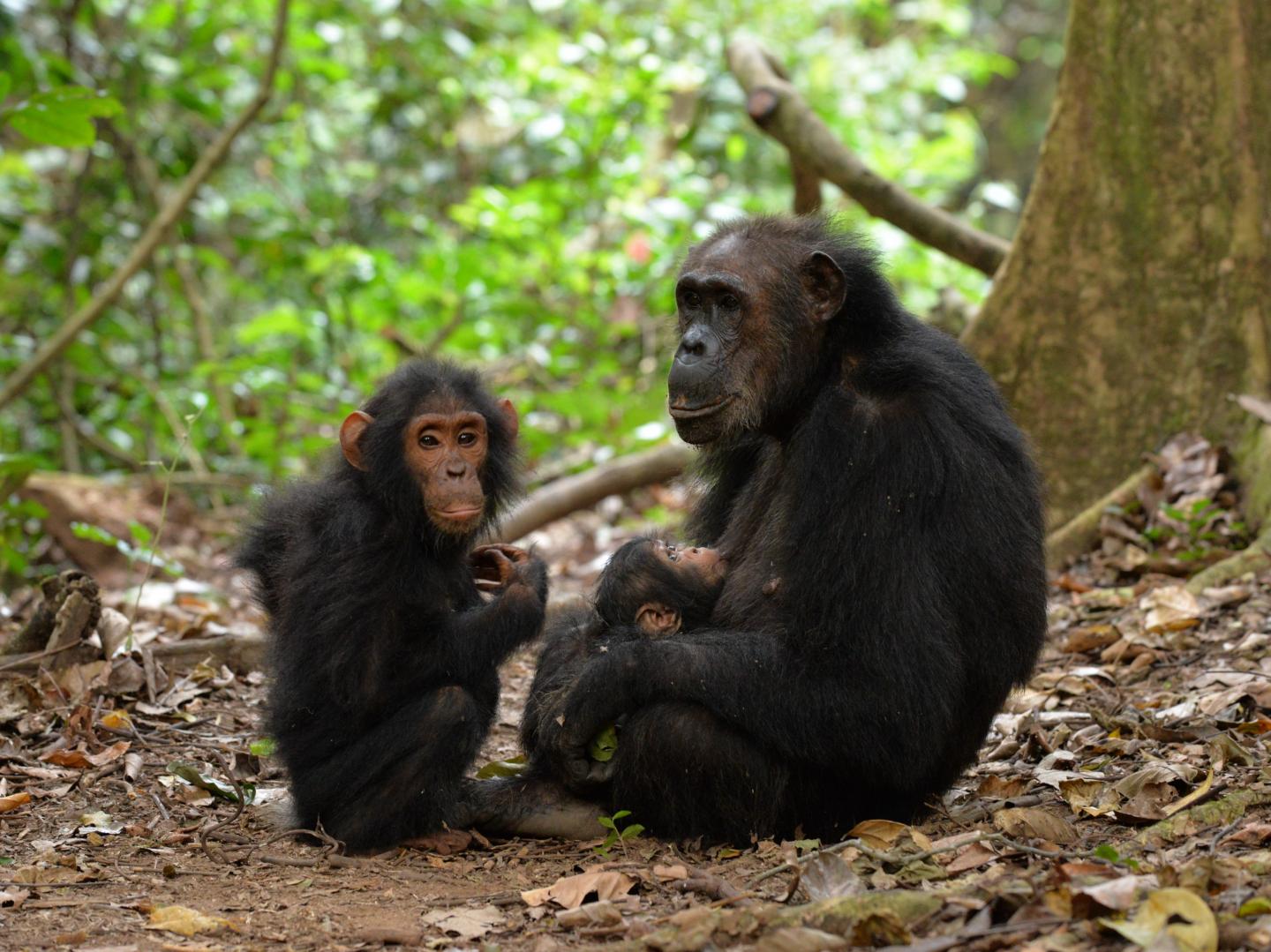
Credit: Photo by Joel Bray, Arizona State University
DURHAM, N.C. — Even kids who are nearly grown still need a parental figure to help them navigate the long path to adulthood — and our closest animal relatives are no exception.
A new study of wild chimpanzees finds that males whose moms were present during their tween and teen years had higher odds of survival later in life, compared with their peers who lost their mothers before they finished puberty.
The results appear in the February 2020 issue of the journal Behavioral Ecology and Sociobiology.
Beginning in the 1960s, researchers led by primatologist Jane Goodall started monitoring the wild chimpanzees living in Gombe National Park in western Tanzania, making note of things like births, deaths, who was related to who and how the animals interacted. Using more than 50 years of data for 247 chimpanzees, a team from Franklin & Marshall College, The George Washington University and Duke University examined the impacts of having or losing a mother at different stages of a chimpanzee’s growing up.
Perhaps not surprisingly, they found that a mom’s continued presence after weaning means better outcomes for her kids. Chimpanzees whose mothers were still around by their tenth birthdays lived longer than their orphaned peers.
But at later stages of growing up, the effect was stronger for sons than daughters. Sons whose mothers were still around between the ages of 10 and 15 were more likely to survive than sons who lost their mothers during that time, whereas daughters did just fine either way.
There’s a good reason for mom’s diminishing influence on daughters, the researchers say. In Gombe National Park, half of all chimpanzee females leave their birth families behind at puberty. But adolescent males stay put, which means mothers and sons are more likely to form lifelong bonds.
Exactly how a mom’s continued presence enhances her adolescent offspring’s survival is still unclear, the researchers say.
Compared to other mammals, primates such as chimps and humans take a long time to grow up. Young chimps continue to travel around with their moms and stay within her sight for four to five years after they’re weaned.
“Primates are unique in having a really long period of juvenility,” said associate professor Elizabeth Lonsdorf of Franklin & Marshall College.
Young adult chimpanzees have been known to turn to their moms for comfort or reassurance after tussles with other members of their group, said senior author Anne Pusey, professor emerita of evolutionary anthropology at Duke. She recalls a time at Gombe in the early 1970s when she saw a 20-year-old male named Figan hurt his hand during a tense encounter with another male. “He just went screaming to his mom,” Pusey said. “The next week he traveled constantly with his mother while his hand got better.”
Adolescent chimps could also be benefitting from their mom’s wealth of experience and knowledge about things like how to avoid predators, or how to get food, such as which fruit trees ripen when and where to find them.
“There’s a lot more research to be done about what mom actually does,” Pusey said.
But the take-home is that while a mother’s role may change after the nursing years, she continues to matter even when her offspring are nearly grown, especially to her sons.
“Even after infants are weaned, mothers still matter somehow,” said Margaret Stanton, a visiting assistant professor at Franklin & Marshall College and first author of the study.
###
This research was supported by the Jane Goodall Institute, the National Science Foundation (DBS-9021946, SBR-9319909, BCS-0452315, IOS-LTREB-1052693), the National Institutes of Health (R01 AI 058715), Harris Steel, University of Minnesota, and Duke University.
CITATION: “Consequences of Maternal Loss Before and After Weaning in Male and Female Wild Chimpanzees,” Margaret A. Stanton, Elizabeth V. Lonsdorf, Carson M. Murray and Anne E. Pusey. Behavioral Ecology and Sociobiology, January 27, 2020. DOI: 10.1007/s00265-020-2804-7.
Media Contact
Robin Ann Smith
[email protected]
919-681-8057
Original Source
https:/
Related Journal Article
http://dx.