• HOME
  • NEWS
  • EXPLORE
    • CAREER
      • Companies
      • Jobs
    • EVENTS
    • iGEM
      • News
      • Team
    • PHOTOS
    • VIDEO
    • WIKI
  • BLOG
  • COMMUNITY
    • FACEBOOK
    • INSTAGRAM
    • TWITTER
Saturday, February 7, 2026
BIOENGINEER.ORG
No Result
View All Result
  • Login
  • HOME
  • NEWS
  • EXPLORE
    • CAREER
      • Companies
      • Jobs
        • Lecturer
        • PhD Studentship
        • Postdoc
        • Research Assistant
    • EVENTS
    • iGEM
      • News
      • Team
    • PHOTOS
    • VIDEO
    • WIKI
  • BLOG
  • COMMUNITY
    • FACEBOOK
    • INSTAGRAM
    • TWITTER
  • HOME
  • NEWS
  • EXPLORE
    • CAREER
      • Companies
      • Jobs
        • Lecturer
        • PhD Studentship
        • Postdoc
        • Research Assistant
    • EVENTS
    • iGEM
      • News
      • Team
    • PHOTOS
    • VIDEO
    • WIKI
  • BLOG
  • COMMUNITY
    • FACEBOOK
    • INSTAGRAM
    • TWITTER
No Result
View All Result
Bioengineer.org
No Result
View All Result
Home NEWS Science News Biology

University of Guam secures grant for innovative coral restoration work

Bioengineer by Bioengineer
February 14, 2020
in Biology
Reading Time: 2 mins read
0
IMAGE
Share on FacebookShare on TwitterShare on LinkedinShare on RedditShare on Telegram

IMAGE

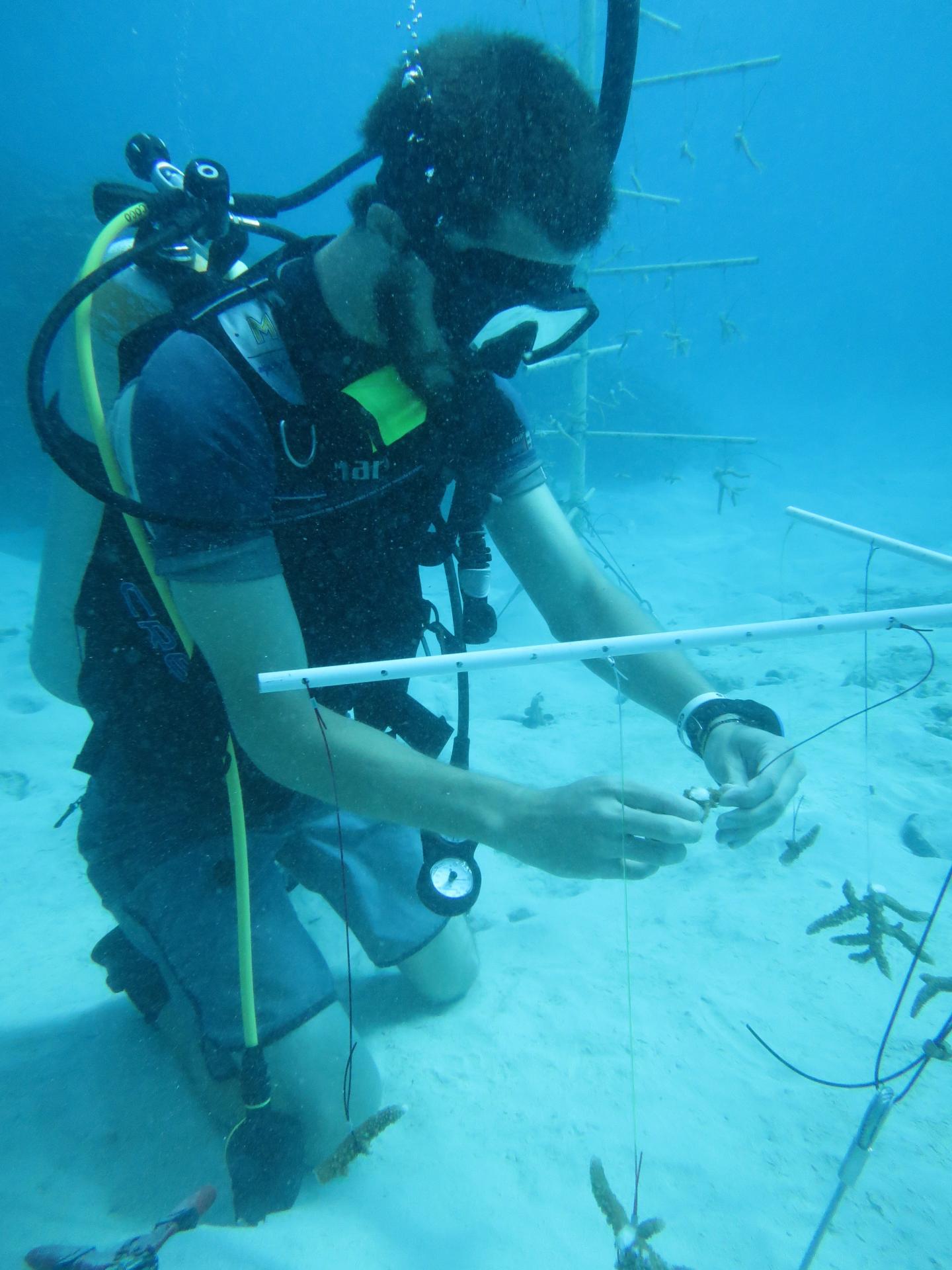
Credit: Photo courtesy of University of Guam


Coral restoration efforts on Guam received a funding boost of $856,000 for the next three years. The funds were awarded to the University of Guam on Nov. 18 by the National Fish & Wildlife Foundation through its National Coastal Resilience Fund and will be matched with $596,000 raised by the university, bringing the total to $1.4 million.

The University of Guam project was one of 44 projects awarded nationally among 176 proposals.

“This award is a significant amount ­– the largest amount so far for coral restoration in this region, to my knowledge,” said Laurie J. Raymundo, interim director of the UOG Marine Laboratory who will serve as principal investigator and researcher on the grant.

The project will involve Raymundo and her graduate students, led by Ph.D. student Whitney Hoot, propagating types of staghorn corals that survived the mass coral bleaching and mortality events in the last five years. They will outplant cultured corals onto reef flats in Tumon, Piti, and Cocos/Achang while developing best restoration practices, including determining optimum planting density, maximizing genetic diversity, and examining environmental influences that impact the process.

David Combosch, an assistant professor of population genetics at the Marine Lab, will be genotyping all of Guam’s cultured populations of staghorns to examine differences in heat resilience and disease susceptibility. The group will attempt to cross breed gametes of these different populations, as well as plant populations of mixed genotypes, to facilitate successful interbreeding and development of genetically diverse populations.

“Throughout the course of this grant, I hope to develop a solid core of people who are trained to do this work on Guam and to develop some tested and reliable methods for propagating and outplanting specific species,” Raymundo said. “The grant has promised 4.15 hectares of planted coral substrate over the course of three years.”

The National Coastal Resilience Fund grant slate for 2019 will invest $29.3 million nationwide into innovative approaches that strengthen natural infrastructure to protect coastal communities, enhance fish and wildlife habitat, and allow communities to recover more quickly from hazardous weather events.

Funds will be administered by the National Fish & Wildlife Foundation in partnership with the National Oceanic & Atmospheric Administration. The Research Corporation of the University of Guam will manage the grant for the university.

###

Media Contact
Jonas Macapinlac
[email protected]
671-787-1010

Original Source

https://www.uog.edu/news-announcements/2019-2020/2019-press-release-university-of-guam-secures-grant-for-innovative-coral-restoration-work.php

Tags: BiologyClimate ChangeGrants/FundingMarine/Freshwater BiologyTemperature-Dependent Phenomena
Share12Tweet8Share2ShareShareShare2

Related Posts

Florida Cane Toad: Complex Spread and Selective Evolution

Florida Cane Toad: Complex Spread and Selective Evolution

February 7, 2026
New Study Uncovers Mechanism Behind Burn Pit Particulate Matter–Induced Lung Inflammation

New Study Uncovers Mechanism Behind Burn Pit Particulate Matter–Induced Lung Inflammation

February 6, 2026

DeepBlastoid: Advancing Automated and Efficient Evaluation of Human Blastoids with Deep Learning

February 6, 2026

Navigating the Gut: The Role of Formic Acid in the Microbiome

February 6, 2026
Please login to join discussion

POPULAR NEWS

  • Robotic Ureteral Reconstruction: A Novel Approach

    Robotic Ureteral Reconstruction: A Novel Approach

    82 shares
    Share 33 Tweet 21
  • Digital Privacy: Health Data Control in Incarceration

    63 shares
    Share 25 Tweet 16
  • Study Reveals Lipid Accumulation in ME/CFS Cells

    57 shares
    Share 23 Tweet 14
  • Breakthrough in RNA Research Accelerates Medical Innovations Timeline

    53 shares
    Share 21 Tweet 13

About

We bring you the latest biotechnology news from best research centers and universities around the world. Check our website.

Follow us

Recent News

Evaluating Pediatric Emergency Care Quality in Ethiopia

TPMT Expression Predictions Linked to Azathioprine Side Effects

Improving Dementia Care with Enhanced Activity Kits

Subscribe to Blog via Email

Success! An email was just sent to confirm your subscription. Please find the email now and click 'Confirm' to start subscribing.

Join 73 other subscribers
  • Contact Us

Bioengineer.org © Copyright 2023 All Rights Reserved.

Welcome Back!

Login to your account below

Forgotten Password?

Retrieve your password

Please enter your username or email address to reset your password.

Log In
No Result
View All Result
  • Homepages
    • Home Page 1
    • Home Page 2
  • News
  • National
  • Business
  • Health
  • Lifestyle
  • Science

Bioengineer.org © Copyright 2023 All Rights Reserved.