• HOME
  • NEWS
  • EXPLORE
    • CAREER
      • Companies
      • Jobs
    • EVENTS
    • iGEM
      • News
      • Team
    • PHOTOS
    • VIDEO
    • WIKI
  • BLOG
  • COMMUNITY
    • FACEBOOK
    • INSTAGRAM
    • TWITTER
Saturday, November 14, 2026
BIOENGINEER.ORG
No Result
View All Result
  • Login
  • HOME
  • NEWS
  • EXPLORE
    • CAREER
      • Companies
      • Jobs
        • Lecturer
        • PhD Studentship
        • Postdoc
        • Research Assistant
    • EVENTS
    • iGEM
      • News
      • Team
    • PHOTOS
    • VIDEO
    • WIKI
  • BLOG
  • COMMUNITY
    • FACEBOOK
    • INSTAGRAM
    • TWITTER
No Result
View All Result
Bioengineer.org
No Result
View All Result
Home NEWS Science News

Designer proteins

Bioengineer by Bioengineer
February 7, 2020
in Science News
Reading Time: 2 mins read
0
IMAGE
Share on FacebookShare on TwitterShare on LinkedinShare on RedditShare on Telegram

IMAGE

Credit: Ian C Haydon / UW Institute for Protein Design


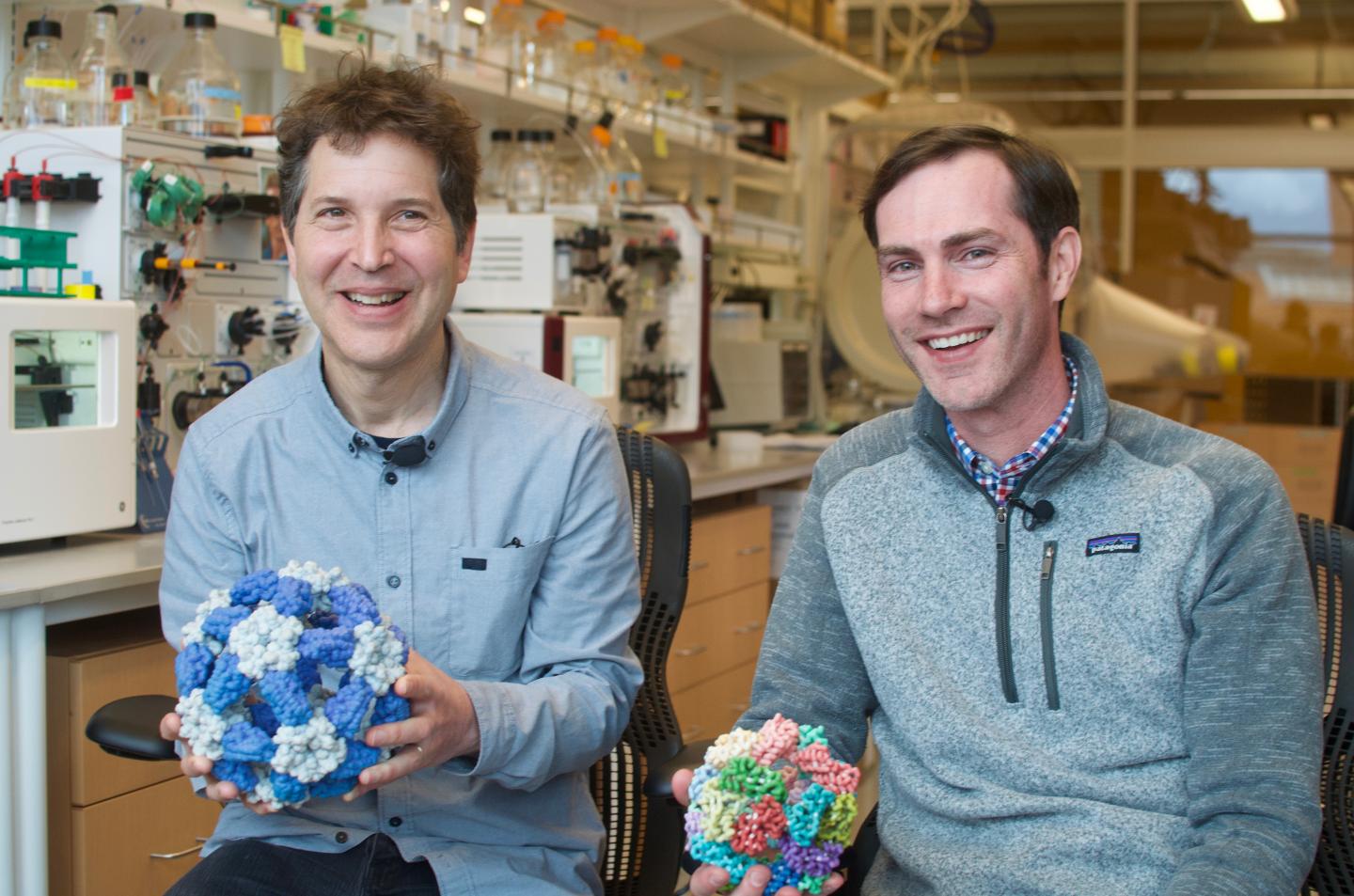
Proteins are the molecular machines that make all living things hum — they stop deadly infections, heal cells and capture energy from the sun. Yet because our basic understanding of how proteins work has until now remained a mystery, humans have only been able to harness the power of proteins by modifying ones we happen to find in nature. This is beginning to change. Enabled by decades of basic research, the rise of inexpensive computing, and the genomics revolution in reading and writing DNA, scientists can now design new proteins from scratch with specific functions.

David Baker, Professor of Biochemistry and Director of the Institute for Protein Design at the University of Washington will speak about how algorithmic processes such as de novo design predict protein structures, protein folding mechanisms, and new protein functions. Computational protein design is now being used to create proteins with novel structures using iterative structure prediction and experimental structure characterization. These results suggest that new proteins — encoded by synthetic genes –can be designed on computers with atomic-level accuracy.

In April 2019, the Institute for Protein Design (IPD) was selected as part of The Audacious Project, a successor to the TED Prize. As a result, the IPD is expanding its research on vaccine design, targeted drug delivery, ‘smart’ therapeutics, next-generation nanomaterials and more.

###

More information:

Designer Proteins

https://aaas.confex.com/aaas/2020/meetingapp.cgi/Paper/26043

UW Institute for Protein Design website:

https://www.ipd.uw.edu/

Baker Lab website:

https://www.bakerlab.org/

David Baker’s 2019 TED talk:

https://www.ted.com/talks/david_baker_5_challenges_we_could_solve_by_designing_new_proteins

Media Contact
Marianne Lucien
marianne.lucien@hk.ethz.ch
41-795-486-255

Original Source

https://ethz.ch/en/the-eth-zurich/global/eth-global-news-events/2019/11/eth-meets-you-at-the-aaas-2020-in-seattle.html

Related Journal Article

http://dx.doi.org/10.1038/nature19946

Tags: BiochemistryBioinformaticsBiologyBiomedical/Environmental/Chemical EngineeringBiotechnologyCell BiologyGenesMedical/Scientific EthicsResearch/Development
Share12Tweet8Share2ShareShareShare2

Related Posts

Optimized Lightweight Face Recognition Network Improves Performance on Embedded AI Platforms

Optimized Lightweight Face Recognition Network Improves Performance on Embedded AI Platforms

November 14, 2026
Smart Cyber Operating Theater Testbed Integrates Surgical Devices Using OPeLiNK Architecture

Smart Cyber Operating Theater Testbed Integrates Surgical Devices Using OPeLiNK Architecture

November 14, 2026

BUN to Creatinine Ratio Shows Nonlinear Mortality Risk in Older Atrial Fibrillation

November 14, 2026

Simulated Annealing Cuts Benchmark Drone Delivery Distances Up to 55 Percent

November 14, 2026
Please login to join discussion

POPULAR NEWS

  • Disordered Protein Termini Suppress Cotranslational Degradation in Yeast and Human Cells

    Disordered Protein Termini Suppress Cotranslational Degradation in Yeast and Human Cells

    29 shares
    Share 12 Tweet 7
  • Open-Source Python Library pt13528 Verifies ISO Proficiency Statistics and Exposes Discrepancies

    29 shares
    Share 12 Tweet 7
  • Machine Learning Model Predicts In-Hospital Mortality in Severe Fever with Thrombocytopenia Syndrome

    29 shares
    Share 12 Tweet 7
  • Machine Learning Accurately Predicts Chronic Ankle Reinjury Using Sex-Adjusted Thresholds

    29 shares
    Share 12 Tweet 7

About

We bring you the latest biotechnology news from best research centers and universities around the world. Check our website.

Follow us

Recent News

Optimized Lightweight Face Recognition Network Improves Performance on Embedded AI Platforms

Smart Cyber Operating Theater Testbed Integrates Surgical Devices Using OPeLiNK Architecture

BUN to Creatinine Ratio Shows Nonlinear Mortality Risk in Older Atrial Fibrillation

Subscribe to Blog via Email

Enter your email address to subscribe to this blog and receive notifications of new posts by email.

Join 87 other subscribers
  • Contact Us

Bioengineer.org © Copyright 2023 All Rights Reserved.

Welcome Back!

Login to your account below

Forgotten Password?

Retrieve your password

Please enter your username or email address to reset your password.

Log In
No Result
View All Result
  • Homepages
    • Home Page 1
    • Home Page 2
  • News
  • National
  • Business
  • Health
  • Lifestyle
  • Science

Bioengineer.org © Copyright 2023 All Rights Reserved.