• HOME
  • NEWS
  • EXPLORE
    • CAREER
      • Companies
      • Jobs
    • EVENTS
    • iGEM
      • News
      • Team
    • PHOTOS
    • VIDEO
    • WIKI
  • BLOG
  • COMMUNITY
    • FACEBOOK
    • INSTAGRAM
    • TWITTER
Thursday, March 26, 2026
BIOENGINEER.ORG
No Result
View All Result
  • Login
  • HOME
  • NEWS
  • EXPLORE
    • CAREER
      • Companies
      • Jobs
        • Lecturer
        • PhD Studentship
        • Postdoc
        • Research Assistant
    • EVENTS
    • iGEM
      • News
      • Team
    • PHOTOS
    • VIDEO
    • WIKI
  • BLOG
  • COMMUNITY
    • FACEBOOK
    • INSTAGRAM
    • TWITTER
  • HOME
  • NEWS
  • EXPLORE
    • CAREER
      • Companies
      • Jobs
        • Lecturer
        • PhD Studentship
        • Postdoc
        • Research Assistant
    • EVENTS
    • iGEM
      • News
      • Team
    • PHOTOS
    • VIDEO
    • WIKI
  • BLOG
  • COMMUNITY
    • FACEBOOK
    • INSTAGRAM
    • TWITTER
No Result
View All Result
Bioengineer.org
No Result
View All Result
Home NEWS Science News Biology

Global cooling after nuclear war would harm ocean life

Bioengineer by Bioengineer
February 5, 2020
in Biology
Reading Time: 2 mins read
0
IMAGE
Share on FacebookShare on TwitterShare on LinkedinShare on RedditShare on Telegram

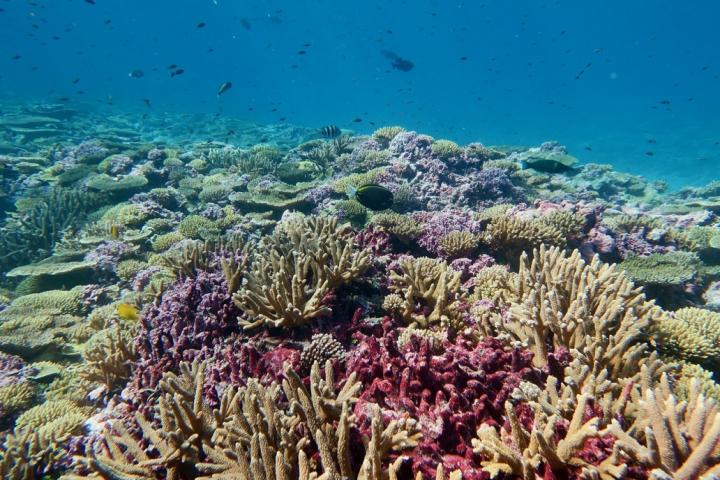
Seafood production also may be impacted by increased acidification
IMAGE

Credit: NOAA Fisheries/Morgan Winston


A nuclear war that cooled Earth could worsen the impact of ocean acidification on corals, clams, oysters and other marine life with shells or skeletons, according to the first study of its kind.

“We found that the ocean’s chemistry would change, with global cooling dissolving atmospheric carbon into the upper ocean and exacerbating the primary threat of ocean acidification,” said co-author Alan Robock, a Distinguished Professor in the Department of Environmental Sciences in the School of Environmental and Biological Sciences at Rutgers University-New Brunswick.

The study is published in the journal Geophysical Research Letters.

Scientists looked at how climate changes stemming from nuclear war would affect the oceans. They used a global climate model in which the climate reacted to soot (black carbon) in smoke that would be injected into the upper atmosphere from fires ignited by nuclear weapons. They considered a range of hypothetical nuclear wars, including a relatively small one between India and Pakistan and a large one between the United States and Russia.

Excess carbon dioxide from the burning of fossil fuels enters the ocean and reacts with water to form carbonic acid, which decreases ocean pH (makes it more acidic) and lowers levels of carbonate ions. Corals, clams, oysters and other marine organisms use carbonate ions to create their shells and skeletons, according to the National Oceanic and Atmospheric Administration. A more acidic ocean makes it harder to form and maintain shells and skeletons.

The massive amount of smoke from a nuclear conflict would block sunlight and cause global cooling. The cooling would temporarily boost the pH in the surface ocean over five years and briefly lessen the decline in pH from ocean acidification. But the cooling would also lead to lower levels of carbonate ions for about 10 years, challenging shell maintenance in marine organisms.

“We have known for a while that agriculture on land would be severely affected by climate change from nuclear war,” Robock said. “A lingering question is whether the survivors could still get food from the sea. Our study is the first step in answering this question.”

The next step is to combine projected changes in ocean chemistry with projected changes in temperature and salinity and assess their impacts on shellfish and fish stocks throughout the oceans, he said.

###

Joshua Coupe, a Rutgers doctoral student, contributed to the study, which also included scientists at the University of Colorado Boulder; University of Texas Rio Grande Valley; National Center for Atmospheric Research; U.S. Department of Energy; and University of California, Santa Barbara.

Media Contact
Todd Bates
[email protected]
848-932-0550

Original Source

https://news.rutgers.edu/global-cooling-after-nuclear-war-would-harm-ocean-life/20200204#.XjnB4GhKi71

Related Journal Article

http://dx.doi.org/10.1029/2019GL086246

Tags: Climate ChangeEarth ScienceEcology/EnvironmentFisheries/AquacultureMarine/Freshwater BiologyNutrition/NutrientsOceanographyTemperature-Dependent PhenomenaWeaponry
Share12Tweet8Share2ShareShareShare2

Related Posts

How to sway group opinions: Encourage opponents to stay undecided

How to sway group opinions: Encourage opponents to stay undecided

March 23, 2026
Deep Learning Model Maps How Individual Cells Shape Disease Outcomes

Deep Learning Model Maps How Individual Cells Shape Disease Outcomes

March 20, 2026

Removing only 15 female sharks annually could endanger the entire population, scientists warn

March 20, 2026

Scientists Urge Fragrance Industry to Transition from Sustainability Talk to Active Funding of Plant Conservation

March 20, 2026
Please login to join discussion

POPULAR NEWS

  • blank

    Revolutionary AI Model Enhances Precision in Detecting Food Contamination

    96 shares
    Share 38 Tweet 24
  • Imagine a Social Media Feed That Challenges Your Views Instead of Reinforcing Them

    1003 shares
    Share 397 Tweet 248
  • Uncovering Functions of Cavernous Malformation Proteins in Organoids

    54 shares
    Share 22 Tweet 14
  • Promising Outcomes from First Clinical Trials of Gene Regulation in Epilepsy

    51 shares
    Share 20 Tweet 13

About

We bring you the latest biotechnology news from best research centers and universities around the world. Check our website.

Follow us

Recent News

In-Sensor Cryptography Links Physical Process to Digital Identity

Can Psychosocial Factors Influence Cancer Risk?

Depression Factors in Elderly: Pre vs. Post-COVID Analysis

Subscribe to Blog via Email

Enter your email address to subscribe to this blog and receive notifications of new posts by email.

Join 78 other subscribers
  • Contact Us

Bioengineer.org © Copyright 2023 All Rights Reserved.

Welcome Back!

Login to your account below

Forgotten Password?

Retrieve your password

Please enter your username or email address to reset your password.

Log In
No Result
View All Result
  • Homepages
    • Home Page 1
    • Home Page 2
  • News
  • National
  • Business
  • Health
  • Lifestyle
  • Science

Bioengineer.org © Copyright 2023 All Rights Reserved.