• HOME
  • NEWS
  • EXPLORE
    • CAREER
      • Companies
      • Jobs
    • EVENTS
    • iGEM
      • News
      • Team
    • PHOTOS
    • VIDEO
    • WIKI
  • BLOG
  • COMMUNITY
    • FACEBOOK
    • INSTAGRAM
    • TWITTER
Thursday, July 9, 2026
BIOENGINEER.ORG
No Result
View All Result
  • Login
  • HOME
  • NEWS
  • EXPLORE
    • CAREER
      • Companies
      • Jobs
        • Lecturer
        • PhD Studentship
        • Postdoc
        • Research Assistant
    • EVENTS
    • iGEM
      • News
      • Team
    • PHOTOS
    • VIDEO
    • WIKI
  • BLOG
  • COMMUNITY
    • FACEBOOK
    • INSTAGRAM
    • TWITTER
  • HOME
  • NEWS
  • EXPLORE
    • CAREER
      • Companies
      • Jobs
        • Lecturer
        • PhD Studentship
        • Postdoc
        • Research Assistant
    • EVENTS
    • iGEM
      • News
      • Team
    • PHOTOS
    • VIDEO
    • WIKI
  • BLOG
  • COMMUNITY
    • FACEBOOK
    • INSTAGRAM
    • TWITTER
No Result
View All Result
Bioengineer.org
No Result
View All Result
Home NEWS Science News Biology

Identified a determinant protein for tumor progression and metastasis in Rhabdomyos

Bioengineer by Bioengineer
January 29, 2020
in Biology
Reading Time: 2 mins read
0
IMAGE
Share on FacebookShare on TwitterShare on LinkedinShare on RedditShare on Telegram

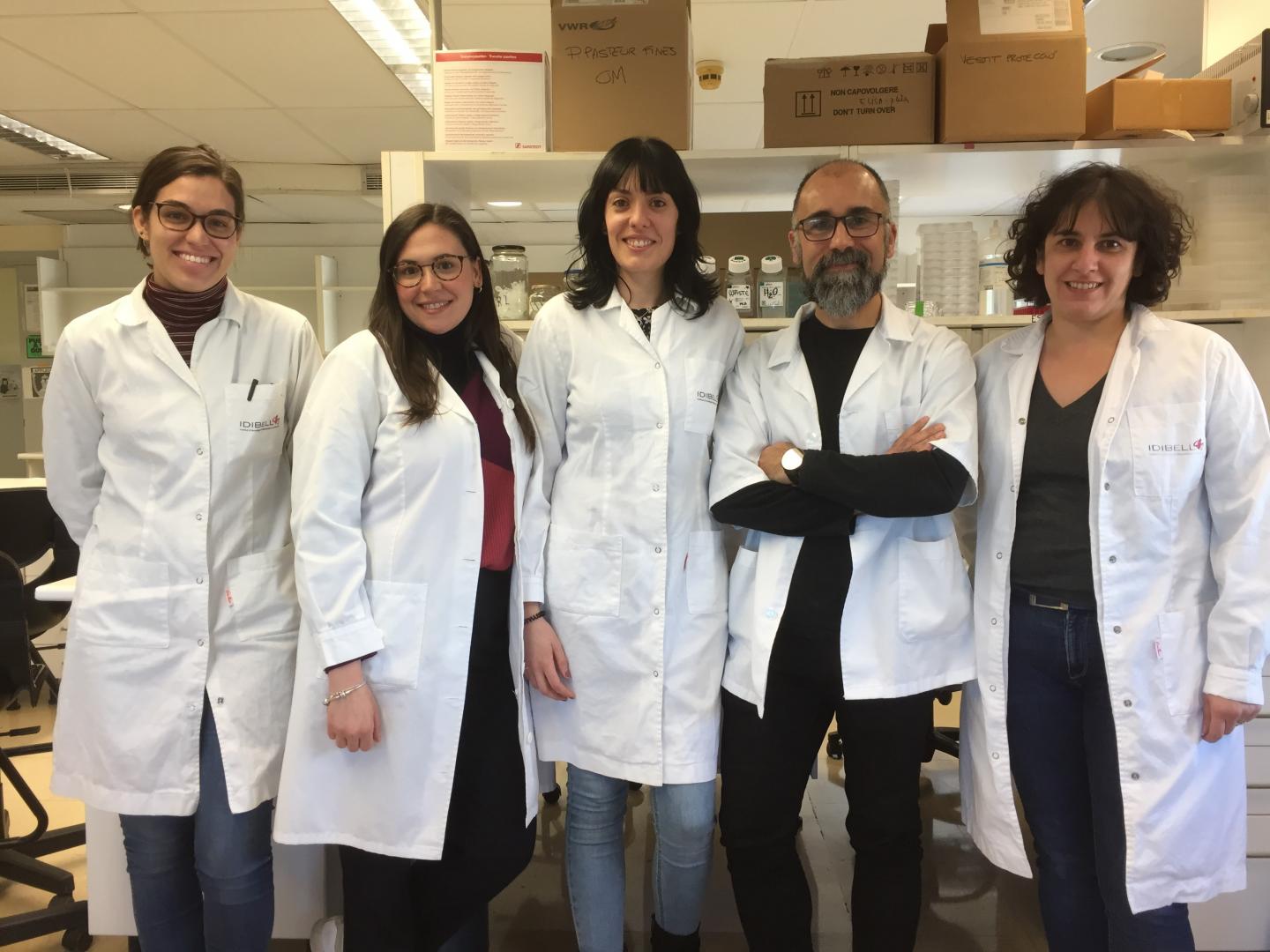
LOXL2 protein levels are increased in the cells from this type of sarcoma
IMAGE

Credit: Dr. Òscar M. Tirado group

Rhabdomyosarcoma is the most common childhood cancer in the soft tissues, and it is mainly originated in the muscles. It represents almost 5% of pediatric tumors, and the survival rate is between 60% and 70%. The work published in “Cancer Letters” journal focuses on the most aggressive and hard to treat rhabdomyosarcoma, the alveolar type. Metastasis plays an essential role in the disease progression, because it induces a severe decrease in patient survival rate, lower than 30%. Dr. Oscar M. Tirado’s group from Bellvitge Biomedical Research Institute (IDIBELL) has observed that this type of sarcoma cells have an increased level of LOXL2 protein, that is implicated in tumors metastatic capacity.

In a normal situation, LOXL2 acts, outside the cell, modifying the surrounding extracellular matrix. However, in a tumor environment, LOXL2 acts inside the cell, promoting metastasis processes by a mechanism independent from its normal function. Dr. Olga Almacellas, the first author of the study, states that in future treatment, that tries to inhibit LOXL2 activity to reduce rhabdomyosarcoma metastasis, the drug penetration inside the cells must be considered. Besides, she adds that existing drugs that block the classic LOXL2 activity would not affect their metastatic role, as it is independent of its classical function.

Not only cellular models of alveolar rhabdomyosarcoma showed a clear decrease in metastatic capacity by LOXL2 elimination. Also, the injection of these cells into healthy mice demonstrated that those expressing LOXL2 formed more metastasis than those without it. Additionally, patients’ samples, from the Virgen del Rocío University Hospital, suggested a lower survival rate for patients with higher levels of LOXL2. However, a more extensive study with more samples would be needed to confirm this relationship.

One of the questions that remains open is how LOXL2 regulates metastatic function in tumor cells. Researchers have found that it interacts with vimentin. A cytoskeletal protein that provides structural support, cell resistance and plays a crucial role in cell migration. Basics processes in metastasis.

###

This study was funded in part by the Alba Pérez Foundation fighting childhood cancer, the Carlos III Health Institute, the EU European Regional Development Fund (ERDF) and the SEARCH Program/Generalitat de Catalunya (2017SGR332).

Media Contact
Carla Serra
[email protected]
0034-932-607-825

Original Source

http://www.idibell.cat/ca/actualitat/noticies/identifiquen-una-proteina-determinant-la-progressio-tumoral-i-la-metastasi-del

Related Journal Article

http://dx.doi.org/10.1016/j.canlet.2019.12.040

Tags: BiologyBiotechnologycancerCell BiologyMedicine/Health
Share12Tweet8Share2ShareShareShare2

Related Posts

Global study reveals key process controlling cellular fat energy use

Global study reveals key process controlling cellular fat energy use

July 9, 2026
Caddisfly Silk Gene Rapidly Evolves While Keeping Its Stickiness

Caddisfly Silk Gene Rapidly Evolves While Keeping Its Stickiness

July 9, 2026

New Research Reveals Necks Exist in Fishes and Amphibians

July 9, 2026

New Genetic Screen Advances Understanding of Human Development

July 9, 2026
Please login to join discussion

POPULAR NEWS

  • Detection of EDCs in Breast Milk and Infant Urine Up to Six Months Highlights Early Exposure Risks

    77 shares
    Share 31 Tweet 19
  • New Drug Candidate Developed at McMaster Shows Potential for Treating Brain Cancer

    58 shares
    Share 23 Tweet 15
  • KTU Researchers Explore Ultrasound’s Role in Enhancing Blood Flow Beyond Diagnostics

    53 shares
    Share 21 Tweet 13
  • 高齢者の骨粗鬆症治療の持続性比較

    51 shares
    Share 20 Tweet 13

About

BIOENGINEER.ORG

We bring you the latest biotechnology news from best research centers and universities around the world. Check our website.

Follow us

Recent News

Phylo-Plex Enables Low-Cost, High-Resolution Genomic Epidemiology Deployment

Low Physical Activity Raises Fall Risk in Older Adults at High Altitudes

Honey’s Anti-Aging Effects Revealed in Human Skin Cells Study

Subscribe to Blog via Email

Enter your email address to subscribe to this blog and receive notifications of new posts by email.

Join 84 other subscribers
  • Contact Us

Bioengineer.org © Copyright 2023 All Rights Reserved.

Welcome Back!

Login to your account below

Forgotten Password?

Retrieve your password

Please enter your username or email address to reset your password.

Log In
No Result
View All Result
  • Homepages
    • Home Page 1
    • Home Page 2
  • News
  • National
  • Business
  • Health
  • Lifestyle
  • Science

Bioengineer.org © Copyright 2023 All Rights Reserved.