• HOME
  • NEWS
  • EXPLORE
    • CAREER
      • Companies
      • Jobs
    • EVENTS
    • iGEM
      • News
      • Team
    • PHOTOS
    • VIDEO
    • WIKI
  • BLOG
  • COMMUNITY
    • FACEBOOK
    • INSTAGRAM
    • TWITTER
Wednesday, May 13, 2026
BIOENGINEER.ORG
No Result
View All Result
  • Login
  • HOME
  • NEWS
  • EXPLORE
    • CAREER
      • Companies
      • Jobs
        • Lecturer
        • PhD Studentship
        • Postdoc
        • Research Assistant
    • EVENTS
    • iGEM
      • News
      • Team
    • PHOTOS
    • VIDEO
    • WIKI
  • BLOG
  • COMMUNITY
    • FACEBOOK
    • INSTAGRAM
    • TWITTER
  • HOME
  • NEWS
  • EXPLORE
    • CAREER
      • Companies
      • Jobs
        • Lecturer
        • PhD Studentship
        • Postdoc
        • Research Assistant
    • EVENTS
    • iGEM
      • News
      • Team
    • PHOTOS
    • VIDEO
    • WIKI
  • BLOG
  • COMMUNITY
    • FACEBOOK
    • INSTAGRAM
    • TWITTER
No Result
View All Result
Bioengineer.org
No Result
View All Result
Home NEWS Science News Health

A way to look younger is right under your nose, UCLA-led study finds

Bioengineer by Bioengineer
January 27, 2020
in Health
Reading Time: 3 mins read
0
IMAGE
Share on FacebookShare on TwitterShare on LinkedinShare on RedditShare on Telegram

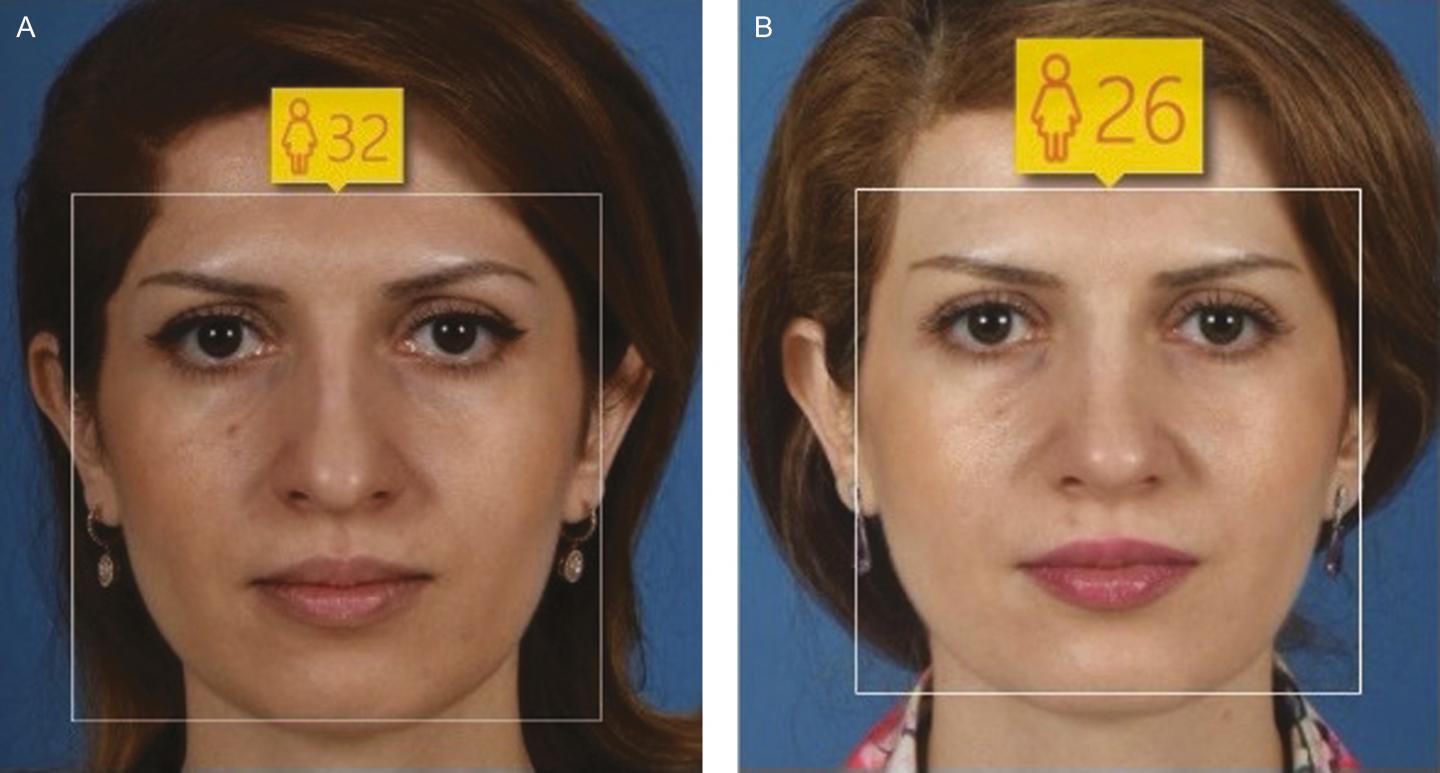
Rhinoplasty may make a woman appear to be three years younger, machine learning shows
IMAGE

Credit: UCLA Health


From face-lifts to facials and fillers, there’s no shortage of ways to reduce the inevitable signs of aging. But there’s one cosmetic procedure that most people don’t think about as a tool that can make women look years younger.

Rhinoplasty, or cosmetic nose surgery, may make a woman look up to three years younger, according to a new study led by researchers at UCLA that used a type of artificial intelligence known as machine learning.

The researchers used the technology to study before-and-after photos of 100 female patients, ages 16 to 72, all of whom underwent rhinoplasty for cosmetic reasons by a UCLA surgeon and senior author of the study. At 12 or more weeks later, standardized photographs were analyzed with the technology, which estimates a person’s age by cropping the face from a photograph and then extracting a prediction through an algorithm.

“Rhinoplasty is widely recognized as a facial beautification procedure, but it isn’t commonly known for its anti-aging effects,” said Dr. Robert Dorfman, lead author of the study and a resident physician in the division of plastic and reconstructive surgery at the David Geffen School of Medicine at UCLA. The study was published in the Aesthetic Surgery Journal.

Rhinoplasty involves making structural changes to the bone and cartilage through small incisions inside the nose and when necessary around the nostril, all while a patient is under general anesthesia. The rhinoplasty procedures in this study were customized for each patient to fit the person’s face best.

Until now, Dorfman said, there has been little to no objective scientific evidence for the rejuvenating effect of rhinoplasty. “This technology allows us to accurately estimate age in an objective way and has proven to recognize patterns and features of aging beyond what the human eye can perceive,” he said.

The results were even more dramatic in women over 40, some of whom were estimated to look seven years younger after rhinoplasty. However, because the sample size of the 40-plus group was small (25 women), the researchers said further studies need to be done to validate the results. (The median age of the study participants was 32.)

The nose is not usually a focus of anti-aging treatment. However, like other features of the body, the human nose, which is made up of soft tissue, cartilage and bone, also ages.

“The nose loses support as it ages and can take on a more prominent or droopy appearance,” said Dr. Jason Roostaeian, senior author of the study and associate clinical professor in the division of plastic and reconstructive surgery at the Geffen School.

The nose is also affected when other features of the face age. “When we lose facial fat and volume in our cheeks, which are the canvas that our nose sits on, the nose becomes more prominent.”

By refining the nose, he said, the youthful appearance of the entire face can be refined. “This is something we have subjectively thought for many decades but now we have objective evidence through artificial intelligence to support this.”

###

Media Contact
Alana Prisco
[email protected]
310-267-0465

Original Source

http://newsroom.ucla.edu/releases/ai-rhinoplasty-nose-job-younger

Tags: AgingMedicine/HealthRobotry/Artificial IntelligenceSurgery
Share12Tweet8Share2ShareShareShare2

Related Posts

Study Finds Sustained Weight Loss Possible by Transitioning from Injectable Obesity Drugs to Daily Oral Orforglipron (ATTAIN-MAINTAIN)

May 13, 2026

Weight Loss Maintained Seven Times More Effectively with Continued Maximum Dose of Tirzepatide, Study Finds

May 12, 2026

Immune Protein Identified as Potential Target to Slow Parkinson’s Disease Progression

May 12, 2026

New Insights Reveal How Sleep Habits Could Increase Dementia Risk

May 12, 2026
Please login to join discussion

POPULAR NEWS

  • Research Indicates Potential Connection Between Prenatal Medication Exposure and Elevated Autism Risk

    842 shares
    Share 337 Tweet 211
  • New Study Reveals Plants Can Detect the Sound of Rain

    728 shares
    Share 290 Tweet 182
  • Salmonella Haem Blocks Macrophages, Boosts Infection

    62 shares
    Share 25 Tweet 16
  • Breastmilk Balances E. coli and Beneficial Bacteria in Infant Gut Microbiomes

    57 shares
    Share 23 Tweet 14

About

We bring you the latest biotechnology news from best research centers and universities around the world. Check our website.

Follow us

Recent News

Study Finds Sustained Weight Loss Possible by Transitioning from Injectable Obesity Drugs to Daily Oral Orforglipron (ATTAIN-MAINTAIN)

Weight Loss Maintained Seven Times More Effectively with Continued Maximum Dose of Tirzepatide, Study Finds

Immune Protein Identified as Potential Target to Slow Parkinson’s Disease Progression

Subscribe to Blog via Email

Enter your email address to subscribe to this blog and receive notifications of new posts by email.

Join 82 other subscribers
  • Contact Us

Bioengineer.org © Copyright 2023 All Rights Reserved.

Welcome Back!

Login to your account below

Forgotten Password?

Retrieve your password

Please enter your username or email address to reset your password.

Log In
No Result
View All Result
  • Homepages
    • Home Page 1
    • Home Page 2
  • News
  • National
  • Business
  • Health
  • Lifestyle
  • Science

Bioengineer.org © Copyright 2023 All Rights Reserved.