• HOME
  • NEWS
  • EXPLORE
    • CAREER
      • Companies
      • Jobs
    • EVENTS
    • iGEM
      • News
      • Team
    • PHOTOS
    • VIDEO
    • WIKI
  • BLOG
  • COMMUNITY
    • FACEBOOK
    • INSTAGRAM
    • TWITTER
Sunday, August 16, 2026
BIOENGINEER.ORG
No Result
View All Result
  • Login
  • HOME
  • NEWS
  • EXPLORE
    • CAREER
      • Companies
      • Jobs
        • Lecturer
        • PhD Studentship
        • Postdoc
        • Research Assistant
    • EVENTS
    • iGEM
      • News
      • Team
    • PHOTOS
    • VIDEO
    • WIKI
  • BLOG
  • COMMUNITY
    • FACEBOOK
    • INSTAGRAM
    • TWITTER
  • HOME
  • NEWS
  • EXPLORE
    • CAREER
      • Companies
      • Jobs
        • Lecturer
        • PhD Studentship
        • Postdoc
        • Research Assistant
    • EVENTS
    • iGEM
      • News
      • Team
    • PHOTOS
    • VIDEO
    • WIKI
  • BLOG
  • COMMUNITY
    • FACEBOOK
    • INSTAGRAM
    • TWITTER
No Result
View All Result
Bioengineer.org
No Result
View All Result
Home NEWS Science News Health

Can weighted vests help maintain bone health when older adults slim down?

Bioengineer by Bioengineer
January 23, 2020
in Health
Reading Time: 3 mins read
0
IMAGE
Share on FacebookShare on TwitterShare on LinkedinShare on RedditShare on Telegram

IMAGE

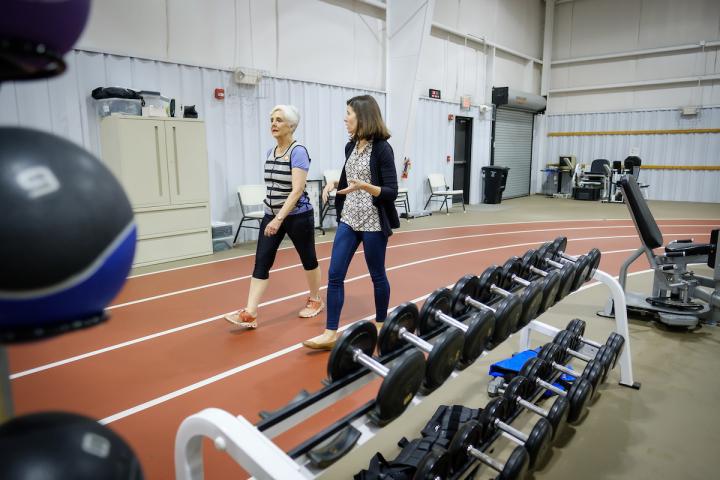
Credit: WFU / Ken Bennett


Losing weight can be a tricky balance of risks and benefits for older adults: You want to shed fat to improve overall health, but preserve muscle and bone, which reduces risk of future injury.

With a new, $2.9 million grant from the National Institute on Aging, researchers at Wake Forest University will test whether wearing a weighted vest can take the place of traditional resistance training to help maintain bone density and quality in older adults with obesity who are trying to lose weight. Previous research by this group showed that seniors who lifted weights while restricting calories lost less muscle and had stronger bones.

But several barriers keep people from lifting weights, including the cost of a gym membership, transportation to the gym, and even inability to perform the amount and intensity of exercise needed to preserve muscle and bone.

“I would love it if people would do regular resistance training, but they just don’t,” said Kristen Beavers, principal investigator on this study, “Incorporating Nutrition, Vests, Education and Strength Training in Bone Health,” (INVEST in Bone Health, NIH grant no. 1R01AG059186-01A1). “This is a more passive, but potentially as effective, alternative.”

In the pilot study that preceded INVEST, Wake Forest researchers asked participants to wear a weighted vest for 10 hours/day during a six-month weight loss program, with an average of 6.5 hours/day of wear time reported.

The vest, which weighs two pounds, can be worn under clothes and allows full range of motion. As pilot participants lost weight, the researchers added the amount of weight lost – in two-ounce increments – to the vest.

Bones grow when there is weight or “load” put on them and will bulk up when you put on a few extra pounds. On the flip side, bones will lose density when you lose weight – and, to make matters worse, older adults typically don’t regain bone density even if they regain their weight.

“With the weighted vest, you’re keeping yourself at an equal load while you lose weight,” Beavers said. “We know that not all, but a lot, of bone loss that occurs when you drop pounds is because of this ‘unloading effect.'”

In the pilot, people who wore the vest reduced hip bone loss dramatically.

The new study runs through April 2024 and will follow 192 adults age 60-85 in a randomized, controlled trial. The weighted vest used in the study retails for about $150 and includes weighted blocks about the size of a domino tile that fit into little pockets all over the vest.

Study participants will be divided into three groups: (1) weight loss program alone; (2) weight loss plus weighted vest; or (3) weight loss plus structured resistance training. These interventions will begin in spring 2020.

Safe weight loss for older adults has been a focus of multiple studies at Wake Forest in recent years.

###

For information about participating in the study, call 336-758-3795.

Media Contact
Cheryl Walker
[email protected]
336-758-6073

Original Source

https://news.wfu.edu/2020/01/23/can-weighted-vests-help-maintain-bone-health-when-older-adults-slim-down/

Tags: AgingClinical TrialsDiet/Body WeightExerciseGerontologyMedicine/Health
Share12Tweet8Share2ShareShareShare2

Related Posts

PARP1 Drives Neuropathic Pain Through GPX4-Dependent Ferroptosis in Injured Mice’s Sensory Neurons

August 15, 2026

Genome-wide skin pQTL map reveals genetic regulators and mechanisms underlying skin disorders

August 15, 2026

Levistilide A Drives Ferroptosis via RNF40-HSP90α Axis, Suppressing Colorectal Cancer Lung Metastasis

August 15, 2026

Sintilimab, IBI305, and Chemotherapy Show Promise in First-Line Advanced Gastric and GEJ Adenocarcinoma

August 15, 2026
Please login to join discussion

POPULAR NEWS

  • KAIST develops semiconductor neuron that harnesses noise to selectively process signals

    29 shares
    Share 12 Tweet 7
  • Imagining natural and extra robotic thumbs together strengthens kinesthetic sensorimotor networks

    29 shares
    Share 12 Tweet 7
  • PARP1 Drives Neuropathic Pain Through GPX4-Dependent Ferroptosis in Injured Mice’s Sensory Neurons

    29 shares
    Share 12 Tweet 7
  • Strubbelig–NHL3 Receptor Complex Helps Arabidopsis Respond to Cellulose Deficiency

    29 shares
    Share 12 Tweet 7

About

We bring you the latest biotechnology news from best research centers and universities around the world. Check our website.

Follow us

Recent News

KAIST develops semiconductor neuron that harnesses noise to selectively process signals

Imagining natural and extra robotic thumbs together strengthens kinesthetic sensorimotor networks

PARP1 Drives Neuropathic Pain Through GPX4-Dependent Ferroptosis in Injured Mice’s Sensory Neurons

Subscribe to Blog via Email

Success! An email was just sent to confirm your subscription. Please find the email now and click 'Confirm' to start subscribing.

Join 85 other subscribers
  • Contact Us

Bioengineer.org © Copyright 2023 All Rights Reserved.

Welcome Back!

Login to your account below

Forgotten Password?

Retrieve your password

Please enter your username or email address to reset your password.

Log In
No Result
View All Result
  • Homepages
    • Home Page 1
    • Home Page 2
  • News
  • National
  • Business
  • Health
  • Lifestyle
  • Science

Bioengineer.org © Copyright 2023 All Rights Reserved.