• HOME
  • NEWS
  • EXPLORE
    • CAREER
      • Companies
      • Jobs
    • EVENTS
    • iGEM
      • News
      • Team
    • PHOTOS
    • VIDEO
    • WIKI
  • BLOG
  • COMMUNITY
    • FACEBOOK
    • INSTAGRAM
    • TWITTER
Thursday, March 26, 2026
BIOENGINEER.ORG
No Result
View All Result
  • Login
  • HOME
  • NEWS
  • EXPLORE
    • CAREER
      • Companies
      • Jobs
        • Lecturer
        • PhD Studentship
        • Postdoc
        • Research Assistant
    • EVENTS
    • iGEM
      • News
      • Team
    • PHOTOS
    • VIDEO
    • WIKI
  • BLOG
  • COMMUNITY
    • FACEBOOK
    • INSTAGRAM
    • TWITTER
  • HOME
  • NEWS
  • EXPLORE
    • CAREER
      • Companies
      • Jobs
        • Lecturer
        • PhD Studentship
        • Postdoc
        • Research Assistant
    • EVENTS
    • iGEM
      • News
      • Team
    • PHOTOS
    • VIDEO
    • WIKI
  • BLOG
  • COMMUNITY
    • FACEBOOK
    • INSTAGRAM
    • TWITTER
No Result
View All Result
Bioengineer.org
No Result
View All Result
Home NEWS Science News

The adaptability of debris is successfully proven as a raw material for roads

Bioengineer by Bioengineer
January 21, 2020
in Science News
Reading Time: 3 mins read
0
IMAGE
Share on FacebookShare on TwitterShare on LinkedinShare on RedditShare on Telegram

IMAGE

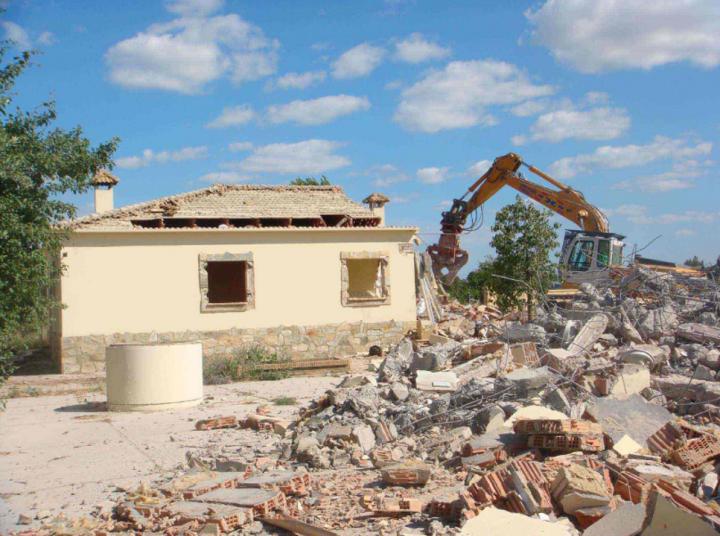
Credit: Universidad de Córdoba


In 2009, 105 single-family homes in the city of Cordoba were demolished in order to expand the airport. At first, the debris from the demolition was going to be sent to a landfill, as is common procedure. But, the University of Cordoba came up with the idea to recycle all the debris in situ and use it to build an experimental stretch of road on the CH-2 highway that goes around the runway at the airport and also connects Cordoba with the town of Almodóvar. This stretch of road is used by over 9,000 vehicles on a daily basis. After ten years of research, the complete study was published. The results are very positive and the conclusion is that recycled materials from demolitions are a good alternative when building roadways.

Most research projects performed at a national or international level are done in the lab. “This research shows the feasibility of using these materials on a real project and for a long period of time”, says José Ramón Jiménez, the researcher in charge of the study. This research was carried out with involvement from the company PLODER UICESA, contractor of the highway building project, and with the support of AENA and of the Guadalquivir Water Agency, owner of the highway.

One stretch of the road was built with natural aggregates, commonly used materials for these kinds of construction projects. In the experimental stretch of road two kinds of recycled materials were used: mixed recycled aggregates, from walls and structures of the homes, and recycled aggregates from concrete, which came from the foundations of the homes.

“The surface properties of the road were maintained in both cases”, says the researcher. “In the case of mechanical properties, the development is even better in the case of recycled aggregates”.

In addition to determining the good behavior of these materials, the research team wanted to do their part in contributing to sustainability in the construction sector. In order to do so, a mobile recycling plant was set up, which allowed for less carbon dioxide impact caused by transporting materials. The researcher highlights that in situ recycling is a viable alternative but “we have to be really careful” in this area. There are several cases in which these debris have been recycled illegally and without any kind of quality guarantee. Only materiales from recycling plants that can guarantee the quality of their materials should be used.

Building demolition generates a large amount of materials that usually end up in landfills. 2020 European regulations on waste make it compulsory to recycle 70% of construction and demolition waste. Nevertheless, Spain continues to fall far below that goal, with barely a 40% recycling rate. This study lays out a scientific basis to start repurposing these materials. “This is a real sample that can lead to government agencies and construction companies relying on recycled demolition and construction waste. We have no excuse to not reach the goals required by the EU”, concludes José Ramón Jiménez.

###

Javier Tavira, José Ramón Jiménez, Enrique F. Ledesma, Antonio López Uceda, Jesús Ayuso. “Real-scale study of a heavy trafffic road built with in situ recycled demolition waste”. Journal of Cleaner Production. DOI: 10.1016/j.jclepro.2019.119219

Media Contact
Elena Lázaro
[email protected]
34-957-212-252

Original Source

https://www.uco.es/ucci/es/noticias-ingles/item/2811-the-adaptability-of-debris-is-successfully-proven-as-a-raw-material-for-roads

Related Journal Article

http://dx.doi.org/10.1016/j.jclepro.2019.119219

Tags: Chemistry/Physics/Materials SciencesIndustrial Engineering/ChemistryMaterialsUrbanization
Share12Tweet8Share2ShareShareShare2

Related Posts

Starburst Winds Drain Supernova Energy Quickly

Starburst Winds Drain Supernova Energy Quickly

March 26, 2026
Decoding the Phosphorus Puzzle: How Microplastics and Hydrochar Transform Nutrient Dynamics in Rice Paddies

Decoding the Phosphorus Puzzle: How Microplastics and Hydrochar Transform Nutrient Dynamics in Rice Paddies

March 26, 2026

Microtubules Found to Actively Ensure Accurate Chromosome Distribution During Cell Division

March 25, 2026

Aversive Learning Hijacks Brain Sugar Sensor

March 25, 2026
Please login to join discussion

POPULAR NEWS

  • blank

    Revolutionary AI Model Enhances Precision in Detecting Food Contamination

    96 shares
    Share 38 Tweet 24
  • Imagine a Social Media Feed That Challenges Your Views Instead of Reinforcing Them

    1003 shares
    Share 397 Tweet 248
  • Uncovering Functions of Cavernous Malformation Proteins in Organoids

    54 shares
    Share 22 Tweet 14
  • Promising Outcomes from First Clinical Trials of Gene Regulation in Epilepsy

    51 shares
    Share 20 Tweet 13

About

We bring you the latest biotechnology news from best research centers and universities around the world. Check our website.

Follow us

Recent News

In-Sensor Cryptography Links Physical Process to Digital Identity

Can Psychosocial Factors Influence Cancer Risk?

Depression Factors in Elderly: Pre vs. Post-COVID Analysis

Subscribe to Blog via Email

Success! An email was just sent to confirm your subscription. Please find the email now and click 'Confirm' to start subscribing.

Join 78 other subscribers
  • Contact Us

Bioengineer.org © Copyright 2023 All Rights Reserved.

Welcome Back!

Login to your account below

Forgotten Password?

Retrieve your password

Please enter your username or email address to reset your password.

Log In
No Result
View All Result
  • Homepages
    • Home Page 1
    • Home Page 2
  • News
  • National
  • Business
  • Health
  • Lifestyle
  • Science

Bioengineer.org © Copyright 2023 All Rights Reserved.