• HOME
  • NEWS
  • EXPLORE
    • CAREER
      • Companies
      • Jobs
    • EVENTS
    • iGEM
      • News
      • Team
    • PHOTOS
    • VIDEO
    • WIKI
  • BLOG
  • COMMUNITY
    • FACEBOOK
    • INSTAGRAM
    • TWITTER
Wednesday, December 24, 2025
BIOENGINEER.ORG
No Result
View All Result
  • Login
  • HOME
  • NEWS
  • EXPLORE
    • CAREER
      • Companies
      • Jobs
        • Lecturer
        • PhD Studentship
        • Postdoc
        • Research Assistant
    • EVENTS
    • iGEM
      • News
      • Team
    • PHOTOS
    • VIDEO
    • WIKI
  • BLOG
  • COMMUNITY
    • FACEBOOK
    • INSTAGRAM
    • TWITTER
  • HOME
  • NEWS
  • EXPLORE
    • CAREER
      • Companies
      • Jobs
        • Lecturer
        • PhD Studentship
        • Postdoc
        • Research Assistant
    • EVENTS
    • iGEM
      • News
      • Team
    • PHOTOS
    • VIDEO
    • WIKI
  • BLOG
  • COMMUNITY
    • FACEBOOK
    • INSTAGRAM
    • TWITTER
No Result
View All Result
Bioengineer.org
No Result
View All Result
Home NEWS Science News Chemistry

A molecular map of the brain’s decision-making area

Bioengineer by Bioengineer
December 24, 2019
in Chemistry
Reading Time: 2 mins read
0
IMAGE
Share on FacebookShare on TwitterShare on LinkedinShare on RedditShare on Telegram

IMAGE

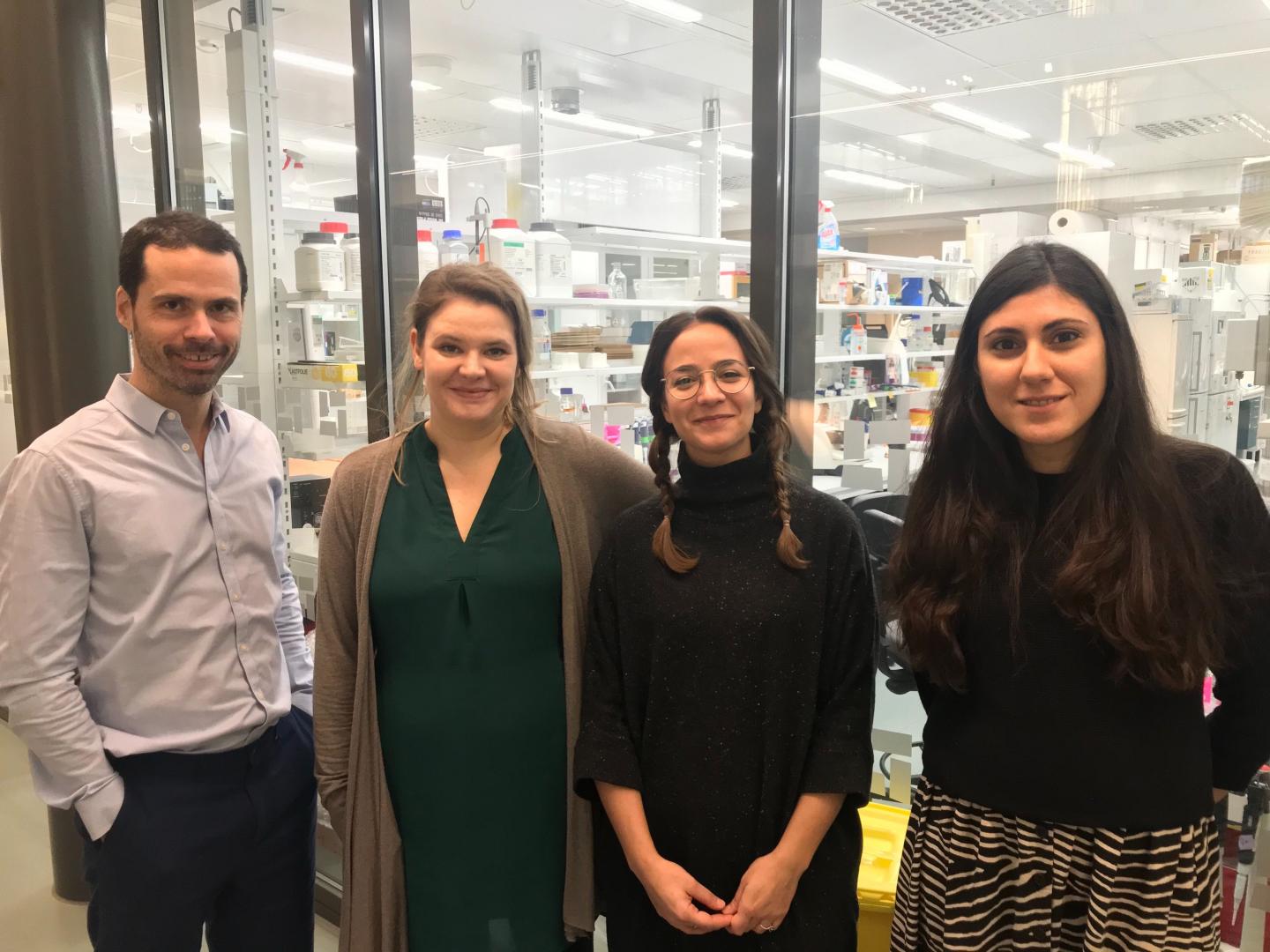
Credit: Juan Perez Fernandez


Researchers at Karolinska Institutet have come one step closer toward understanding how the part of our brain that is central for decision-making and the development of addiction is organized on a molecular level. In mouse models and with methods used for mapping cell types and brain tissue, the researchers were able to visualize the organization of different opioid-islands in striatum. Their spatiomolecular map, published in the journal Cell Reports, may further our understanding of the brain’s reward-system.

Striatum is the inner part of the brain that among other things regulates rewards, motivation, impulses and motor function. It is considered central to decision-making and the development of various addictions.

In this study, the researchers created a molecular 3D-map of the nerve cells targeted by opioids, such as morphine and heroin, and showed how they are organized in striatum. It is an important step toward understanding how the brain’s network governing motivation and drug addiction is organized. In the study, the researchers described a spatiomolecular code that can be used to divide striatum into different subregions.

“Our map forms the basis for a new understanding of the brain’s probably most important network for decision-making,” says Konstantinos Meletis, associate professor at the Department of Neuroscience at Karolinska Institutet and the study’s main author. “It may contribute to an increased understanding of both normal reward processes and the effects of various addictive substances on this network.”

To find this molecular code, the researchers used single-nucleus RNA sequencing, a method to study small differences in individual cells, and mapping of the striatal gene expression. The results provide the first demonstration of molecular codes that divide the striatum into three main levels of classification: a spatial, a patch-matrix and a cell-type specific organization.

“With this new knowledge we may now begin to analyze the function of different types of nerve cells in different molecularly defined areas,” says Meletis. “This is the first step in directly defining the networks’ role in controlling decision-making and addiction with the help of optogenetics.”

This new knowledge may also form the basis for the development of new treatments based on a mechanistic understanding of the brain’s network, according to the researchers.

###

The study has been financed with the help of the Swedish Brain Foundation, the Swedish Research Council and the William K. Bowes, Jr. Foundation.

Publication: “A spatiomolecular map of the striatum,” Antje Märtin, Daniela Calvigioni, Ourania Tzortzi, Janos Fuzik, Emil Wärnberg, Konstantinos Meletis, Cell Reports, online Dec. 24, 2019, doi: 10.1016/j.celrep.2019.11.096

Media Contact
Press Office, Karolinska Institutet
[email protected]

Related Journal Article

http://dx.doi.org/10.1016/j.celrep.2019.11.096

Tags: AddictionBiochemistryCell BiologyMedicine/HealthneurobiologyNeurochemistry
Share12Tweet8Share2ShareShareShare2

Related Posts

Cutting Electrolyte Reduction Boosts High-Energy Battery Performance

Cutting Electrolyte Reduction Boosts High-Energy Battery Performance

December 19, 2025
Microenvironment Shapes Gold-Catalysed CO2 Electroreduction

Microenvironment Shapes Gold-Catalysed CO2 Electroreduction

December 11, 2025

Photoswitchable Olefins Enable Controlled Polymerization

December 11, 2025

Cation Hydration Entropy Controls Chloride Ion Diffusion

December 10, 2025
Please login to join discussion

POPULAR NEWS

  • Nurses’ Views on Online Learning: Effects on Performance

    Nurses’ Views on Online Learning: Effects on Performance

    70 shares
    Share 28 Tweet 18
  • NSF funds machine-learning research at UNO and UNL to study energy requirements of walking in older adults

    71 shares
    Share 28 Tweet 18
  • Unraveling Levofloxacin’s Impact on Brain Function

    54 shares
    Share 22 Tweet 14
  • Exploring Audiology Accessibility in Johannesburg, South Africa

    51 shares
    Share 20 Tweet 13

About

We bring you the latest biotechnology news from best research centers and universities around the world. Check our website.

Follow us

Recent News

New Phase 2 Trial Boosts Stage III NSCLC Treatment

GPR4 Drives Immune Exclusion via LOXL2 in Colon Cancer

MicroRNA Connections in PCOS and Endometriosis

Subscribe to Blog via Email

Enter your email address to subscribe to this blog and receive notifications of new posts by email.

Join 70 other subscribers
  • Contact Us

Bioengineer.org © Copyright 2023 All Rights Reserved.

Welcome Back!

Login to your account below

Forgotten Password?

Retrieve your password

Please enter your username or email address to reset your password.

Log In
No Result
View All Result
  • Homepages
    • Home Page 1
    • Home Page 2
  • News
  • National
  • Business
  • Health
  • Lifestyle
  • Science

Bioengineer.org © Copyright 2023 All Rights Reserved.