Marine scientists implement a social-ecological systems framework in 85 communities across four countries
Credit: Stacy Jupiter/WCS
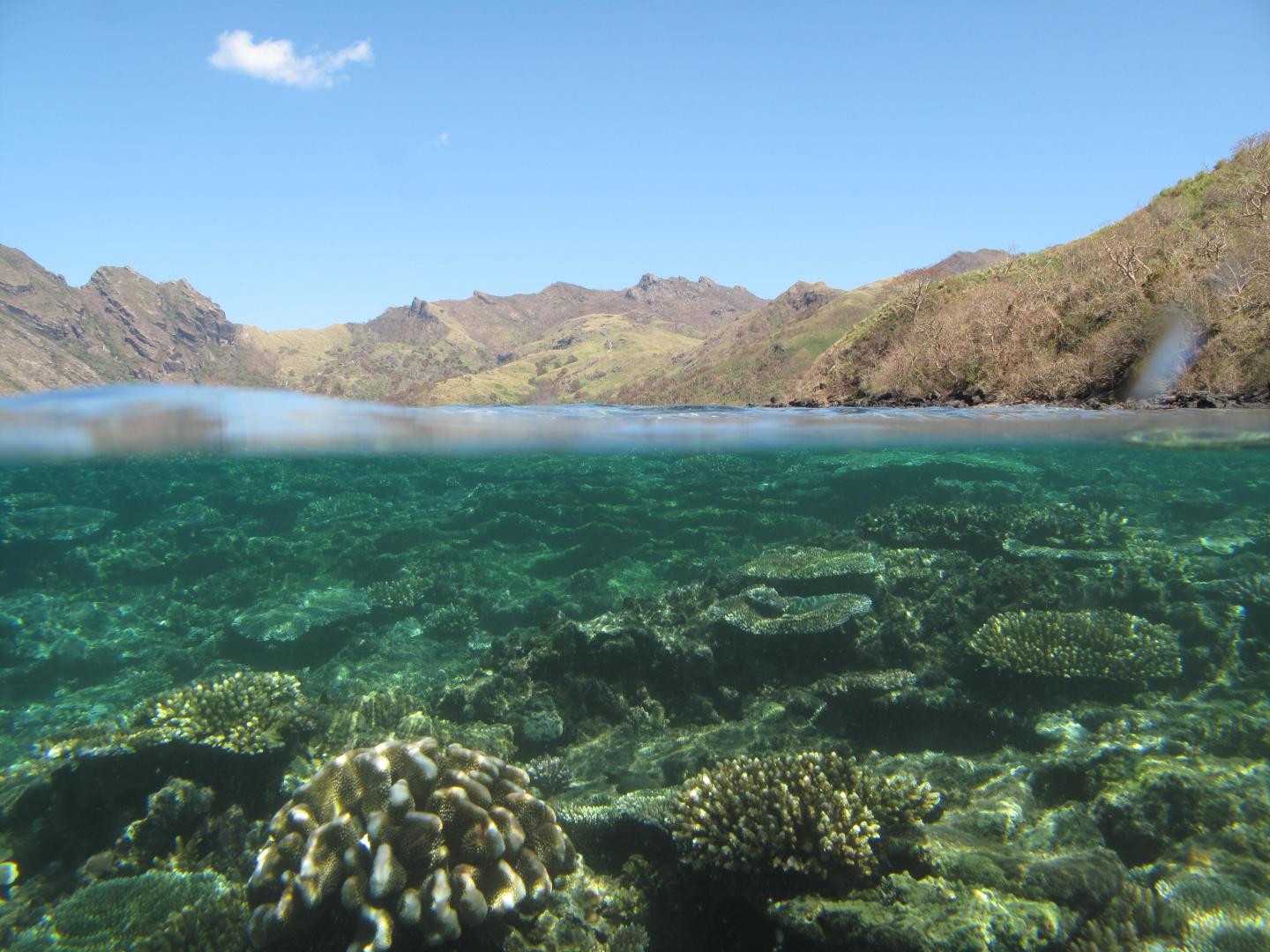
While many conservation plans focus on only environmental indicators for success, the Wildlife Conservation Society (WCS)’s coral reef program is trying a relatively new approach: focusing on both social and ecological processes and outcomes to ensure a long-term future for coral reef systems, according to a newly published study.
In the new study, scientists from WCS and James Cook University in Australia developed and implemented a cutting-edge monitoring approach that incorporates social and ecological indicators to uncover drivers of coral reef conservation success. The framework was developed and implemented in four countries across Africa, Asia and the Pacific where millions of people rely on coral reef ecosystems for livelihoods, food security and cultural practices.
The study titled “Implementing a social-ecological systems framework for conservation monitoring: lessons from a multi-country coral reef program” appears in the latest edition of the journal Biological Conservation.
“People depend on coral reefs for multiple dimensions of their wellbeing, and working with people, rather than fish or coral, is at the heart of reef management. A social-ecological systems perspective for management is critical to achieving positive outcomes for people and nature,” said lead author Dr. Georgina Gurney of the ARC Centre of Excellence for Coral Reef Studies, James Cook University.
Dr. Emily Darling, co-author and leader of WCS’s global coral reef monitoring program, said: “Measuring both the social and ecological outcomes of coral reef management is crucial for resource users, reef managers and governments, and can help effectively and equitably manage coral reefs in a changing climate.”
This approach is based on Nobel Prize winner Elinor Ostrom’s social-ecological systems framework, with this work being the first to implement it for monitoring practice across multiple countries. The framework was developed using a transdisciplinary approach, involving collaborations between applied scientists and academics across social and ecological disciplines.
The framework includes 90 social and ecological indicators that can be collected using standard underwater diver surveys and surveys conducted with local community members, fishers, and marine managers. This allows monitoring to shed light on local coral reef management contexts, resource use and dependence, and local stakeholders’ perceptions of impact and equity of management.
The new social-ecological systems monitoring framework has been implemented in more than 85 communities in four countries (Fiji, Kenya, Madagascar, and Indonesia). Data collection and analysis workflows are supported by two open-source data platforms: Kobo Toolbox (kobotoolbox.org) and a new platform for coral reef ecological surveys developed by WCS and WWF called MERMAID (datamermaid.org).
A major lesson learned in the study is that global monitoring approaches can be designed and implemented from the ground up. Darling added: “Tracking standardized and comparable metrics require intensive design and collaboration across research disciplines and sectors. Understanding people’s experiences with management and the health of coral reefs is providing new insights for international conservation and management policy frameworks, such as the Convention on Biological Diversity and the Sustainable Development Goals.”
To ensure a future for the world’s coral reefs, continued investments in long-term in-situ coral reef conservation are urgently needed. Alongside these efforts, improved data collection, analysis and learning are required such that both reefs and people can adapt to the ongoing local and global threats, most notably from global climate change. There is hope for coral reefs, but it will take both bottom up action on the ground, as evidenced by this study, in combination with global political will.
###
This study has been supported by the John D. and Catherine T. MacArthur Foundation and the Bloomberg Philanthropies’ Vibrant Oceans Initiative.
Wildlife Conservation Society (WCS)
MISSION: WCS saves wildlife and wild places worldwide through science, conservation action, education, and inspiring people to value nature. To achieve our mission, WCS, based at the Bronx Zoo, harnesses the power of its Global Conservation Program in nearly 60 nations and in all the world’s oceans and its five wildlife parks in New York City, visited by 4 million people annually. WCS combines its expertise in the field, zoos, and aquarium to achieve its conservation mission. Visit: newsroom.wcs.org. Follow: @WCSNewsroom. For more information: +1 (347) 840-1242.
About Bloomberg Philanthropies’ Vibrant Oceans Initiative:
As climate change increasingly threatens key ocean ecosystems, Bloomberg Philanthropies’ Vibrant Oceans Initiative is working around the world to advance evidence-based conservation practices and implement data-driven policies to protect our oceans and the 3 billion people that depend on them. Launched in 2014, Bloomberg’s Vibrant Oceans Initiative currently operates with partners Rare, Oceana, Global Fishing Watch, and the Wildlife Conservation Society in 10 countries that are top fishing nations – Australia, the Bahamas, Chile, Fiji, French Polynesia, Indonesia, the Philippines, Tanzania, Peru and the United States – to win science-based policies, protect priority coral reefs least vulnerable to climate change, and increase transparency through the adoption of national fishing data platforms.
The John D. and Catherine T. MacArthur Foundation supports creative people, effective institutions, and influential networks building a more just, verdant, and peaceful world. MacArthur is placing a few big bets that truly significant progress is possible on some of the world’s most pressing social challenges, including over-incarceration, global climate change, nuclear risk, and significantly increasing capital for the social sector. In addition to the MacArthur Fellows Program, the Foundation continues its historic commitments to the role of journalism in a responsible and responsive democracy; the strength and vitality of our headquarters city, Chicago; and generating new knowledge about critical issues.
Media Contact
John Delaney
[email protected]
347-675-2294
Related Journal Article
http://dx.