• HOME
  • NEWS
  • EXPLORE
    • CAREER
      • Companies
      • Jobs
    • EVENTS
    • iGEM
      • News
      • Team
    • PHOTOS
    • VIDEO
    • WIKI
  • BLOG
  • COMMUNITY
    • FACEBOOK
    • INSTAGRAM
    • TWITTER
Saturday, February 7, 2026
BIOENGINEER.ORG
No Result
View All Result
  • Login
  • HOME
  • NEWS
  • EXPLORE
    • CAREER
      • Companies
      • Jobs
        • Lecturer
        • PhD Studentship
        • Postdoc
        • Research Assistant
    • EVENTS
    • iGEM
      • News
      • Team
    • PHOTOS
    • VIDEO
    • WIKI
  • BLOG
  • COMMUNITY
    • FACEBOOK
    • INSTAGRAM
    • TWITTER
  • HOME
  • NEWS
  • EXPLORE
    • CAREER
      • Companies
      • Jobs
        • Lecturer
        • PhD Studentship
        • Postdoc
        • Research Assistant
    • EVENTS
    • iGEM
      • News
      • Team
    • PHOTOS
    • VIDEO
    • WIKI
  • BLOG
  • COMMUNITY
    • FACEBOOK
    • INSTAGRAM
    • TWITTER
No Result
View All Result
Bioengineer.org
No Result
View All Result
Home NEWS Science News Health

New insights to major disease pathways

Bioengineer by Bioengineer
December 12, 2019
in Health
Reading Time: 2 mins read
0
IMAGE
Share on FacebookShare on TwitterShare on LinkedinShare on RedditShare on Telegram

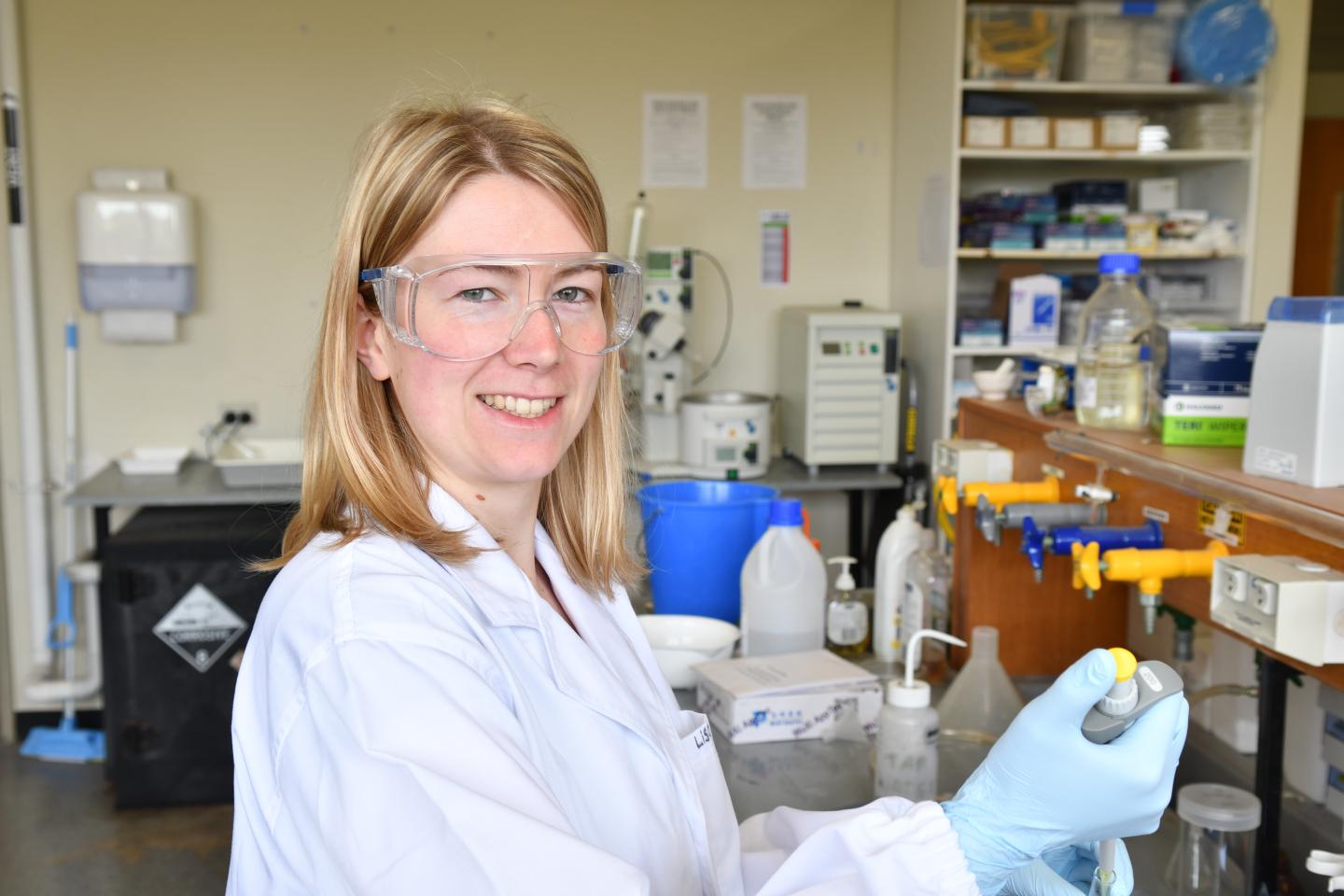
Chemical tool identifies hundreds of modified proteins
IMAGE

Credit: Flinders University


Australian researchers are making major inroads into finding the cause of heart disease, Alzheimer’s, cancer, diabetes and other diseases after discovering a further 148 proteins affected by oxidative stress in the human body.

The latest publication in ChemBioChem, a European Journal of Chemical Biology, reveals how a chemical tool has now been used to identify a further 148 previously unknown proteins modified by cells damaged by stress.

The results build on earlier advances at the Flinders University Chalker Lab, led by nanotechnology researchers Associate Professor Justin Chalker and Dr Lisa Alcock in collaboration with Dr Gonçalo Bernardes’ lab at the University of Cambridge and Heinrich-Heine-University in Dusseldorf, Germany.

The new modified proteins identified in the latest research are linked to heart disease, drug resistance in cancer, and other critical cellular functions, says Dr Chalker, director of the Flinders Chalker Research Lab.

“This study is an important foundation for understanding the network of proteins that communicate during oxidative stress,” he says. “It gives new signposts for biomedical scientists around the world to understand how cells react and respond to reactive oxygen species (ROS).”
ROS can occur when cells are stressed and, in turn, reacts with proteins to either damage or deactivate them or create different signalling pathways.

Flinders PhD Dr Alcock, now working at the leading St Jude Children’s Research Hospital in Memphis USA, says the new chemical tool developed at the Chalker Lab at Flinders can label oxidised proteins in live cells creating many more opportunities to expand this vital research into identifying the problem proteins which may contribute to major diseases.

“Our chemical tool is proving to be superior to the gold-standard probes often used in such studies and will help develop new therapeutic strategies by adding to the fundamental goal in biomedical science to understand how proteins are modified during oxidative stress.”

The novel reagent developed at Flinders detects the biomarker cysteine sulfenic acid and has already mapped this oxidation in a cancer cell line and identified more than 1000 proteins that are modified under oxidative stress.

###

The paper, ‘Proteome-wide survey of cysteine oxidation using a norbornene probe’ (2019) by LJ Alcock, M Langini, K Stühler, M Remke, MV Perkins, GJL Bernardes and JM Chalker is in press at ChemBioChem DOI: 10.1002/cbic.201900729

Media Contact
Dr Justin Chalker
[email protected]
61-416-405-951

Original Source

http://doi.org/10.1002/cbic.201900729

Related Journal Article

http://dx.doi.org/10.1002/cbic.201900729

Tags: AlzheimerBiochemistryBiomechanics/BiophysicscancerCell BiologyDiabetesMedicine/Health
Share12Tweet8Share2ShareShareShare2

Related Posts

Evaluating Pediatric Emergency Care Quality in Ethiopia

February 7, 2026

TPMT Expression Predictions Linked to Azathioprine Side Effects

February 7, 2026

Improving Dementia Care with Enhanced Activity Kits

February 7, 2026

Decoding Prostate Cancer Origins via snFLARE-seq, mxFRIZNGRND

February 7, 2026
Please login to join discussion

POPULAR NEWS

  • Robotic Ureteral Reconstruction: A Novel Approach

    Robotic Ureteral Reconstruction: A Novel Approach

    82 shares
    Share 33 Tweet 21
  • Digital Privacy: Health Data Control in Incarceration

    63 shares
    Share 25 Tweet 16
  • Study Reveals Lipid Accumulation in ME/CFS Cells

    57 shares
    Share 23 Tweet 14
  • Breakthrough in RNA Research Accelerates Medical Innovations Timeline

    53 shares
    Share 21 Tweet 13

About

We bring you the latest biotechnology news from best research centers and universities around the world. Check our website.

Follow us

Recent News

Evaluating Pediatric Emergency Care Quality in Ethiopia

TPMT Expression Predictions Linked to Azathioprine Side Effects

Improving Dementia Care with Enhanced Activity Kits

Subscribe to Blog via Email

Success! An email was just sent to confirm your subscription. Please find the email now and click 'Confirm' to start subscribing.

Join 73 other subscribers
  • Contact Us

Bioengineer.org © Copyright 2023 All Rights Reserved.

Welcome Back!

Login to your account below

Forgotten Password?

Retrieve your password

Please enter your username or email address to reset your password.

Log In
No Result
View All Result
  • Homepages
    • Home Page 1
    • Home Page 2
  • News
  • National
  • Business
  • Health
  • Lifestyle
  • Science

Bioengineer.org © Copyright 2023 All Rights Reserved.