• HOME
  • NEWS
  • EXPLORE
    • CAREER
      • Companies
      • Jobs
    • EVENTS
    • iGEM
      • News
      • Team
    • PHOTOS
    • VIDEO
    • WIKI
  • BLOG
  • COMMUNITY
    • FACEBOOK
    • INSTAGRAM
    • TWITTER
Wednesday, January 14, 2026
BIOENGINEER.ORG
No Result
View All Result
  • Login
  • HOME
  • NEWS
  • EXPLORE
    • CAREER
      • Companies
      • Jobs
        • Lecturer
        • PhD Studentship
        • Postdoc
        • Research Assistant
    • EVENTS
    • iGEM
      • News
      • Team
    • PHOTOS
    • VIDEO
    • WIKI
  • BLOG
  • COMMUNITY
    • FACEBOOK
    • INSTAGRAM
    • TWITTER
  • HOME
  • NEWS
  • EXPLORE
    • CAREER
      • Companies
      • Jobs
        • Lecturer
        • PhD Studentship
        • Postdoc
        • Research Assistant
    • EVENTS
    • iGEM
      • News
      • Team
    • PHOTOS
    • VIDEO
    • WIKI
  • BLOG
  • COMMUNITY
    • FACEBOOK
    • INSTAGRAM
    • TWITTER
No Result
View All Result
Bioengineer.org
No Result
View All Result
Home NEWS Science News Biology

How flowers adapt to their pollinators

Bioengineer by Bioengineer
December 5, 2019
in Biology
Reading Time: 2 mins read
0
IMAGE
Share on FacebookShare on TwitterShare on LinkedinShare on RedditShare on Telegram

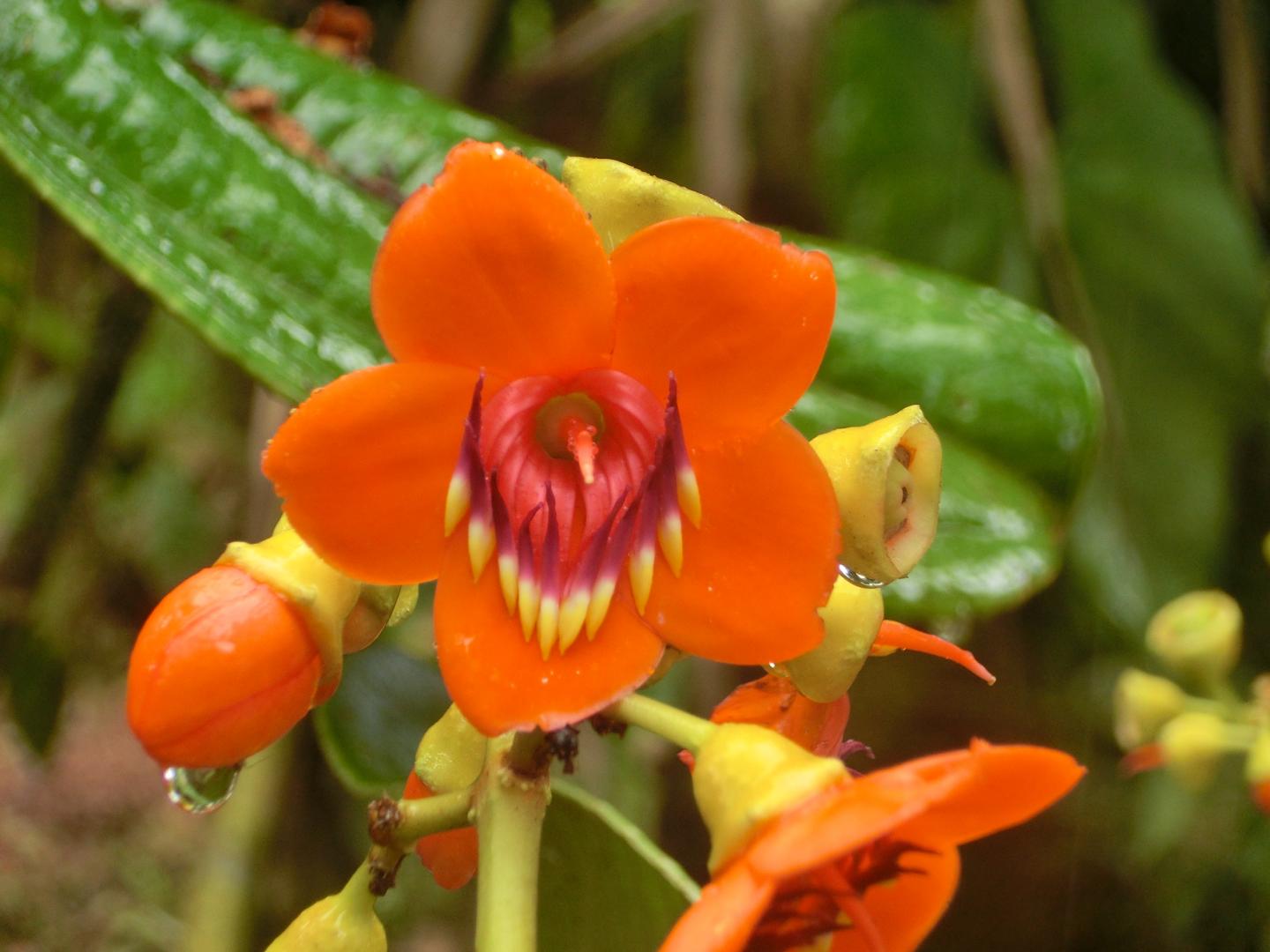
Modularity facilitates rapid adaptation of single floral organs to different pollinators
IMAGE

Credit: Agnes Dellinger


Flowering plants are characterized by an astonishing diversity of flowers of different shapes and sizes. This diversity has arisen in adaptation to selection imposed by different pollinators including among others bees, flies, butterflies, hummingbirds, bats or rodents. Although several studies have documented that pollinators can impose strong selection pressures on flowers, our understanding of how flowers diversify remains fragmentary. For example, does the entire flower adapt to a pollinator, or do only some flower parts evolve to fit a pollinator while other flower parts may remain unchanged?

In a recent study, scientists around Agnes Dellinger from the Department of Botany and Biodiversity Research from the University of Vienna investigated flowers of 30 species of a tropical plant group (Merianieae) from the Andes. “Each of these plant species has adapted to pollination by either bees, birds, bats or rodents”, says Dellinger. Using High-Resolution X-ray computed tomography, the research team produced 3D-models of these flowers and used geometric-morphometric methods to analyse differences in flower shape among species with different pollinators.

The researchers could show that flower shapes have evolved in adaptation to the distinct pollinators, but that flower shape evolution was not homogeneous across the flower. In particular, the showy sterile organs of flowers (petals) adapted to the different pollinators more quickly than the rest of the flower: the reproductive organs have evolved more slowly. “This study is among the first to analyse the entire 3-dimensional flower shape, and it will be exciting to see whether similar evolutionary floral modularity exists in other plant groups”, concludes Dellinger.

###

Publication in Communications Biology:

Modularity increases rate of floral evolution and adaptive success for functionally specialized pollination systems; Agnes S. Dellinger, Silvia Artuso, Susanne Pamperl, Fabián A. Michelangeli, Darin S. Penneys, Diana M. Fernández-Fernández, Marcela Alvear, Frank Almeda, W. Scott Armbruster, Yannick Staeder, Jürg Schönenberger; in Communications Biology.

DOI: 10.1038/s42003-019-0697-7

Media Contact
Agnes Dellinger
[email protected]
43-142-775-4083

Original Source

https://medienportal.univie.ac.at/presse/aktuelle-pressemeldungen/detailansicht/artikel/how-flowers-adapt-to-their-pollinators/

Related Journal Article

http://dx.doi.org/10.1038/s42003-019-0697-7

Tags: BiologyDevelopmental/Reproductive BiologyEarth ScienceEnergy SourcesEvolutionGeology/Soil
Share12Tweet8Share2ShareShareShare2

Related Posts

Accelerated Donkey Breed Classification via SNP Insights

Accelerated Donkey Breed Classification via SNP Insights

January 14, 2026
Integrative Multi-Omics Links GWAS to Genes in Cattle

Integrative Multi-Omics Links GWAS to Genes in Cattle

January 14, 2026

Astaxanthin’s Role in Easing Exercise Muscle Damage

January 14, 2026

Impact of Sex on Mortality in Sjögren’s Disease

January 14, 2026
Please login to join discussion

POPULAR NEWS

  • Enhancing Spiritual Care Education in Nursing Programs

    155 shares
    Share 62 Tweet 39
  • PTSD, Depression, Anxiety in Childhood Cancer Survivors, Parents

    147 shares
    Share 59 Tweet 37
  • Robotic Ureteral Reconstruction: A Novel Approach

    73 shares
    Share 29 Tweet 18
  • Study Reveals Lipid Accumulation in ME/CFS Cells

    52 shares
    Share 21 Tweet 13

About

We bring you the latest biotechnology news from best research centers and universities around the world. Check our website.

Follow us

Recent News

Pre-Breakfast Hand Bathing Boosts Postoperative Recovery Comfort

Exploring Dorstenia barnimiana’s Antioxidant and Antibacterial Properties

Pre-Breakfast Bathing Boosts Post-Surgery Comfort in Japan

Subscribe to Blog via Email

Enter your email address to subscribe to this blog and receive notifications of new posts by email.

Join 71 other subscribers
  • Contact Us

Bioengineer.org © Copyright 2023 All Rights Reserved.

Welcome Back!

Login to your account below

Forgotten Password?

Retrieve your password

Please enter your username or email address to reset your password.

Log In
No Result
View All Result
  • Homepages
    • Home Page 1
    • Home Page 2
  • News
  • National
  • Business
  • Health
  • Lifestyle
  • Science

Bioengineer.org © Copyright 2023 All Rights Reserved.