• HOME
  • NEWS
  • EXPLORE
    • CAREER
      • Companies
      • Jobs
    • EVENTS
    • iGEM
      • News
      • Team
    • PHOTOS
    • VIDEO
    • WIKI
  • BLOG
  • COMMUNITY
    • FACEBOOK
    • INSTAGRAM
    • TWITTER
Saturday, July 4, 2026
BIOENGINEER.ORG
No Result
View All Result
  • Login
  • HOME
  • NEWS
  • EXPLORE
    • CAREER
      • Companies
      • Jobs
        • Lecturer
        • PhD Studentship
        • Postdoc
        • Research Assistant
    • EVENTS
    • iGEM
      • News
      • Team
    • PHOTOS
    • VIDEO
    • WIKI
  • BLOG
  • COMMUNITY
    • FACEBOOK
    • INSTAGRAM
    • TWITTER
  • HOME
  • NEWS
  • EXPLORE
    • CAREER
      • Companies
      • Jobs
        • Lecturer
        • PhD Studentship
        • Postdoc
        • Research Assistant
    • EVENTS
    • iGEM
      • News
      • Team
    • PHOTOS
    • VIDEO
    • WIKI
  • BLOG
  • COMMUNITY
    • FACEBOOK
    • INSTAGRAM
    • TWITTER
No Result
View All Result
Bioengineer.org
No Result
View All Result
Home NEWS Science News Health

Scientist identify new marker for insecticide resistance in malaria mosquitoes

Bioengineer by Bioengineer
December 5, 2019
in Health
Reading Time: 2 mins read
0
IMAGE
Share on FacebookShare on TwitterShare on LinkedinShare on RedditShare on Telegram

IMAGE

Credit: Adriana Adolfi


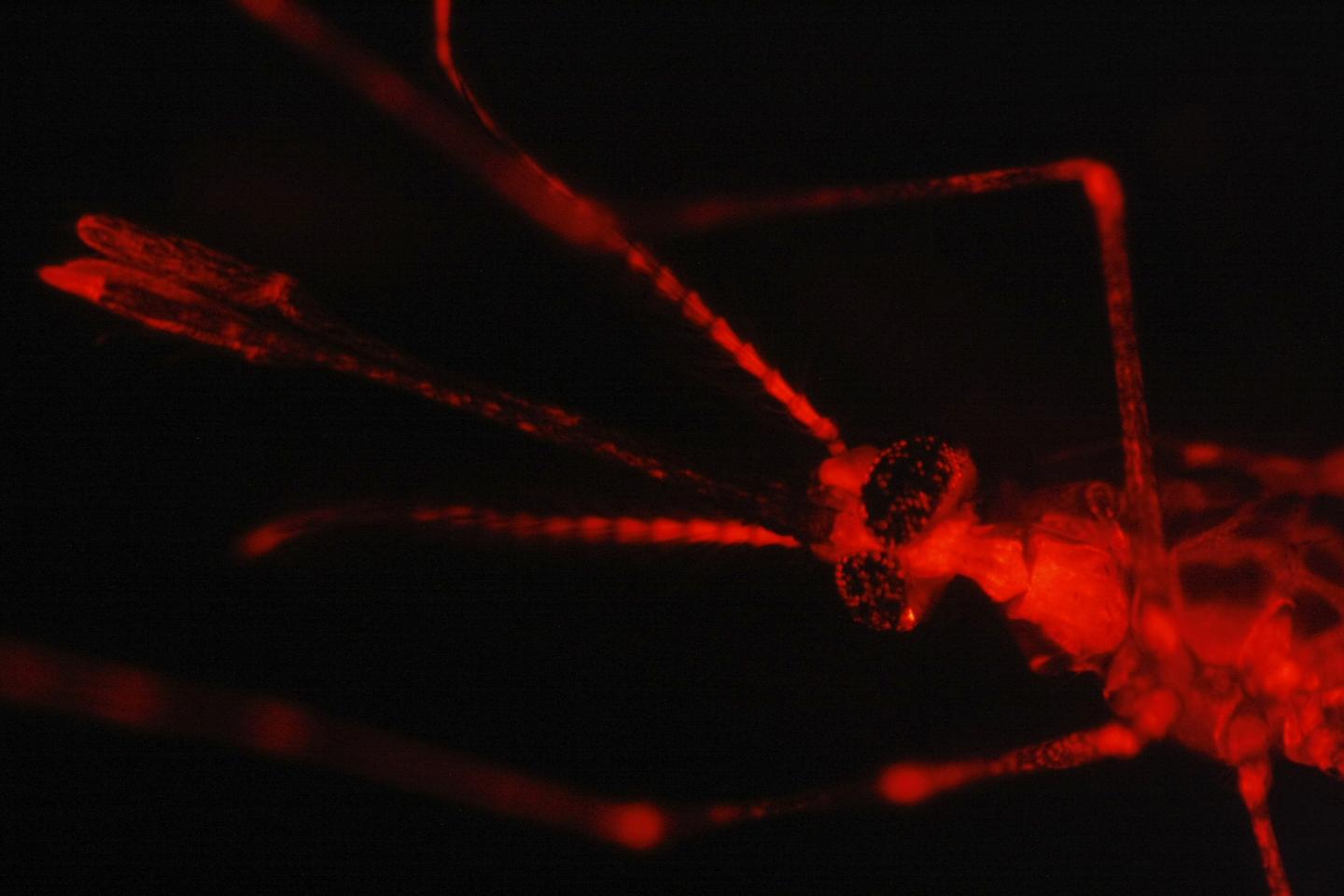
Researchers at LSTM have genetically modified malaria carrying mosquitoes in order to demonstrate the role of particular genes in conferring insecticide resistance.

For the first time the team characterised three genes (Cyp6m2, Cyp6p3 and Gste2) most often associated with insecticide resistance directly by their overproduction in genetically modified Anopheles gambiae. LSTM’s Dr Gareth Lycett is senior author on a paper published today in the journal PNAS. He explained: “Malaria is resurging again in Africa as mosquitoes become highly resistant to insecticides that are used to create bednets and spray household surfaces.”

To help find the causes of this increased resistance first author, Dr Adriana Adolfi, and her colleagues at LSTM generated genetically modified mosquitoes that overproduce specific enzymes that previous work at LSTM had identified as potential candidates in this process of acquiring insecticide resistance. This breakthrough work has found that increased production of just these three genes can between them cause the mosquitoes to become resistant to all four classes of public health insecticides currently being used in malaria control.

Dr Lycett continued: “These data validate the particular genes as excellent markers for resistance, giving us much needed tools to monitor the growing problem effectively through molecular testing. The super-resistant mosquitoes generated are now also being used test new insecticides to find compounds that escape the activity of these enzymes and so can successfully to be incorporated in next generation bednets to again provide effective protection for users and the wider community.”

###

Media Contact
Clare Bebb
[email protected]
44-015-170-53135

Related Journal Article

http://dx.doi.org/10.1073/pnas.1914633116

Tags: Medicine/HealthMolecular Biology
Share12Tweet8Share2ShareShareShare2

Related Posts

Lysine Pyruvylation Links Glycolysis to Epigenetics

July 4, 2026

Personalized Neoantigen Dendritic Cell Vaccine in Glioblastoma

July 4, 2026

Decoding Neural Timescales: A Computational Viewpoint

July 4, 2026

Uncovering C5aR2: Unique Signaling and Agonists

July 4, 2026
Please login to join discussion

POPULAR NEWS

  • Detection of EDCs in Breast Milk and Infant Urine Up to Six Months Highlights Early Exposure Risks

    77 shares
    Share 31 Tweet 19
  • Saying Goodbye to PGY-6: Pediatric Fellowship Realities

    103 shares
    Share 41 Tweet 26
  • New Drug Candidate Developed at McMaster Shows Potential for Treating Brain Cancer

    58 shares
    Share 23 Tweet 15
  • KTU Researchers Explore Ultrasound’s Role in Enhancing Blood Flow Beyond Diagnostics

    53 shares
    Share 21 Tweet 13

About

We bring you the latest biotechnology news from best research centers and universities around the world. Check our website.

Follow us

Recent News

Quasi-Bound States Boost Quantum Well Photoresponse

Lysine Pyruvylation Links Glycolysis to Epigenetics

Multiphysics Coupling: Single vs. Multiple DeepONet Branches

Subscribe to Blog via Email

Success! An email was just sent to confirm your subscription. Please find the email now and click 'Confirm' to start subscribing.

Join 83 other subscribers
  • Contact Us

Bioengineer.org © Copyright 2023 All Rights Reserved.

Welcome Back!

Login to your account below

Forgotten Password?

Retrieve your password

Please enter your username or email address to reset your password.

Log In
No Result
View All Result
  • Homepages
    • Home Page 1
    • Home Page 2
  • News
  • National
  • Business
  • Health
  • Lifestyle
  • Science

Bioengineer.org © Copyright 2023 All Rights Reserved.