• HOME
  • NEWS
  • EXPLORE
    • CAREER
      • Companies
      • Jobs
    • EVENTS
    • iGEM
      • News
      • Team
    • PHOTOS
    • VIDEO
    • WIKI
  • BLOG
  • COMMUNITY
    • FACEBOOK
    • INSTAGRAM
    • TWITTER
Friday, May 15, 2026
BIOENGINEER.ORG
No Result
View All Result
  • Login
  • HOME
  • NEWS
  • EXPLORE
    • CAREER
      • Companies
      • Jobs
        • Lecturer
        • PhD Studentship
        • Postdoc
        • Research Assistant
    • EVENTS
    • iGEM
      • News
      • Team
    • PHOTOS
    • VIDEO
    • WIKI
  • BLOG
  • COMMUNITY
    • FACEBOOK
    • INSTAGRAM
    • TWITTER
  • HOME
  • NEWS
  • EXPLORE
    • CAREER
      • Companies
      • Jobs
        • Lecturer
        • PhD Studentship
        • Postdoc
        • Research Assistant
    • EVENTS
    • iGEM
      • News
      • Team
    • PHOTOS
    • VIDEO
    • WIKI
  • BLOG
  • COMMUNITY
    • FACEBOOK
    • INSTAGRAM
    • TWITTER
No Result
View All Result
Bioengineer.org
No Result
View All Result
Home NEWS Science News Biology

Intestinal stem cell genes may link dietary fat and colon cancer

Bioengineer by Bioengineer
November 25, 2019
in Biology
Reading Time: 2 mins read
0
IMAGE
Share on FacebookShare on TwitterShare on LinkedinShare on RedditShare on Telegram

Rutgers study suggests tie between stem cell behavior and a high fat diet
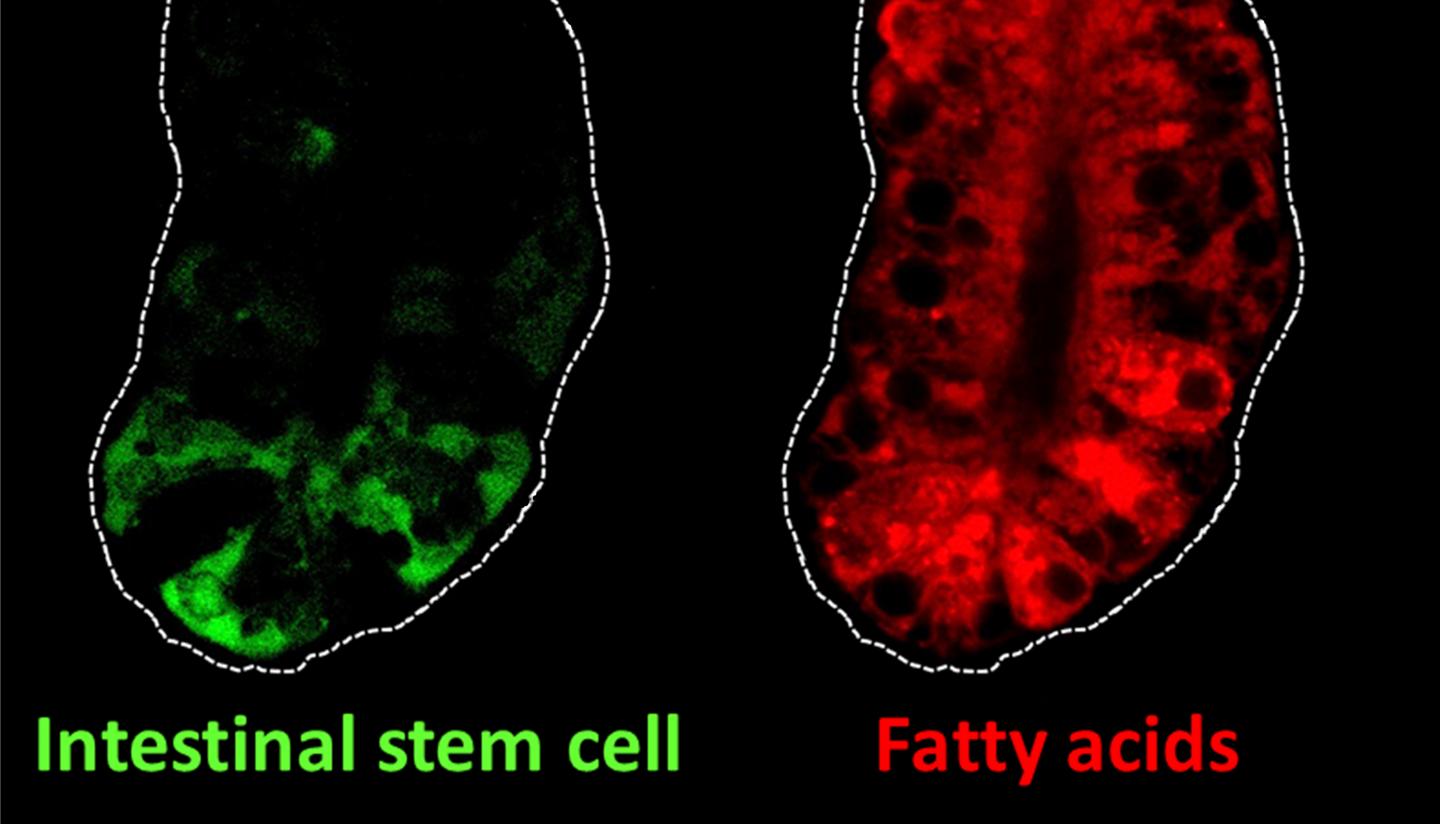
IMAGE

Credit: Lei Chen


Two genes that appear to help stem cells in the intestine burn dietary fat may play a role in colon cancer, according to a Rutgers study.

The study, published in the journal Gastroenterology, describes a new connection between the way cells consume fat and how genes regulate stem cell behavior in the intestines of mice.

“This is important because scientists have shown that when there’s too much dietary fat in the intestine, stem cell numbers increase, boosting susceptibility to colon cancer,” said senior author Michael Verzi, an associate professor in the Department of Genetics in the School of Arts and Sciences at Rutgers University-New Brunswick. Verzi is also a research member in the Genomic Instability and Cancer Genetics Research Program at Rutgers Cancer Institute of New Jersey.

People naturally lose millions of intestinal cells daily, much like they lose skin cells. Intestinal stem cells undergo constant renewal and fuel the continuous turnover of the lining of the intestine, but altered stem cell functions can lead to colon cancer.

Colorectal cancer (of the colon or rectum) is the third most common cancer diagnosed in both men and women in the United States. An estimated 101,420 Americans will be diagnosed with colon cancer this year, according to the American Cancer Society.

Recent studies have shown that intestinal stem cells can increase in animals on a high fat “Western” diet, potentially explaining an elevated cancer risk from such a diet.

The Rutgers team recently discovered that two genes (HNF4A and HNF4G) work together to promote the proper function of the intestinal lining. In the new study, they found that mice lost intestinal stem cells when these genes were inactivated, confirming their importance. Rutgers scientists believe that the genes help stem cells burn fat, providing them energy.

Going forward, the researchers hope to further investigate whether the two genes alter stem cell numbers and cancer risk during a high fat diet, said Verzi, who is also a member of the Rutgers Center for Lipid Research.

###

The lead author is Lei Chen in Verzi’s lab. Rutgers co-authors include Roshan P. Vasoya, Natalie H. Toke, Aditya Parthasarathy and Shirley Luo in Verzi’s lab; Eric Chiles at the Rutgers Cancer Institute of New Jersey; graduate student Juan Flores, Associate Professor Nan Gao and Professor Edward M. Bonder in the Department of Biological Sciences at Rutgers-Newark; and Assistant Professor Xiaoyang Su at the Rutgers Cancer Institute of New Jersey and Department of Medicine at Rutgers Robert Wood Johnson Medical School in Rutgers Biomedical and Health Sciences.

Media Contact
Todd Bates
[email protected]
848-932-0550

Original Source

https://news.rutgers.edu/intestinal-stem-cell-genes-may-link-dietary-fat-and-colon-cancer/20191121#.XdgQnOhKi70

Related Journal Article

http://dx.doi.org/10.1053/j.gastro.2019.11.031

Tags: cancerCell BiologyGastroenterologyGenesGeneticsMedicine/HealthMolecular BiologyNutrition/Nutrients
Share12Tweet8Share2ShareShareShare2

Related Posts

New Astrobiology Special Collection Highlights Emerging Evidence Supporting Land-Based Origins of Life — Biology

New Astrobiology Special Collection Highlights Emerging Evidence Supporting Land-Based Origins of Life

May 14, 2026
Revolutionizing Textiles: Engineered Protein Fibers Pave the Way for Sustainable, Recyclable Fabrics — Biology

Revolutionizing Textiles: Engineered Protein Fibers Pave the Way for Sustainable, Recyclable Fabrics

May 14, 2026

URI Master’s Student Emilio Pedroza Lopez Awarded Prestigious NSF Graduate Research Fellowship

May 14, 2026

Enhancing Disease Surveillance Through SARS-CoV-2 Diversity Analysis in Wastewater

May 14, 2026
Please login to join discussion

POPULAR NEWS

  • Research Indicates Potential Connection Between Prenatal Medication Exposure and Elevated Autism Risk

    842 shares
    Share 337 Tweet 211
  • New Study Reveals Plants Can Detect the Sound of Rain

    729 shares
    Share 291 Tweet 182
  • Salmonella Haem Blocks Macrophages, Boosts Infection

    62 shares
    Share 25 Tweet 16
  • Breastmilk Balances E. coli and Beneficial Bacteria in Infant Gut Microbiomes

    58 shares
    Share 23 Tweet 15

About

We bring you the latest biotechnology news from best research centers and universities around the world. Check our website.

Follow us

Recent News

Comprehensive Study Finds No Clear Association Between Common Antidepressant Use During Pregnancy and Autism or ADHD in Children

Viagra Shows Promise as Potential Treatment to Halt Peyronie’s Disease

Screening Leads to Moderate Reduction in Prostate Cancer Mortality

Subscribe to Blog via Email

Enter your email address to subscribe to this blog and receive notifications of new posts by email.

Join 82 other subscribers
  • Contact Us

Bioengineer.org © Copyright 2023 All Rights Reserved.

Welcome Back!

Login to your account below

Forgotten Password?

Retrieve your password

Please enter your username or email address to reset your password.

Log In
No Result
View All Result
  • Homepages
    • Home Page 1
    • Home Page 2
  • News
  • National
  • Business
  • Health
  • Lifestyle
  • Science

Bioengineer.org © Copyright 2023 All Rights Reserved.