• HOME
  • NEWS
  • EXPLORE
    • CAREER
      • Companies
      • Jobs
    • EVENTS
    • iGEM
      • News
      • Team
    • PHOTOS
    • VIDEO
    • WIKI
  • BLOG
  • COMMUNITY
    • FACEBOOK
    • INSTAGRAM
    • TWITTER
Friday, March 27, 2026
BIOENGINEER.ORG
No Result
View All Result
  • Login
  • HOME
  • NEWS
  • EXPLORE
    • CAREER
      • Companies
      • Jobs
        • Lecturer
        • PhD Studentship
        • Postdoc
        • Research Assistant
    • EVENTS
    • iGEM
      • News
      • Team
    • PHOTOS
    • VIDEO
    • WIKI
  • BLOG
  • COMMUNITY
    • FACEBOOK
    • INSTAGRAM
    • TWITTER
  • HOME
  • NEWS
  • EXPLORE
    • CAREER
      • Companies
      • Jobs
        • Lecturer
        • PhD Studentship
        • Postdoc
        • Research Assistant
    • EVENTS
    • iGEM
      • News
      • Team
    • PHOTOS
    • VIDEO
    • WIKI
  • BLOG
  • COMMUNITY
    • FACEBOOK
    • INSTAGRAM
    • TWITTER
No Result
View All Result
Bioengineer.org
No Result
View All Result
Home NEWS Science News

Scientists discover the origin of a microbial infection with lethal effects

Bioengineer by Bioengineer
November 21, 2019
in Science News
Reading Time: 2 mins read
0
IMAGE
Share on FacebookShare on TwitterShare on LinkedinShare on RedditShare on Telegram

Universitat Rovira I Virgili researchers are taking part in this research work that is paving the way to finding effective treatments that can counteract the virulence of necrotizing fasciitis caused by a bacterium in water.
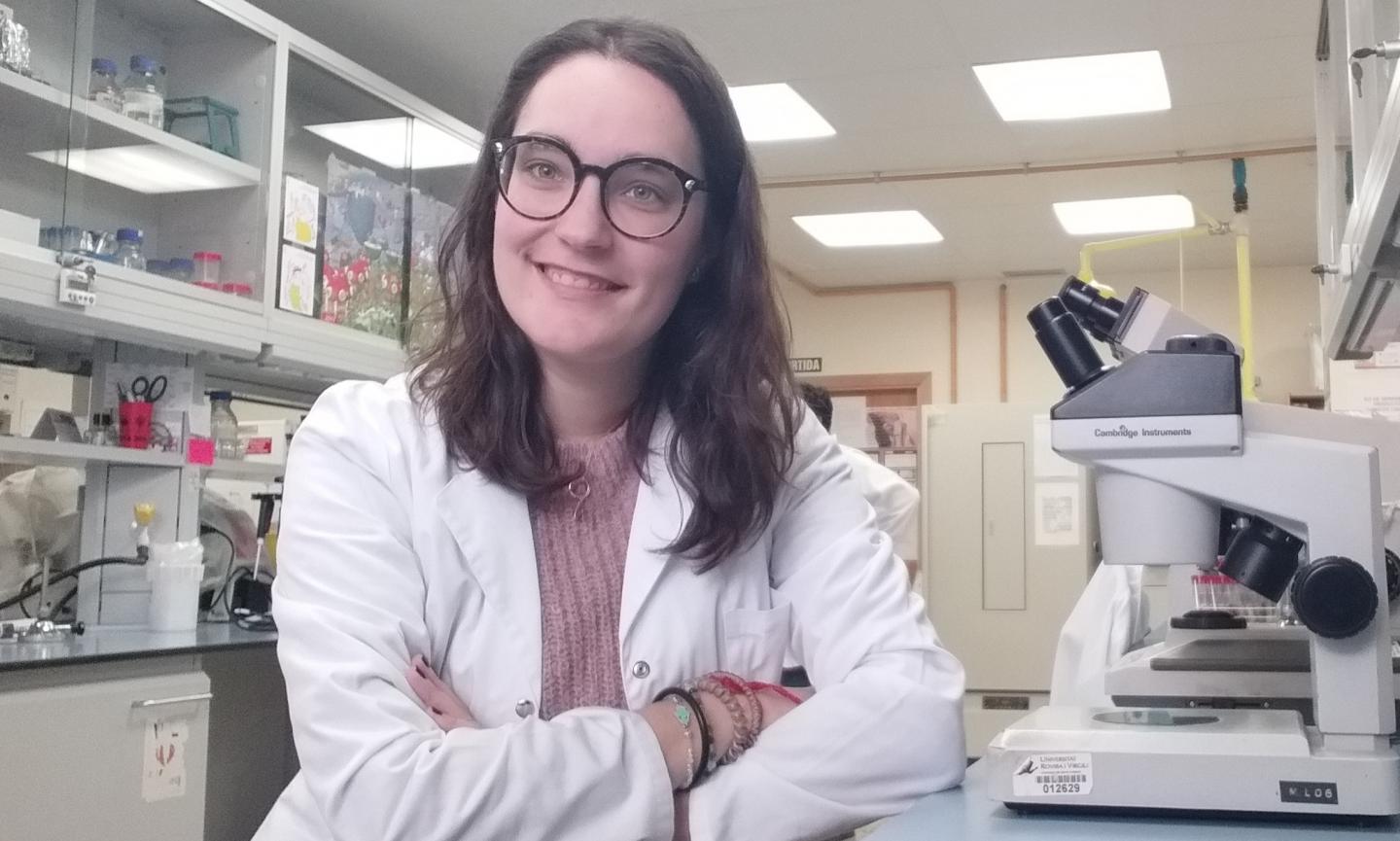
IMAGE

Credit: URV


Some infections caused by bacteria can have devastating results on health. This is the case of the infections caused by Aeromonas hydrophila, which can be found in water and, if ingested orally, can sometimes cause gastrointestinal upsets that require treatment with antibiotics. However, when this aquatic bacterium penetrates the organism through a tissue (an open wound, for example) it gives rise to necrotizing fasciitis, a serious infection that attacks the tissues and in a few hours can even lead to the death of the patient. The researchers Ana Fernández and María José Figueras, of the Department of Basic Medical Sciences, in conjunction with the University of Texas (United States), have discovered why in some cases this bacterium can have lethal consequences, which makes it possible to find effective treatments to attack the infection.

Previous studies had already shown that infections that make such quick progress and do not respond to treatment are often caused by interaction between various microorganisms. A research group from the University of Texas studied a previous case of necrotizing fasciitis and found that two genetically different strains of the bacterium Aeromonas hydrophila were responsible for the virulence of the disease. This difference, however, could not be detected by current diagnostic techniques, which mistakenly attributed the infection to a monomicrobial origin. The research also suggested which virulence factors were involved in these infections.

The current study, which has just been published in the journal Proceedings of the National Academy of Sciences (PNAS), was a continuation of the research carried out by this group. Mutations of the virulence factors were made for the two strains of the bacterium (known as NF1 and NF2) and the infection was inoculated separately and together in an attempt to observe the response of each strain in mixed infections – in which they both intervene – and also when they act individually. The role of these virulence factors in the development of the disease was also studied.
To determine the role of the virulence factors of the strains when they cause infection, the studies were carried out in cell cultures and animal models (mice). The results show that, when microbes from the same species interact, they modulate the progress of the infection. And they also show that the virulence factors studied affect the way in which the strains interact with one another.

“Identifying and understanding the action of the two genes that cause the extremely aggressive reaction of the infection caused by Aeromonas hydrophila will make it possible to find therapies to attack it in the future,” says the researcher Ana Fernández.

###

Media Contact
Cristina Mallo
[email protected]
34-977-558-006

Original Source

http://diaridigital.urv.cat/en/descobreixen-lorigen-duna-infeccio-microbiana-amb-efectes-letals/

Related Journal Article

http://dx.doi.org/10.1073/pnas.1914395116

Tags: BacteriologyBiologyBiotechnologyInfectious/Emerging DiseasesMicrobiology
Share12Tweet8Share2ShareShareShare2

Related Posts

Starburst Winds Drain Supernova Energy Quickly

Starburst Winds Drain Supernova Energy Quickly

March 26, 2026
Decoding the Phosphorus Puzzle: How Microplastics and Hydrochar Transform Nutrient Dynamics in Rice Paddies

Decoding the Phosphorus Puzzle: How Microplastics and Hydrochar Transform Nutrient Dynamics in Rice Paddies

March 26, 2026

Microtubules Found to Actively Ensure Accurate Chromosome Distribution During Cell Division

March 25, 2026

Aversive Learning Hijacks Brain Sugar Sensor

March 25, 2026
Please login to join discussion

POPULAR NEWS

  • blank

    Revolutionary AI Model Enhances Precision in Detecting Food Contamination

    96 shares
    Share 38 Tweet 24
  • Imagine a Social Media Feed That Challenges Your Views Instead of Reinforcing Them

    1003 shares
    Share 397 Tweet 248
  • Uncovering Functions of Cavernous Malformation Proteins in Organoids

    54 shares
    Share 22 Tweet 14
  • Promising Outcomes from First Clinical Trials of Gene Regulation in Epilepsy

    51 shares
    Share 20 Tweet 13

About

We bring you the latest biotechnology news from best research centers and universities around the world. Check our website.

Follow us

Recent News

In-Sensor Cryptography Links Physical Process to Digital Identity

Can Psychosocial Factors Influence Cancer Risk?

Depression Factors in Elderly: Pre vs. Post-COVID Analysis

Subscribe to Blog via Email

Success! An email was just sent to confirm your subscription. Please find the email now and click 'Confirm' to start subscribing.

Join 78 other subscribers
  • Contact Us

Bioengineer.org © Copyright 2023 All Rights Reserved.

Welcome Back!

Login to your account below

Forgotten Password?

Retrieve your password

Please enter your username or email address to reset your password.

Log In
No Result
View All Result
  • Homepages
    • Home Page 1
    • Home Page 2
  • News
  • National
  • Business
  • Health
  • Lifestyle
  • Science

Bioengineer.org © Copyright 2023 All Rights Reserved.