• HOME
  • NEWS
  • EXPLORE
    • CAREER
      • Companies
      • Jobs
    • EVENTS
    • iGEM
      • News
      • Team
    • PHOTOS
    • VIDEO
    • WIKI
  • BLOG
  • COMMUNITY
    • FACEBOOK
    • INSTAGRAM
    • TWITTER
Saturday, February 7, 2026
BIOENGINEER.ORG
No Result
View All Result
  • Login
  • HOME
  • NEWS
  • EXPLORE
    • CAREER
      • Companies
      • Jobs
        • Lecturer
        • PhD Studentship
        • Postdoc
        • Research Assistant
    • EVENTS
    • iGEM
      • News
      • Team
    • PHOTOS
    • VIDEO
    • WIKI
  • BLOG
  • COMMUNITY
    • FACEBOOK
    • INSTAGRAM
    • TWITTER
  • HOME
  • NEWS
  • EXPLORE
    • CAREER
      • Companies
      • Jobs
        • Lecturer
        • PhD Studentship
        • Postdoc
        • Research Assistant
    • EVENTS
    • iGEM
      • News
      • Team
    • PHOTOS
    • VIDEO
    • WIKI
  • BLOG
  • COMMUNITY
    • FACEBOOK
    • INSTAGRAM
    • TWITTER
No Result
View All Result
Bioengineer.org
No Result
View All Result
Home NEWS Science News

NASA tracks Typhoon Kalmaegi affecting Northern Philippines

Bioengineer by Bioengineer
November 19, 2019
in Science News
Reading Time: 2 mins read
0
IMAGE
Share on FacebookShare on TwitterShare on LinkedinShare on RedditShare on Telegram

IMAGE

Credit: Credit: NASA Worldview


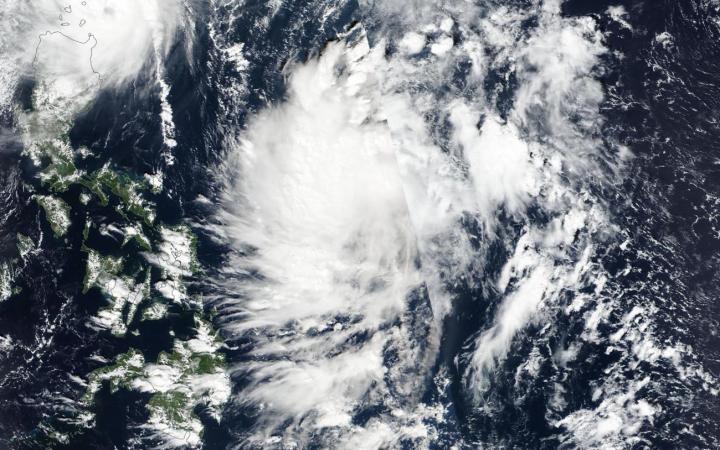
NASA’s Terra satellite captured an image of Typhoon Kalmaegi as it moved into the Luzon Strait and continued to affect the northern Philippines.

On Nov. 19, Kalmaegi’s western edge was in the Luzon Strait, while its southern quadrant was over the northern Philippines. The Luzon Strait is located between Taiwan and Luzon, Philippines. The strait connects the Philippine Sea to the South China Sea in the northwestern Pacific Ocean.

Kalmaegi is known locally in the Philippines as Tropical Cyclone Ramon, and there are many warning signals in effect for the northern Philippines.

Signal #3 is in effect for the Luzon provinces of Northern portion of Cagayan (Santa Praxedes), Claveria, Sanchez Mira, Pamplona, Abulug, Ballesteros, Aparri, Calayan, Camalaniugan, Buguey, Santa Teresita, Gonzaga and Santa Ana. Signal #2 is in effect for the Luzon provinces of Batanes, Apayao, Kalinga, Abra, Ilocos Norte & Sur and the rest of Cagayan. Signal #1 is in effect for the Luzon provinces of Northern portion of Isabela (Sta. Maria), San Pablo, Maconacon, Cabagan, Sto. Tomas, Quezon, Delfin Albano, Tumauini, Divilacan, Quirino, Roxas, Mallig, San Manuel, Burgos, Gamu and Ilagan City, Mountain Province, Benguet, Ifugao, La Union, and Pangasinan.

On Nov. 19, the Moderate Imaging Spectroradiometer or MODIS instrument that flies aboard NASA’s Terra satellite provided a visible image of Kalmaegi. The MODIS image showed the hint of an oblong eye covered by high clouds. Forecasters at the Joint Typhoon Warning Center noted that eye had collapsed due to deteriorating environmental conditions.

At 10 a.m. EST (1500 UTC), Typhoon Kalmaegi was located near 19.4 degrees north latitude and 122.5 degrees east longitude. That is about 301 nautical miles north-northeast of Manila, Philippines. The storm is barely moving, however. It is moving to the west at 1 knot (1 mph/1.8 kph). Maximum sustained winds were near 75 knots (86 mph/139 kph).

Kalmaegi is turning toward a southwesterly course, which will take it across northwestern Luzon (northern Philippines). The storm will start to weaken, later rapidly, as it moves into the South China Sea.

NASA’s Terra satellite is one in a fleet of NASA satellites that provide data for hurricane research.
Typhoons and hurricanes are the most powerful weather event on Earth. NASA’s expertise in space and scientific exploration contributes to essential services provided to the American people by other federal agencies, such as hurricane weather forecasting.

###

Media Contact
Rob Gutro
[email protected]

Original Source

https://blogs.nasa.gov/hurricanes/2019/11/19/kalmaegi-northwestern-pacific-ocean-5/

Tags: Atmospheric ChemistryAtmospheric ScienceClimate ChangeClimate ScienceEarth ScienceMeteorologyTechnology/Engineering/Computer ScienceTemperature-Dependent PhenomenaWeather/Storms
Share12Tweet8Share2ShareShareShare2

Related Posts

Evaluating Pediatric Emergency Care Quality in Ethiopia

February 7, 2026

TPMT Expression Predictions Linked to Azathioprine Side Effects

February 7, 2026

Improving Dementia Care with Enhanced Activity Kits

February 7, 2026

Decoding Prostate Cancer Origins via snFLARE-seq, mxFRIZNGRND

February 7, 2026
Please login to join discussion

POPULAR NEWS

  • Robotic Ureteral Reconstruction: A Novel Approach

    Robotic Ureteral Reconstruction: A Novel Approach

    82 shares
    Share 33 Tweet 21
  • Digital Privacy: Health Data Control in Incarceration

    63 shares
    Share 25 Tweet 16
  • Study Reveals Lipid Accumulation in ME/CFS Cells

    57 shares
    Share 23 Tweet 14
  • Breakthrough in RNA Research Accelerates Medical Innovations Timeline

    53 shares
    Share 21 Tweet 13

About

We bring you the latest biotechnology news from best research centers and universities around the world. Check our website.

Follow us

Recent News

Evaluating Pediatric Emergency Care Quality in Ethiopia

TPMT Expression Predictions Linked to Azathioprine Side Effects

Improving Dementia Care with Enhanced Activity Kits

Subscribe to Blog via Email

Success! An email was just sent to confirm your subscription. Please find the email now and click 'Confirm' to start subscribing.

Join 73 other subscribers
  • Contact Us

Bioengineer.org © Copyright 2023 All Rights Reserved.

Welcome Back!

Login to your account below

Forgotten Password?

Retrieve your password

Please enter your username or email address to reset your password.

Log In
No Result
View All Result
  • Homepages
    • Home Page 1
    • Home Page 2
  • News
  • National
  • Business
  • Health
  • Lifestyle
  • Science

Bioengineer.org © Copyright 2023 All Rights Reserved.