• HOME
  • NEWS
  • EXPLORE
    • CAREER
      • Companies
      • Jobs
    • EVENTS
    • iGEM
      • News
      • Team
    • PHOTOS
    • VIDEO
    • WIKI
  • BLOG
  • COMMUNITY
    • FACEBOOK
    • INSTAGRAM
    • TWITTER
Sunday, January 11, 2026
BIOENGINEER.ORG
No Result
View All Result
  • Login
  • HOME
  • NEWS
  • EXPLORE
    • CAREER
      • Companies
      • Jobs
        • Lecturer
        • PhD Studentship
        • Postdoc
        • Research Assistant
    • EVENTS
    • iGEM
      • News
      • Team
    • PHOTOS
    • VIDEO
    • WIKI
  • BLOG
  • COMMUNITY
    • FACEBOOK
    • INSTAGRAM
    • TWITTER
  • HOME
  • NEWS
  • EXPLORE
    • CAREER
      • Companies
      • Jobs
        • Lecturer
        • PhD Studentship
        • Postdoc
        • Research Assistant
    • EVENTS
    • iGEM
      • News
      • Team
    • PHOTOS
    • VIDEO
    • WIKI
  • BLOG
  • COMMUNITY
    • FACEBOOK
    • INSTAGRAM
    • TWITTER
No Result
View All Result
Bioengineer.org
No Result
View All Result
Home NEWS Science News Chemistry

Ground penetrating radar reveals why ancient Cambodian capital was moved to Angkor

Bioengineer by Bioengineer
October 31, 2019
in Chemistry
Reading Time: 2 mins read
0
IMAGE
Share on FacebookShare on TwitterShare on LinkedinShare on RedditShare on Telegram

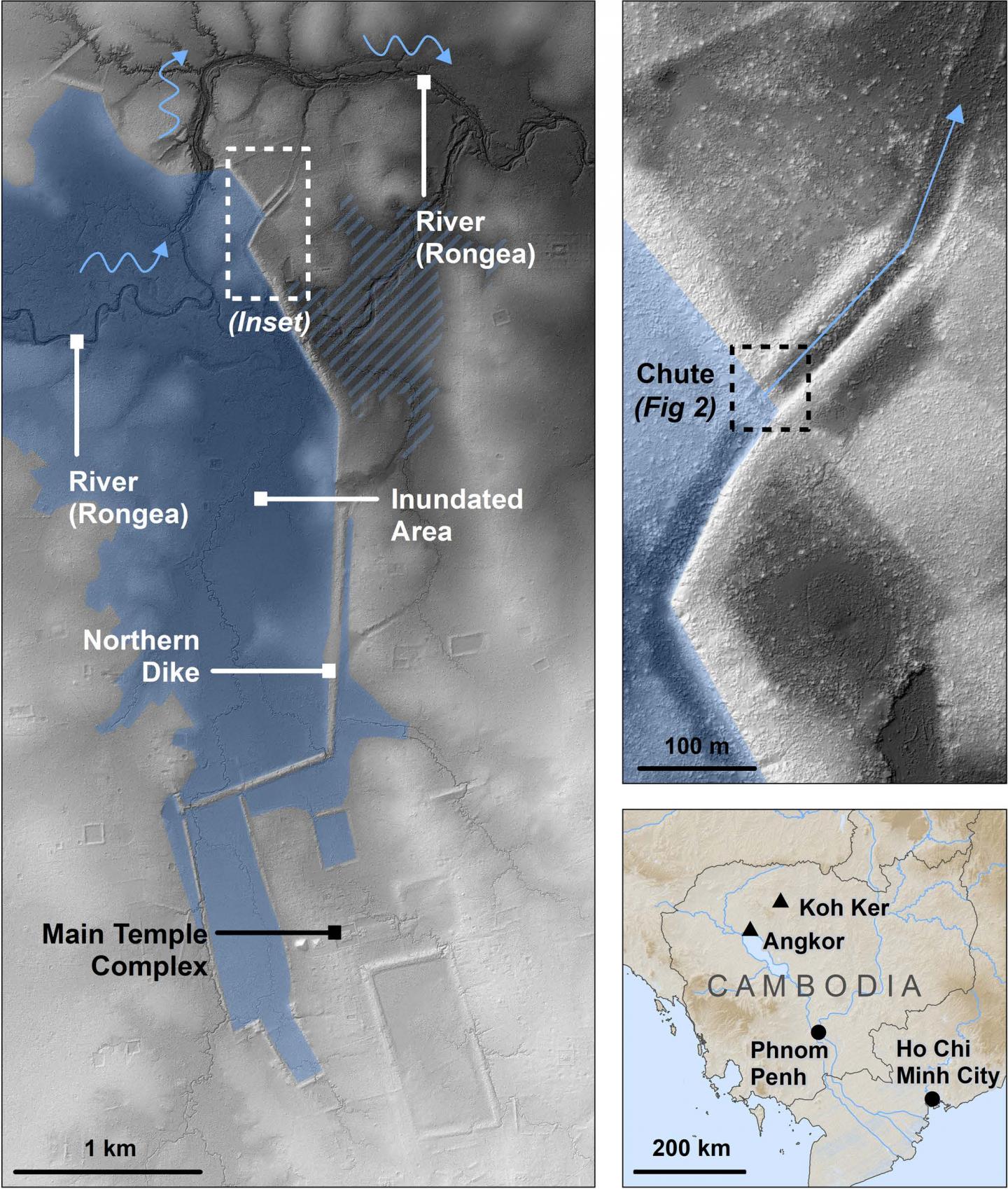
Ancient spillway Cambodia reveals structure built for water storage failed and forced Cambodian Kings to relocate capital
IMAGE

Credit: Dr Ian Moffat, Flinders University


The largest water management feature in Khmer history was built in the 10th century as part of a short-lived ancient capital in northern Cambodia to store water but the system failed in its first year of operation, possibly leading to the return of the capital to Angkor.

An international team of researchers led by Dr Ian Moffat from Flinders University in Australia used ground penetrating radar to map the surface of a buried spillway in Koh Ker to better understand why the reservoir failed during its first year of use.

In a study published in Geoarchaeology, archaeologists explain that the 7km long embankment was designed to capture water from the Stung Rongea river but modelling indicates it was inadequate to contain the average water flow in the catchment, putting into question the legitimacy of Khmer kings, and forcing them to re-establish their capital in Angkor.

“At that time, embarking on projects of civil engineering such as temple building, urban renewal, and the development of water infrastructure was central to establishing the legitimacy of Khmer kings,” says Dr Moffat

“It’s not difficult to envisage that the failure of the embankment at Koh Ker–the largest and most ambitious infrastructure project of the era–may have had a significant impact on the prestige of the sovereign capital, and contributed to the decision to re-establish Angkor as the capital of the Khmer Empire.”

“Our study shows that this ambitious engineering feat was always doomed to rapid failure.”

The monumental complex of Koh Ker, located 90 km northeast of Angkor, remains relatively poorly understood even though it was briefly the capital in the middle of the 10th century CE under King Jayavarman IV, the only capital throughout six centuries to be established outside of the Angkor region.

The site is located in an area of gently sloping hills and stone outcrops, far removed from the low-lying floodplains that define the Khmer heartland.

###

Researchers from Flinders, University of British Columbia and Ecole francaise d’Extreme-Orient in Paris contributed to the study.

Media Contact
Ian Moffat
[email protected]
61-403-050-935

Related Journal Article

http://dx.doi.org/10.1002/gea.21757

Tags: ArchaeologyGeology/SoilGeophysicsGeophysics/GravityOld WorldWeather/Storms
Share14Tweet9Share2ShareShareShare2

Related Posts

blank

Advancing Alkene Chemistry: Homologative Difunctionalization Breakthrough

January 8, 2026
Biocompatible Ligand Enables Safe In-Cell Protein Arylation

Biocompatible Ligand Enables Safe In-Cell Protein Arylation

January 8, 2026

Monovalent Pseudo-Natural Products Boost IDO1 Degradation

January 7, 2026

Catalytic Enantioselective [1,2]-Wittig Rearrangement Breakthrough

January 7, 2026
Please login to join discussion

POPULAR NEWS

  • Enhancing Spiritual Care Education in Nursing Programs

    154 shares
    Share 62 Tweet 39
  • PTSD, Depression, Anxiety in Childhood Cancer Survivors, Parents

    146 shares
    Share 58 Tweet 37
  • Robotic Ureteral Reconstruction: A Novel Approach

    50 shares
    Share 20 Tweet 13
  • Impact of Vegan Diet and Resistance Exercise on Muscle Volume

    47 shares
    Share 19 Tweet 12
v>

About

We bring you the latest biotechnology news from best research centers and universities around the world. Check our website.

Follow us

Recent News

Developing Eye Care Guidelines for Prone Ventilation

Guillain-Barré Syndrome Linked to TNF Inhibitor in Blau

Dual Nanocarriers Target Smad3 and Runx2 in Aortic Valve Disease

Subscribe to Blog via Email

Enter your email address to subscribe to this blog and receive notifications of new posts by email.

Join 71 other subscribers
  • Contact Us

Bioengineer.org © Copyright 2023 All Rights Reserved.

Welcome Back!

Login to your account below

Forgotten Password?

Retrieve your password

Please enter your username or email address to reset your password.

Log In
No Result
View All Result
  • Homepages
    • Home Page 1
    • Home Page 2
  • News
  • National
  • Business
  • Health
  • Lifestyle
  • Science

Bioengineer.org © Copyright 2023 All Rights Reserved.