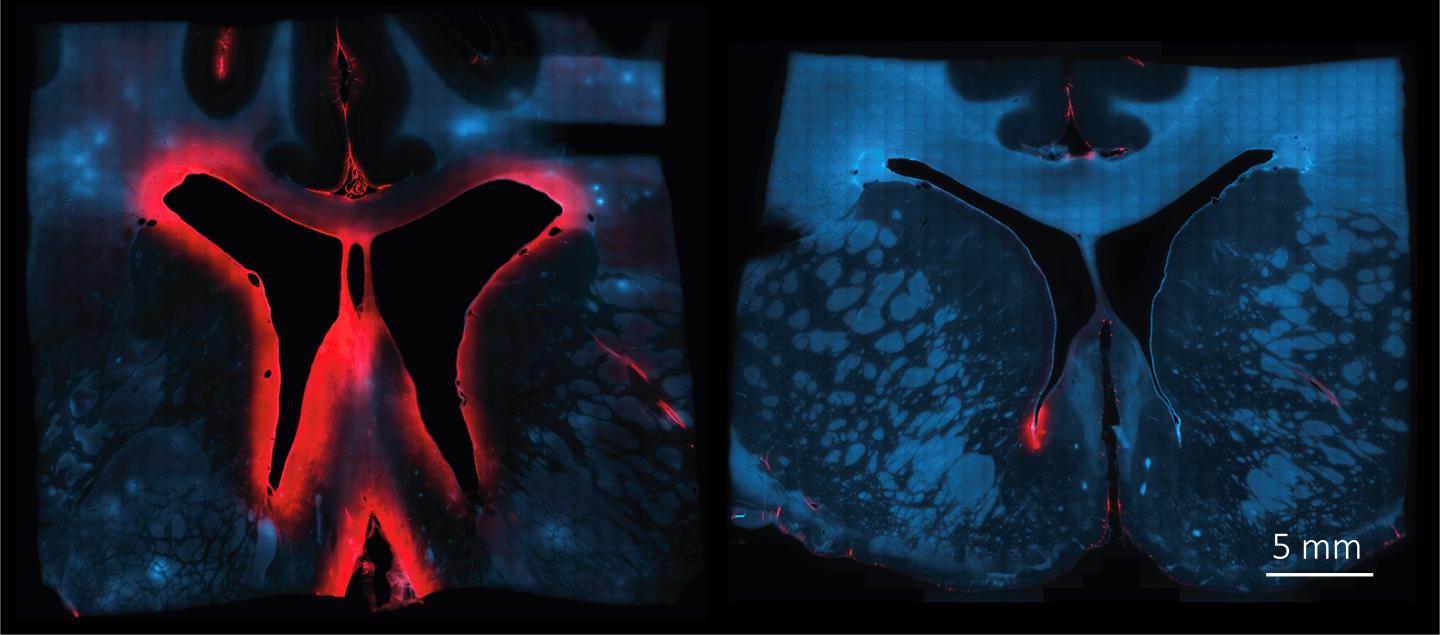
Credit: Dominik Schaer, UZH/USZ
Patients who survive a cerebral hemorrhage may suffer delayed severe brain damage caused by free hemoglobin, which comes from red blood cells and damages neurons. Researchers at the University of Zurich and the UniversityHospital Zurich have now discovered a protective protein in the body called haptoglobin, which prevents this effect.
Bleeding in the narrow space between the inner and middle meninges is life threatening. This type of cerebral hemorrhage is normally caused by small protrusions in the major arteries at the base of the brain (Aneurysms) that can burst without warning. A third of patients suffering such a hemorrhage, who are often still young, die as a result of the massive increase of pressure inside the skull. “Even if we manage to stop the bleeding and to stabilize the patients, in the first two weeks after bleeding there can be delayed brain damage. This often leads to severe impairments or can even be fatal,” explains Luca Regli, director of the Department of Neurosurgery at the UniversityHospital Zurich (USZ).
Free hemoglobin in the cerebrospinal fluid damages neurons
Despite great research efforts, until now it has not been possible to prevent these serious consequences of bleeding in the subarachnoid space. An interdisciplinary team of researchers from the University of Zurich (UZH), USZ and the Veterinary Teaching Hospital Zurich have now discovered a promising strategy: Haptoglobin, a protective protein found in the blood, binds the hemoglobin that has been released in the cerebrospinal fluid before it can cause damage.
“We observed that in the days after the bleeding, the accumulated blood slowly resolves and the hemoglobin from the degraded red blood cells gets into the cerebrospinal fluid,” says Emanuela Keller, head of the neurosurgery intensive care unit at USZ. This protein, which is normally responsible for transporting oxygen, plays an important role in the occurrence of delayed neurological damage. “Using patient samples and tests on sheep, we have now been able to show that the hemoglobin leads to vasospasms and penetrates deep into the brain tissue, where it can directly damage neurons,” says study lead Dominik Schaer, UZH professor and chief of service in the Department of Internal Medicine at USZ.
Haptoglobin binds hemoglobin and renders it harmless
The substance that makes hemoglobin so dangerous is iron, which is found in the center of the protein and has a high propensity to undergo chemical reactions. Diseases such as malaria, in which hemoglobin is also released, have led to the human body, in the course of evolution, forming its own protective protein called haptoglobin. In the blood, haptoglobin binds free hemoglobin, thus preventing its toxic effects in blood vessels and kidneys. However, the concentration of haptoglobin in the brain is very low and does not offer enough protection against a cerebral hemorrhage.
By administering purified haptoglobin directly into the cerebrospinal fluid of sheep via a catheter, the researchers were now able to make use of this natural protective mechanism. “We could show that purified haptoglobin prevents vasospasms and blocks free hemoglobin from penetrating the brain tissue,” explains Dominik Schaer.
Discovery enables new treatment approach
For patients who suffer bleeding in the subarachnoid space, these results have great medical potential: “We have found a possibility to potentially prevent the toxicity of free hemoglobin after intracranial hemorrhage. This could significantly improve the neurological prognosis and the long-term quality of life for those affected,” says neurosurgeon and first author of the study Michael Hugelshofer.
###
Media Contact
Dr. Dominik Schaer
[email protected]
41-442-552-382
Original Source
https:/
Related Journal Article
http://dx.