• HOME
  • NEWS
  • EXPLORE
    • CAREER
      • Companies
      • Jobs
    • EVENTS
    • iGEM
      • News
      • Team
    • PHOTOS
    • VIDEO
    • WIKI
  • BLOG
  • COMMUNITY
    • FACEBOOK
    • INSTAGRAM
    • TWITTER
Saturday, February 7, 2026
BIOENGINEER.ORG
No Result
View All Result
  • Login
  • HOME
  • NEWS
  • EXPLORE
    • CAREER
      • Companies
      • Jobs
        • Lecturer
        • PhD Studentship
        • Postdoc
        • Research Assistant
    • EVENTS
    • iGEM
      • News
      • Team
    • PHOTOS
    • VIDEO
    • WIKI
  • BLOG
  • COMMUNITY
    • FACEBOOK
    • INSTAGRAM
    • TWITTER
  • HOME
  • NEWS
  • EXPLORE
    • CAREER
      • Companies
      • Jobs
        • Lecturer
        • PhD Studentship
        • Postdoc
        • Research Assistant
    • EVENTS
    • iGEM
      • News
      • Team
    • PHOTOS
    • VIDEO
    • WIKI
  • BLOG
  • COMMUNITY
    • FACEBOOK
    • INSTAGRAM
    • TWITTER
No Result
View All Result
Bioengineer.org
No Result
View All Result
Home NEWS Science News Biology

First generation of induced pluripotent stem cells from domestic cats

Bioengineer by Bioengineer
October 17, 2019
in Biology
Reading Time: 2 mins read
0
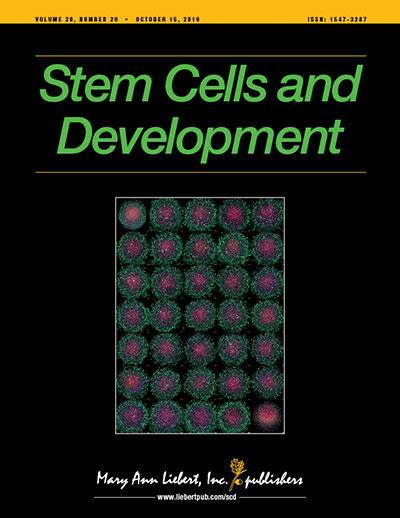
IMAGE
Share on FacebookShare on TwitterShare on LinkedinShare on RedditShare on Telegram

IMAGE

Credit: Mary Ann Liebert, Inc., publishers


New Rochelle, NY, October 17, 2019-Researchers have reported for the first time producing feline induced pluripotent stem cells (fiPSCs) from adult cells of domestic cats. The methods and implications of this research are published in Stem Cells and Development, a peer-reviewed journal from Mary Ann Liebert, Inc., publishers. Click here to read the full-text article for free on the Stem Cells and Development through November 17, 2019.

Luke Dutton, Jayesh Dudhia, Deborah Guest, and David Connolly, Royal Veterinary College, University of London (Herts) and Animal Health Trust (Suffolk), U.K. coauthored the article entitled “Inducing Pluripotency in the Domestic Cat (Felis catus).” The availability of fiPSCs may make it possible to develop cellular models of genetic diseases affecting domestic cats – and similar human disorders – contributing to a better understanding of those diseases and the identification of novel therapeutic approaches. The fiPSCs generated by Dutton et al. were able to differentiate in vitro into cells that represented all three germ layers and produced relevant stem cell markers.

Graham C. Parker, PhD, Editor-in-Chief of Stem Cells and Development and The Carman and Ann Adams Department of Pediatrics, Wayne State University School of Medicine, Detroit, MI states: “Although AAother groups have previously reported derivation of iPSCs from species of wild cats, this is the first characterization of iPSCs from this important companion species.”

###

About the Journal

Stem Cells and Development is an authoritative peer-reviewed journal published 24 times per year in print and online. The Journal is dedicated to communication and objective analysis of developments in the biology, characteristics, and therapeutic utility of stem cells, especially those of the hematopoietic system. A complete table of contents and free sample issue may be viewed on the Stem Cells and Development website.

About the Publisher

Mary Ann Liebert, Inc., publishers is a privately held, fully integrated media company known for establishing authoritative peer-reviewed journals in many promising areas of science and biomedical research, including Cellular Reprogramming, Tissue Engineering, and Human Gene Therapy. Its biotechnology trade magazine, GEN (Genetic Engineering & Biotechnology News), was the first in its field and is today the industry’s most widely read publication worldwide. A complete list of the firm’s 80 journals, books, and newsmagazines is available on the Mary Ann Liebert, Inc., publishers website.

Media Contact
Kathryn Ryan
[email protected]
914-740-2250

Original Source

https://home.liebertpub.com/news/first-generation-of-induced-pluripotent-stem-cells-from-domestic-cats/3610

Related Journal Article

http://dx.doi.org/10.1089/scd.2019.0142

Tags: BiologyCell Biology
Share12Tweet8Share2ShareShareShare2

Related Posts

Florida Cane Toad: Complex Spread and Selective Evolution

Florida Cane Toad: Complex Spread and Selective Evolution

February 7, 2026
New Study Uncovers Mechanism Behind Burn Pit Particulate Matter–Induced Lung Inflammation

New Study Uncovers Mechanism Behind Burn Pit Particulate Matter–Induced Lung Inflammation

February 6, 2026

DeepBlastoid: Advancing Automated and Efficient Evaluation of Human Blastoids with Deep Learning

February 6, 2026

Navigating the Gut: The Role of Formic Acid in the Microbiome

February 6, 2026
Please login to join discussion

POPULAR NEWS

  • Robotic Ureteral Reconstruction: A Novel Approach

    Robotic Ureteral Reconstruction: A Novel Approach

    82 shares
    Share 33 Tweet 21
  • Digital Privacy: Health Data Control in Incarceration

    63 shares
    Share 25 Tweet 16
  • Study Reveals Lipid Accumulation in ME/CFS Cells

    57 shares
    Share 23 Tweet 14
  • Breakthrough in RNA Research Accelerates Medical Innovations Timeline

    53 shares
    Share 21 Tweet 13

About

We bring you the latest biotechnology news from best research centers and universities around the world. Check our website.

Follow us

Recent News

Evaluating Pediatric Emergency Care Quality in Ethiopia

TPMT Expression Predictions Linked to Azathioprine Side Effects

Improving Dementia Care with Enhanced Activity Kits

Subscribe to Blog via Email

Success! An email was just sent to confirm your subscription. Please find the email now and click 'Confirm' to start subscribing.

Join 73 other subscribers
  • Contact Us

Bioengineer.org © Copyright 2023 All Rights Reserved.

Welcome Back!

Login to your account below

Forgotten Password?

Retrieve your password

Please enter your username or email address to reset your password.

Log In
No Result
View All Result
  • Homepages
    • Home Page 1
    • Home Page 2
  • News
  • National
  • Business
  • Health
  • Lifestyle
  • Science

Bioengineer.org © Copyright 2023 All Rights Reserved.