COLD-PCR/FMCA enables simultaneous and more precise evaluation of HBV DNA, genotypes, and mutant DNA, as well as better assessment of infection status, disease progression, and response to treatment, reports The Journal of Molecular Diagnostics
Credit: The First Affliated Hospital of Fujian Medical University
Philadelphia, October 10, 2019 – A report in the Journal of Molecular Diagnostics, published by Elsevier, describes a new and powerful laboratory tool that may improve the diagnosis and treatment of hepatitis B virus (HBV) infection. The technique can simultaneously assess several indicators important for optimal patient management.
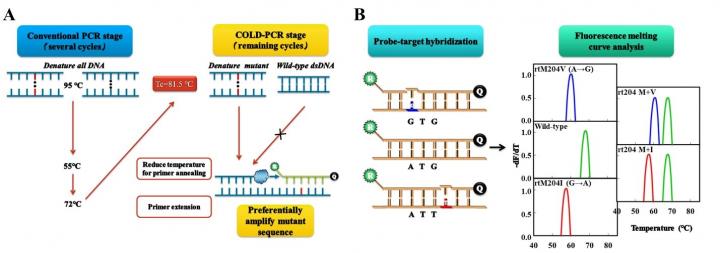
A team of scientists has developed a highly sensitive coamplification at lower denaturation temperature PCR (COLD-PCR) coupled with probe-based fluorescence melting curve analysis (FMCA) for precision diagnosis of chronic hepatitis B (CHB) patients. This novel tool is simple, stable, convenient, practical, inexpensive, and may be used routinely in the average hospital laboratory.
“Guidelines have confirmed that dynamic monitoring of HBV DNA, genotypes, and reverse transcriptase (RT) mutant DNA is of great importance to assess infection status, predict disease progression, and judge treatment efficacy in HBV-infected patients,” explained lead investigator Qishui Ou, PhD, Department of Laboratory Medicine, The First Af?liated Hospital of Fujian Medical University, the Gene Diagnostic Laboratory, Fujian Medical University, and the Fujian Key Laboratory of Laboratory Medicine, Fuzhou, China. “We believe COLD-PCR/FMCA provides a powerful laboratory tool for precise diagnosis and treatment of HBV-infected patients.”
Although a number of molecular methods have been developed for measuring these parameters, many are limited by poor sensitivity or inability to detect more than one mutation at a time. Others are too cumbersome or expensive for clinical use. “Our goal was to establish a more practical and inexpensive method with high sensitivity to detect genotype and RT mutations while detecting HBV DNA,” noted Dr. Ou.
Moreover, COLD-PCR/FMCA can detect HBV mutations at much lower concentrations than other techniques such as PCR/FMCA or PCR Sanger sequencing (1 percent vs. 10 percent vs. 20 percent, respectively). This new technique can also distinguish different phases of HBV infection according to the proportion and type of mutations as well as by detecting HBV DNA.
The researchers also report that the genotype and mutation detected by COLD-PCR/FMCA may predict whether a patient will respond to antiviral therapy. Analysis of serum samples from 41 patients with CHB who were receiving entecavir revealed that the drug was most effective for patients with genotype B and those with a lower percentage of RT mutations at baseline or week 4.
“Until now there have not been high-throughput approaches to detect HBV DNA, genotype, and RT mutations simultaneously. Therefore, it is necessary to establish a more practical and inexpensive method with high sensitivity to detect genotype and RT mutations while detecting HBV DNA. COLD-PCR/FMCA has that potential,” said Dr. Ou.
HBV infection affects the liver. According to the World Health Organization, as of 2015, 257 million individuals were living with and 887,000 died from HBV infection, usually as a result of cirrhosis (loss of liver cells and irreversible scarring of the liver) or liver cancer. In 2016, only about 10.5 percent of individuals infected with HBV were aware of their status, only a fraction of whom were receiving treatment. The virus is typically spread through contact with infected blood or bodily fluids. HBV can be prevented by vaccines that offer almost total protection against HBV infection.
###
Media Contact
Eileen Leahy
[email protected]
732-238-3628
Related Journal Article
http://dx.