• HOME
  • NEWS
  • EXPLORE
    • CAREER
      • Companies
      • Jobs
    • EVENTS
    • iGEM
      • News
      • Team
    • PHOTOS
    • VIDEO
    • WIKI
  • BLOG
  • COMMUNITY
    • FACEBOOK
    • INSTAGRAM
    • TWITTER
Friday, December 26, 2025
BIOENGINEER.ORG
No Result
View All Result
  • Login
  • HOME
  • NEWS
  • EXPLORE
    • CAREER
      • Companies
      • Jobs
        • Lecturer
        • PhD Studentship
        • Postdoc
        • Research Assistant
    • EVENTS
    • iGEM
      • News
      • Team
    • PHOTOS
    • VIDEO
    • WIKI
  • BLOG
  • COMMUNITY
    • FACEBOOK
    • INSTAGRAM
    • TWITTER
  • HOME
  • NEWS
  • EXPLORE
    • CAREER
      • Companies
      • Jobs
        • Lecturer
        • PhD Studentship
        • Postdoc
        • Research Assistant
    • EVENTS
    • iGEM
      • News
      • Team
    • PHOTOS
    • VIDEO
    • WIKI
  • BLOG
  • COMMUNITY
    • FACEBOOK
    • INSTAGRAM
    • TWITTER
No Result
View All Result
Bioengineer.org
No Result
View All Result
Home NEWS Science News Biology

Plant diversity a casualty of high-severity wildfires

Bioengineer by Bioengineer
October 2, 2019
in Biology
Reading Time: 3 mins read
0
IMAGE
Share on FacebookShare on TwitterShare on LinkedinShare on RedditShare on Telegram

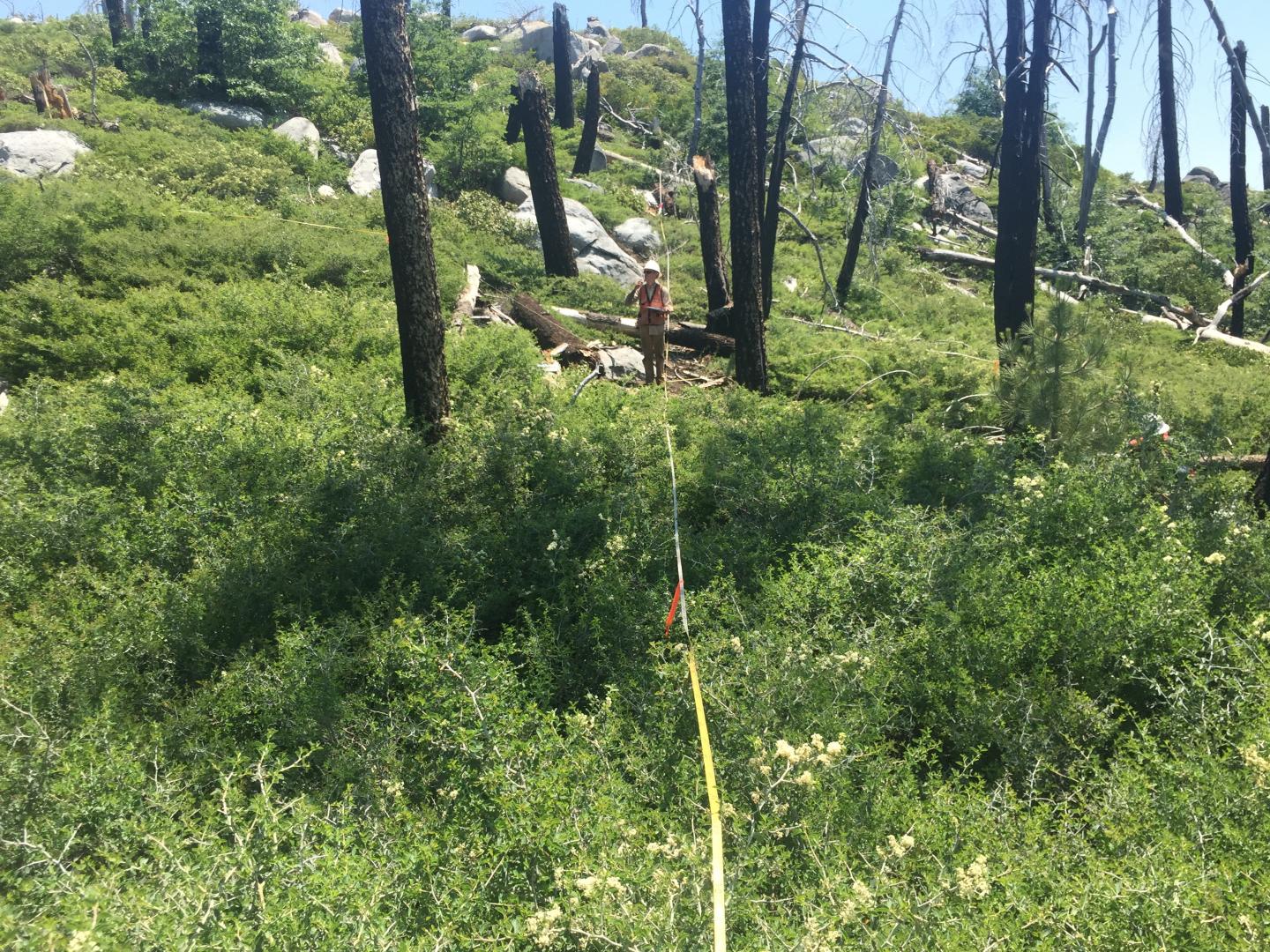
Extreme wildfires are transforming forestlands into shrublands
IMAGE

Credit: Courtesy Clark Richter

Sierra Nevada forests are losing plant diversity due to high-severity fires, according to a study from the University of California, Davis. These fires are turning patches of forest into shrub fields — indefinitely, in some cases.

For the study, published in the journal Ecosphere, scientists analyzed plant diversity across a spectrum of fire severity — from low to moderate to high. They found the sweet spot for plant diversity exists where tree stands burned with low-to-moderate severity, as mixed conifer forests did in this region for millennia before the imposition of fire suppression policies in the early 20th century. Such policies have greatly increased forest density and the amount of woody fuels in many California forests and led to more severe, stand-replacing fires.

On the extreme ends of the spectrum, unburned areas and high-severity burn areas showed relatively low plant diversity. Five to 10 years or more after experiencing high-severity burns, many forest stands were replaced by shrub fields that supported few plant species.

‘A DIFFERENT KIND OF FIRE’

The results suggest these forests, which are used to living with and even benefiting from fire, have not yet adapted to this newer regime of intense, high-severity fires.

“This system is experiencing a different kind of fire,” said lead author Clark Richter, a doctoral candidate at UC Davis. “The species are outside of their limits. More high-severity fires greatly change a diverse and highly varied forest to one where all the trees are dead and what’s left is often just a few species of shrub, not the herbs and wildflowers you may be used to seeing.”

The researchers examined postfire plant response in eight areas of yellow pine and mixed conifer forests that burned in California’s Sierra Nevada between 2001 and 2012. These areas have experienced among the biggest increases in wildfire size and severity over the past 30 years in the continental United States. The areas stretched from the site of the Moonlight Fire (2007) in Lassen County southward to the Power Fire (2004) in Amador County.

TRENDS CALL FOR MULTI-PRONGED APPROACH

The study states that under climate change and current fire trends, “there is a real possibility that large portions of the Sierra Nevada landscape could be caught in a feedback-loop” that prevents recovery of former forest.

“We will need enhanced management tools and resources to help forests adapt if we want to preserve plant diversity for soil, animal and ecosystem health,” Richter said.

The paper suggests a multifaceted management approach that combines forest thinning with a major expansion of prescribed burning and allowing naturally ignited fires to burn under moderate weather conditions.

###

Additional co-authors include co-leading and senior author Marcel Rejmánek from the UC Davis Department of Evolution and Ecology, Jesse E.D. Miller from Stanford University, Kevin Welch from the UC Davis Department of Plant Sciences, JonahMaria Weeks from the UC Davis Department of Environmental Science and Policy, and Hugh Safford from UC Davis and the USDA Forest Service.

The study was funded by the USDA Forest Service Pacific Southwest Region and the Eldorado National Forest.

Read the full study, DOI: 10.1002/ecs2.2882, at https://esajournals.onlinelibrary.wiley.com/doi/full/10.1002/ecs2.2882.

Media Contact
Kat Kerlin
[email protected]

Original Source

https://climatechange.ucdavis.edu/news/plant-diversity-a-casualty-of-high-severity-wildfires/

Related Journal Article

http://dx.doi.org/10.1002/ecs2.2882

Tags: BiodiversityBiologyClimate ChangeEcology/EnvironmentForestryPlant Sciences
Share12Tweet8Share2ShareShareShare2

Related Posts

Temperature and Heat Penetration in Canned vs. Pouched Whelk

Temperature and Heat Penetration in Canned vs. Pouched Whelk

December 26, 2025
Unveiling Genetic Factors Affecting Milk Fat in Holsteins

Unveiling Genetic Factors Affecting Milk Fat in Holsteins

December 26, 2025

Halophilic Bacteria: Combatting Salt Stress with EPS and IAA

December 26, 2025

Male-Biased Immune Changes in Late-Onset Preeclampsia

December 24, 2025
Please login to join discussion

POPULAR NEWS

  • Nurses’ Views on Online Learning: Effects on Performance

    Nurses’ Views on Online Learning: Effects on Performance

    70 shares
    Share 28 Tweet 18
  • NSF funds machine-learning research at UNO and UNL to study energy requirements of walking in older adults

    71 shares
    Share 28 Tweet 18
  • Unraveling Levofloxacin’s Impact on Brain Function

    54 shares
    Share 22 Tweet 14
  • Exploring Audiology Accessibility in Johannesburg, South Africa

    51 shares
    Share 20 Tweet 13

About

We bring you the latest biotechnology news from best research centers and universities around the world. Check our website.

Follow us

Recent News

Vitamin D’s Impact on Osteosarcoma Explained

Optimizing Ultrasound-Assisted Extraction of Fish Collagen

Cancer Patients’ Psychosocial Challenges Persist Post-COVID

Subscribe to Blog via Email

Enter your email address to subscribe to this blog and receive notifications of new posts by email.

Join 71 other subscribers
  • Contact Us

Bioengineer.org © Copyright 2023 All Rights Reserved.

Welcome Back!

Login to your account below

Forgotten Password?

Retrieve your password

Please enter your username or email address to reset your password.

Log In
No Result
View All Result
  • Homepages
    • Home Page 1
    • Home Page 2
  • News
  • National
  • Business
  • Health
  • Lifestyle
  • Science

Bioengineer.org © Copyright 2023 All Rights Reserved.