UC Davis researchers receive $1.5 million grant from NIH’s HEAL Initiative
Credit: UC Davis Health
A UC Davis research team, led by Vladimir Yarov-Yarovoy and Heike Wulff, will receive a $1.5 million grant from the National Institutes of Health (NIH) to develop a novel class of peptides that are better a treating pain and don’t have the side effects of opioids. The grant is part of the NIH initiative Helping to End Addiction Long-Term (HEAL Initiative).
“With the national opioid crisis, we more than ever need a safer, more effective and non-addictive class of medications to treat chronic pain,” said Vladimir Yarov-Yarovoy, associate professor of physiology and membrane biology at UC Davis School of Medicine and principal investigator of the study.
“Dr. Yarov-Yarovoy is leading the next wave of innovative and novel therapeutics for pain,” said David Copenhaver, associate professor and Chief of the Pain Medicine Division at UC Davis. “We are excited to collaborate on this journey of discovery to find novel, safe and effective agents to treat pain.”
Scott Fishman, professor and director of UC Davis Center for Advancing Pain Relief, agrees.
“Receiving this grant reflects the great potential for this work to help millions of people in pain,” Fishman said. “We look forward to bringing this exciting science to the front lines of patient care.”
Targeting specific sodium channels
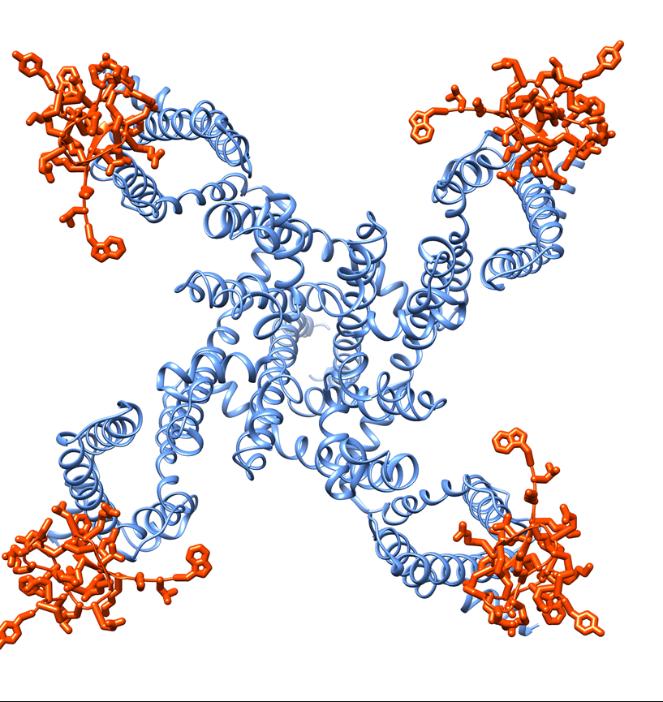
Previous research has identified voltage-gated sodium ion channels, especially NaV1.7, NaV1.8 and NaV1.9, as critical elements in pain signaling and transmission. Certain peptides, such as the tarantula-based toxin ProTx-II, are known to block specific sodium channels, preventing nerve cells from transmitting signals that trigger pain.
“We want to relieve pain without the side effect of addiction that occurs with opioids,” said Karen Wagner, a co-investigator who studies pain in animal models. “By targeting the relevant sodium channels instead of the receptors usually targeted by opioids, we provide an alternative to the addictive and detrimental effects of opioid pain medications.”
Blocking sodium channels to control pain
To ultimately relieve chronic pain, the researchers want to identify the most effective peptide design that can block the relevant sodium channels without affecting the activity of other channels.
In January 2019, several high-resolution structures of human sodium channel were published, giving the researchers a better understanding of the interactions between peptides and the sodium channels. Using the computational power of Rosetta software, the UC Davis researchers will design and synthesize different versions of the ProTx-II-based peptide to identify those that best selectively and effectively block pain-associated channels.
“Starting from the naturally-occurring ProTx-II peptide, we can improve the design of these toxins by optimizing for potency and selectivity,” said Wulff, a professor of pharmacology and director of the Probe and Pharmaceutical Optimization core of the UC Davis CounterACT Center of Excellence. “We will trim ProTx-II down to its essential binding parts to enhance its targeting of specific pain-related channels.”
Designed peptides that are found to selectively block voltage-gated sodium ion channels will be sent to Jon Sack’s laboratory for testing on neurons. Based on this testing, the researchers will choose the peptides that would be used in animal models.
The NIH launched the HEAL Initiative in April 2018 to improve prevention and treatment strategies for opioid misuse and addiction and enhance pain management.
“It’s clear that a multipronged scientific approach is needed to reduce the risks of opioids, accelerate development of effective non-opioid therapies for pain and provide more flexible and effective options for treating addiction to opioids,” said NIH Director Francis Collins.
The Team
Yarov-Yarovoy is an expert in computational modeling of peptide toxin – ion channel interactions and peptide design targeting ion channels.
Heike Wulff specializes in preclinical therapeutics development targeting ion channels and has developed an ion channel-targeted peptide toxin variant currently in clinical trials.
Bruce Hammock, a distinguished professor of entomology and director of the NIEHS-UCD Superfund Research Program, conducts research to develop preclinical therapeutics to control acute and neuropathic pain.
Karen Wagner, a research scientist in the Department of Entomology, researches neurobiology of inflammation, pain and chronic neurodegenerative diseases.
Jon Sack, an associate professor of physiology and membrane biology, specializes in mechanisms of voltage-gated ion channel modulation by toxins, and the design of novel probes to monitor ion channel activity.
Daniel Tancredi is a biostatistician and associate professor of pediatrics at UC Davis School of Medicine.
Project title: Optimization of non-addictive biologics to target sodium channels involved in pain signaling.
Media Contact
Nadine Yehya
[email protected]
Original Source
https:/