• HOME
  • NEWS
  • EXPLORE
    • CAREER
      • Companies
      • Jobs
    • EVENTS
    • iGEM
      • News
      • Team
    • PHOTOS
    • VIDEO
    • WIKI
  • BLOG
  • COMMUNITY
    • FACEBOOK
    • INSTAGRAM
    • TWITTER
Saturday, February 7, 2026
BIOENGINEER.ORG
No Result
View All Result
  • Login
  • HOME
  • NEWS
  • EXPLORE
    • CAREER
      • Companies
      • Jobs
        • Lecturer
        • PhD Studentship
        • Postdoc
        • Research Assistant
    • EVENTS
    • iGEM
      • News
      • Team
    • PHOTOS
    • VIDEO
    • WIKI
  • BLOG
  • COMMUNITY
    • FACEBOOK
    • INSTAGRAM
    • TWITTER
  • HOME
  • NEWS
  • EXPLORE
    • CAREER
      • Companies
      • Jobs
        • Lecturer
        • PhD Studentship
        • Postdoc
        • Research Assistant
    • EVENTS
    • iGEM
      • News
      • Team
    • PHOTOS
    • VIDEO
    • WIKI
  • BLOG
  • COMMUNITY
    • FACEBOOK
    • INSTAGRAM
    • TWITTER
No Result
View All Result
Bioengineer.org
No Result
View All Result
Home NEWS Science News Biology

A Matter of concentration

Bioengineer by Bioengineer
September 17, 2019
in Biology
Reading Time: 2 mins read
0
IMAGE
Share on FacebookShare on TwitterShare on LinkedinShare on RedditShare on Telegram

IMAGE

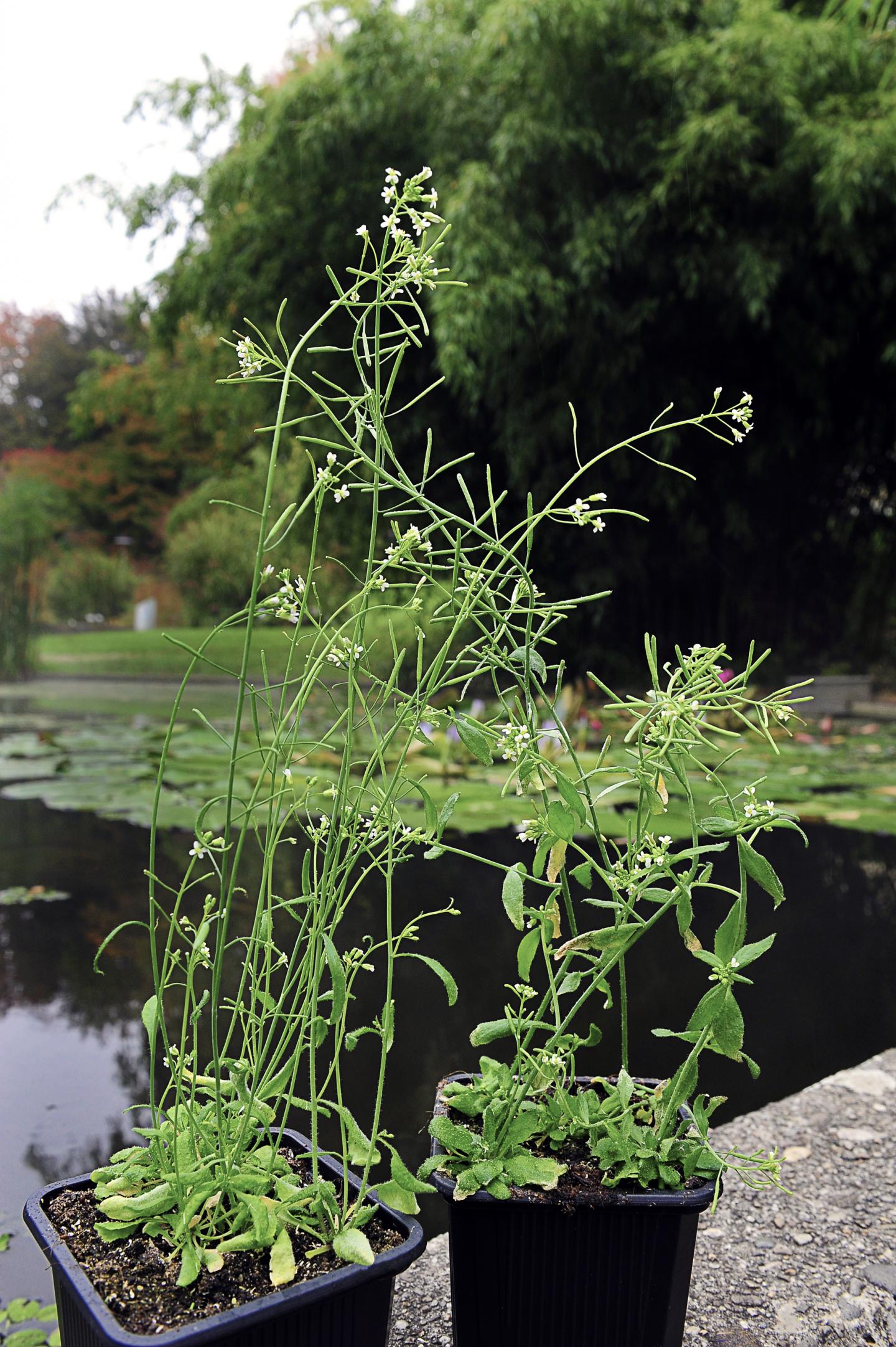
Credit: Photo: Thomas Kunz

Plants can grow whole new organs with the help of pluripotent stem cells throughout their entire lives. When necessary, these stem cells can develop into any type of cell within an organism. The biologist Prof. Dr. Thomas Laux and his plant genetics research group at the University of Freiburg, who are studying how the balance between stem cells and specialized cells is regulated in plants, have determined that the concentration of so-called Argonaute proteins, such as AGO1 and ZLL/AGO10, plays a central role in this process. The team recently published their findings in the scientific journal Plant Communications. First author is Dr. Fei Du.

Using the model plant Arabidopsis thaliana, or mouse-ear cress, the scientists have researched how the concentration of Argonaute proteins affects the ratio of stem cells to differentiated cells, such as flower or leaf cells. The Argonaute proteins AGO1 and ZLL/AGO10 are key factors in RNA interference, a process in which the transfer of genetic information is inhibited. Because AGO1 destroys messenger RNA, which are vital for the maintenance of stem cells, this promotes cell differentiation – in other words, their development into specialized cell types. Laux’s research group has discovered that the exact opposite occurs when there is a high concentration of AGO1. In this case, the protein protects the messenger RNA from degrading and prevents the cells from differentiating, promoting the maintenance of stem cells.

As a result, the scientists have demonstrated that the balance between stem cells and differentiated cells depends on the exact concentration of Argonaute proteins – and that the activity of these proteins is completely reversed when their concentration exceeds a certain level. This means that scientists could use these proteins in biotechnology to cultivate stem cells or to develop organs – for example, a small number of cultivated stem cells could be used to reproduce plants that are able to better adapt to changes in the environment.

###

Prof. Dr. Thomas Laux is the head of a research group at the Institute of Biology III and a member of the excellence cluster BIOSS Centre for Biological Signalling Studies at the University of Freiburg.

Media Contact
Dr. Thomas Laux
[email protected]

Original Source

https://www.pr.uni-freiburg.de/pm-en/press-releases-2019/a-matter-of-concentration

Related Journal Article

http://dx.doi.org/10.1016/j.xplc.2019.100002

Tags: BiologyPlant Sciences
Share12Tweet8Share2ShareShareShare2

Related Posts

Florida Cane Toad: Complex Spread and Selective Evolution

Florida Cane Toad: Complex Spread and Selective Evolution

February 7, 2026
New Study Uncovers Mechanism Behind Burn Pit Particulate Matter–Induced Lung Inflammation

New Study Uncovers Mechanism Behind Burn Pit Particulate Matter–Induced Lung Inflammation

February 6, 2026

DeepBlastoid: Advancing Automated and Efficient Evaluation of Human Blastoids with Deep Learning

February 6, 2026

Navigating the Gut: The Role of Formic Acid in the Microbiome

February 6, 2026
Please login to join discussion

POPULAR NEWS

  • Robotic Ureteral Reconstruction: A Novel Approach

    Robotic Ureteral Reconstruction: A Novel Approach

    82 shares
    Share 33 Tweet 21
  • Digital Privacy: Health Data Control in Incarceration

    63 shares
    Share 25 Tweet 16
  • Study Reveals Lipid Accumulation in ME/CFS Cells

    57 shares
    Share 23 Tweet 14
  • Breakthrough in RNA Research Accelerates Medical Innovations Timeline

    53 shares
    Share 21 Tweet 13

About

We bring you the latest biotechnology news from best research centers and universities around the world. Check our website.

Follow us

Recent News

Inflammasome Protein ASC Drives Pancreatic Cancer Metabolism

Phage-Antibiotic Combo Beats Resistant Peritoneal Infection

Boosting Remote Healthcare: Stepped-Wedge Trial Insights

Subscribe to Blog via Email

Enter your email address to subscribe to this blog and receive notifications of new posts by email.

Join 73 other subscribers
  • Contact Us

Bioengineer.org © Copyright 2023 All Rights Reserved.

Welcome Back!

Login to your account below

Forgotten Password?

Retrieve your password

Please enter your username or email address to reset your password.

Log In
No Result
View All Result
  • Homepages
    • Home Page 1
    • Home Page 2
  • News
  • National
  • Business
  • Health
  • Lifestyle
  • Science

Bioengineer.org © Copyright 2023 All Rights Reserved.