‘Embarrassing’ or stigmatized cancers like lung and liver are underfunded
Credit: Northwestern University
- Poorly funded cancers: colon, endometrial, liver and bile duct, cervical, ovarian, pancreatic and lung
- Well-funded cancers: breast, pediatric, leukemia and lymphoma
- All cancers with stigmatized behavior (i.e. lung cancer and smoking) are poorly funded
- Underfunding of these common cancers could negatively impact research, drug development
CHICAGO — Many of the deadliest or most common cancers get the least amount of nonprofit research funding, according to a new Northwestern Medicine study that examined the distribution of nonprofit research funding in 2015 across cancer types.
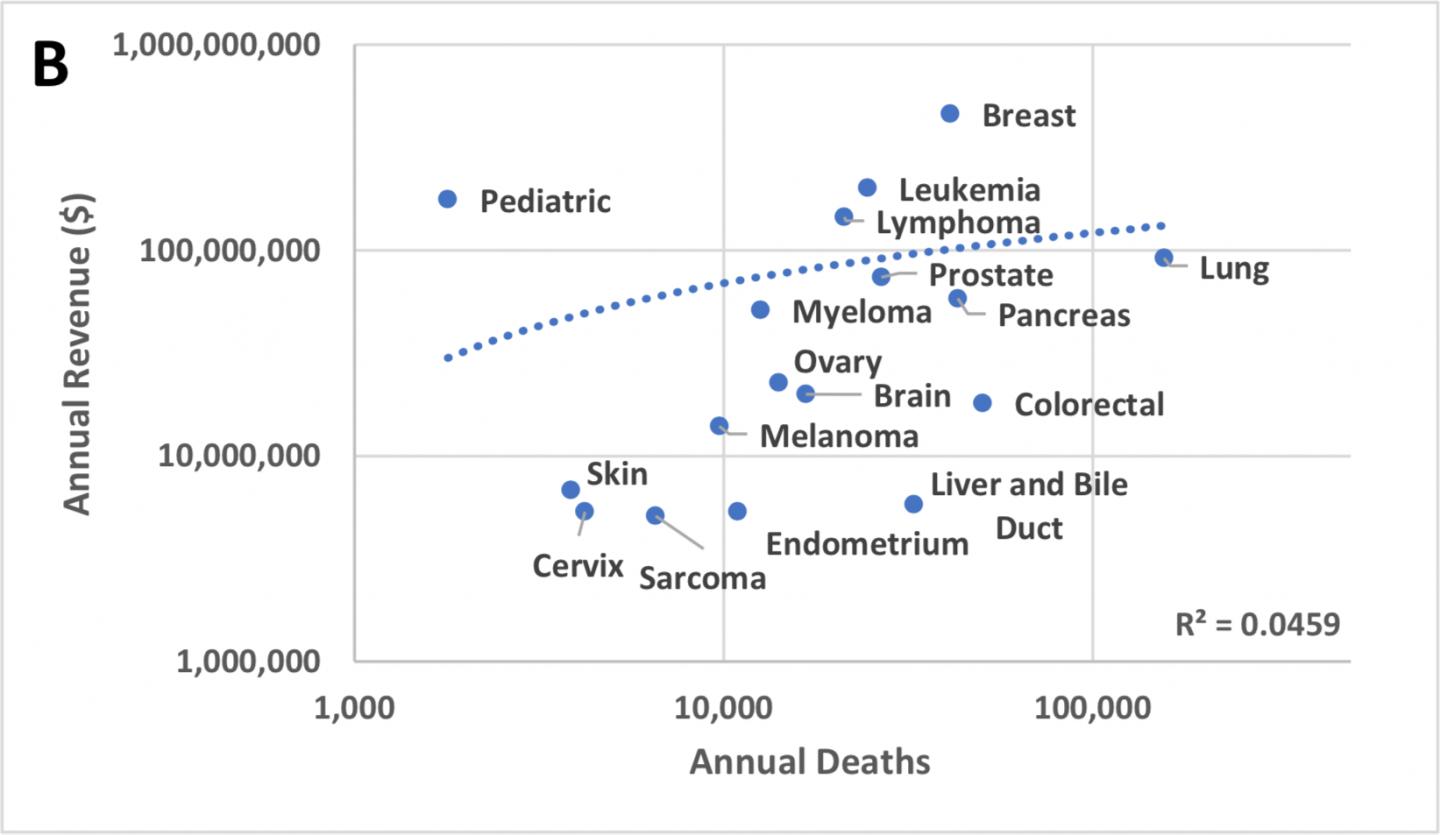
Colon, endometrial, liver and bile duct, cervical, ovarian, pancreatic and lung cancers were all poorly funded compared to how common they are and how many deaths they cause, the study found. In contrast, breast cancer, leukemia, lymphoma and pediatric cancers were all well-funded, respective to their impact on society.
The study is the first to compare nonprofit funding distribution in the United States across cancer types. It will be published July 18 in the Journal of the National Comprehensive Cancer Network.
“The goal of this study is not to divert funds away from cancers that are well-supported, but rather expand funding for other cancers that aren’t getting enough support currently,” said corresponding author Dr. Suneel Kamath, who was the chief fellow in the department of hematology and oncology at Northwestern University Feinberg School of Medicine when he conducted the study. “These are all deadly and life-altering diseases that deserve our attention and support.”
Cancer-related nonprofit organizations play an important role in funding medical research, supporting the education of patients and their families and influencing health policy. Underfunding of these common cancers could negatively impact research, drug development and the number of FDA drug approvals for poorly funded cancers.
“Well-funded patient advocacy organizations should be applauded for their successes,” said co-author Dr. Sheetal Kircher, assistant professor of hematology and oncology at Feinberg and a Northwestern Medicine oncologist. “We hope to bring awareness to the organizations with less relative funding so we can collaborate to improve funding and outcomes for all patients with cancer.”
The study also explored factors that may influence which cancers receive more public support over others. Cancers that are associated with a stigmatized behavior, such as lung cancer with smoking or liver cancer with drinking, were all poorly funded.
“Shame and discomfort with talking about our bowels and ‘private parts’ may be reducing funding for diseases like colon or endometrial cancer,” Kamath said.
The nationwide study, conducted between October 2017 and February 2018, used IRS tax records to identify all nonprofit organizations that support any type of cancer and made at least $5 million in annual revenue in 2015. The scientists examined 119 organizations with a total of $5.98 billion in annual revenue. Most of this ($4.59 billion) went to general cancer charities with no focus on one disease (e.g. American Cancer Society).
The authors compared the amount of revenue for each cancer type with the number of new cases, number of deaths and number of years of life lost to see if the amount of funding for each cancer is proportional to how common and/or deadly it is.
###
Dr. Al Benson, professor of hematology and oncology at Feinberg and a Northwestern Medicine oncologist, also is a study author. Benson and Kircher also are members of the Robert H. Lurie Comprehensive Cancer Center of Northwestern University.
The study was not funded or supported by any government, nonprofit or industry entities.
Media Contact
Kristin Samuelson
[email protected]